The blockade of the Strait of Hormuz by Iran is a watershed moment in the recent history of international political economy. This crisis stems from a dramatic escalation on February 28, 2026, when the United States and Israel launched Operation Epic Fury, a series of coordinated military strikes aimed at neutralising Iranian nuclear ambitions and precipitating regime change. The operation resulted in the death of Iranian Supreme Leader Ayatollah Khamenei, an event that has fundamentally triggered the destabilisation of the region, given that Iran has vowed to avenge the death of its leader. It has already initiated the process of avenging as it has unleashed massive barrages of ballistic missiles and drones against Israel and US military bases across the Gulf. Crucially, Iran has now shuttered the Strait of Hormuz, warning that any vessel attempting transit will be intercepted or destroyed. This total closure of the world’s most vital energy artery is poised to have disastrous consequences. It could trigger a systemic collapse in global energy markets and precipitate an unprecedented economic shock wave that could plunge the international community into a deep and prolonged recession.
The Geopolitical Chokehold: Strategic Weight of the Strait
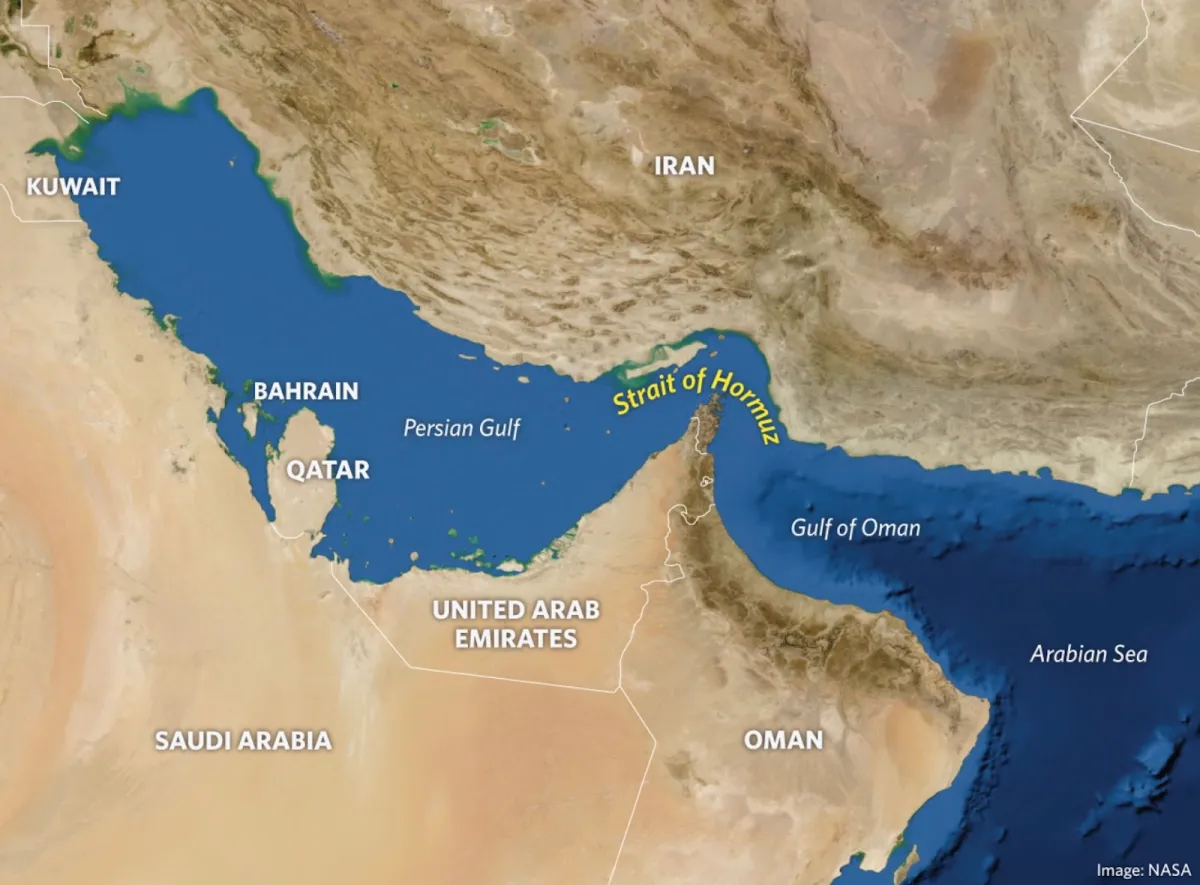
The Strait of Hormuz is the cornerstone of global energy security. It is situated as the narrow gateway between the Persian Gulf and the Gulf of Oman, and it serves as the solitary exit for the world’s most oil-rich region. As the primary artery of the global economy, it facilitates the transit of approximately 20% of the world’s daily oil consumption, alongside a massive volume of Liquefied Natural Gas (LNG) destined for Asian markets.
Iran’s geographical control of the strait’s northern flank enables it to exert disproportionate influence through naval mines, missile batteries, and fast-attack craft. The current crisis has already paralysed maritime commerce, reducing commercial traffic by 70%, with hundreds of tankers at anchor to avoid the risks of signal jamming, detention, or kinetic strikes. This disruption highlights the fragile interdependence of the global system: even a partial blockage quickly triggers supply shortages and extreme price volatility. Furthermore, an extended shutdown would cripple Iran’s own leverage; as the holder of the world’s fourth-largest oil reserves (208 billion barrels), Iran provides 3% to 4% of global crude—largely to China. By closing the strait, Iran has effectively transformed a regional decapitation strike into a globalised conflict.
Calculated Chaos: The Perils of Hegemonic Ambition
The perceived “irrationality” of the US and Israeli strikes has invited a swift deterioration of the global economy. Since the onset of Operation Epic Fury, oil prices have surged by 9%, climbing to $73 per barrel, with analysts projecting a rapid rise to $90 or even $100 if the blockade persists. This inflationary pressure is already straining living costs in developed nations. While OPEC members may attempt to ramp up production to mitigate the deficit, such measures are likely insufficient to cover the sheer volume of barrels currently blocked.
However, a more cynical interpretation suggests that the United States may stand to benefit from this upheaval in its quest for “energy supremacy.” Following the capture of former President Nicolás Maduro in January 2026, the US has effectively seized control of the Venezuelan oil industry. By managing the marketing and distribution of Venezuela’s 300 billion barrels of reserves, the U.S. is positioned to export crude at inflated global prices, diverting revenues into American-controlled accounts under the guise of mutual gain. This strategic posture implies that Washington may be quietly emboldened by the blockade, as high prices enhance the value of Venezuelan exports while simultaneously strangling rivals like Iran.
In sum, the convergence of military aggression and economic warfare has created a perfect storm. While the US and Israel may view these strikes as a necessary check on nuclear proliferation, the resulting blockade of the Strait of Hormuz exposes the inherent cynicism of modern geopolitics. By prioritising regime change and territorial expansion over multilateral stability, these powers have gambled with the foundation of the global trade system. Whether the goal is energy dominance or regional restructuring, the cost of these ambitions is a fractured world economy and a future defined by deepening turmoil.