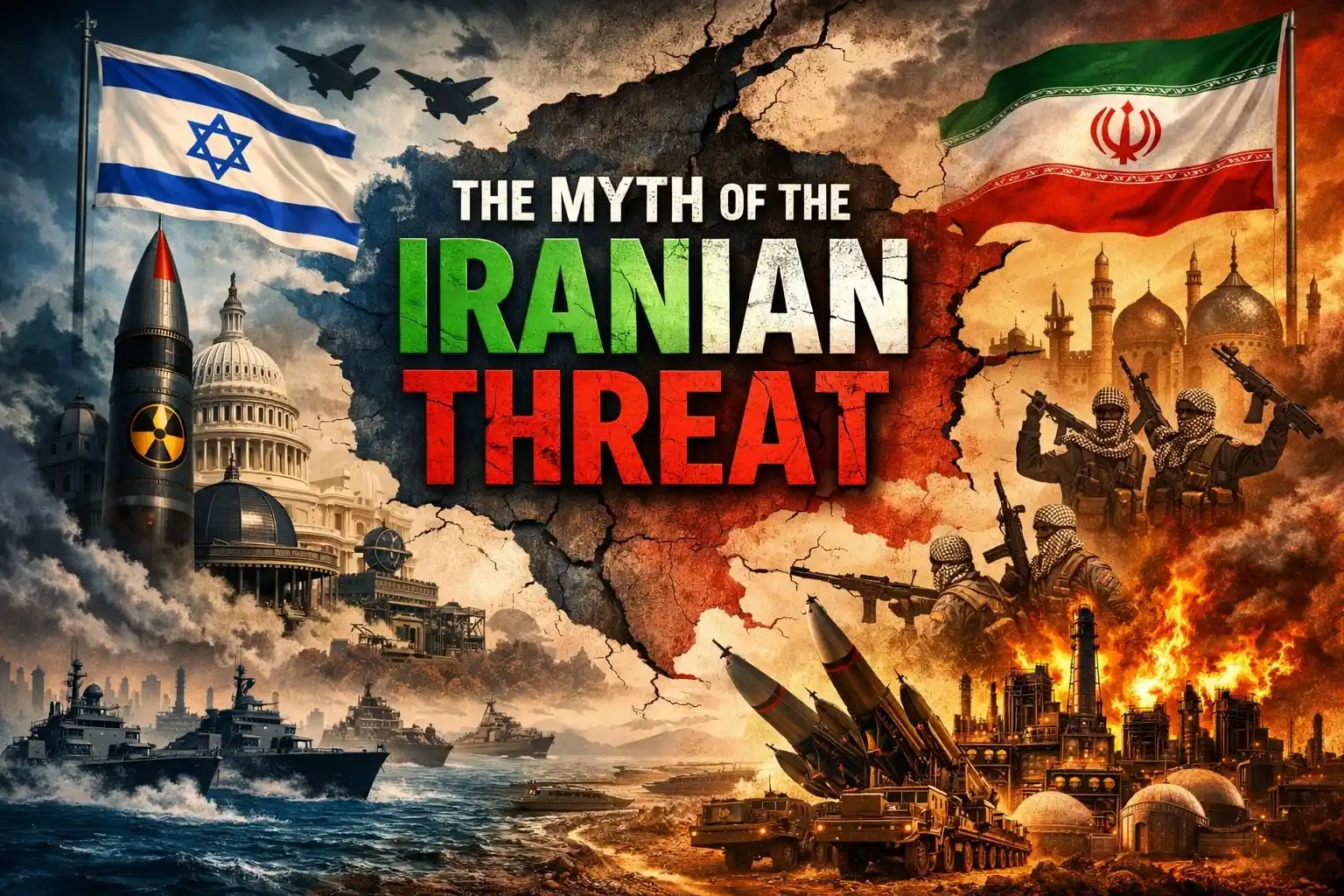
The growing confrontation between the United States, Israel, and Iran in the Middle East is predominantly analysed through the prism of nuclear deterrence and regional power dynamics. However, as illustrated by a recent investigative report by The Guardian, these geopolitical manoeuvres are profoundly animated by religious ideologies and eschatological visions. The revelation that US military personnel are being subjected to extremist Christian rhetoric confirms that the conflict is not merely a strategic necessity, but is being framed as a messianic imperative. This ideological alignment inextricably links military policy to religious Zionism and evangelical Christian doctrines, therefore, prioritising divine prophecy over traditional statecraft.
Christian Nationalism within the US Military Apparatus
The Guardian’s recent reporting brings the startling reality of this ideological penetration into sharp relief. According to the US watchdog Military Religious Freedom Foundation (MRFF) said it has received emailed complaints that US service members were told the war with Iran is meant to “cause Armageddon”, or the biblical “end times”. In official briefings, the conflict has been described as “all part of God’s divine plan,” with explicit references to the Book of Revelation and Armageddon. Most alarmingly, rhetoric from commanding officers has suggested that the US President has been divinely anointed to ignite this conflict to precipitate the return of Jesus Christ. This fusion of theological extremism with active military operations transforms a constitutional military campaign into a religious crusade.
Christian Zionism and US Foreign Policy
This infiltration of apocalyptic theology into the military is a direct extension of Christian Zionism’s broader influence on US foreign policy. This ideology, which posits that the expansion of a Jewish state is a prerequisite for end-times prophecy, commands immense political and financial capital within the United States. Consequently, US diplomacy frequently subordinates objective national security interests to theological mandates. The unquestioning support for territorial maximalism—often echoing the “Greater Israel” vision extending from the Euphrates to the Nile—demonstrates how the current offensive against Iran serves a dual purpose. While ostensibly justified by concerns over nuclear proliferation, the campaign effectively seeks to neutralize regional opposition to religiously motivated territorial ambitions.
Theological Framing in Israel’s Strategy
Parallel to the evangelical influence in Washington, the Israeli strategic calculus is also heavily influenced by religious rhetoric. The infamous Begin Doctrine bears testimony to this fact. The operational framework of the Doctrine—which asserts a preemptive imperative to destroy adversarial nuclear capabilities, as seen in the historic and contemporary strikes on Iranian facilities—is frequently articulated by far-right Israeli leadership as a divine mission. This characterization of regional conflicts as cosmic battles between the “children of light” and “children of darkness” deliberately conflates political adversaries with spiritual evil. This dangerous ideological framing is in direct contradiction with the Islamic teachings, which strictly prohibits disproportionate warfare and emphasizes the profound sanctity of all human life.
In conclusion, the US-Israel military campaign against Iran represents a perilous departure from conventional realpolitik. As The Guardian’s findings illustrate, when the most powerful military apparatuses in the world are guided by commanders who view warfare as the fulfillment of biblical prophecy, the conflict transcends strategic calculation. This eschatological paradigm renders traditional diplomatic negotiation impossible, as peace-making is inherently incompatible with the active pursuit of Armageddon. Acknowledging this deeply entrenched ideological determinant is essential for understanding the severe trajectory of the current crisis, as policies rooted in apocalyptic theology pose an existential threat to regional and global stability.