Skip to content
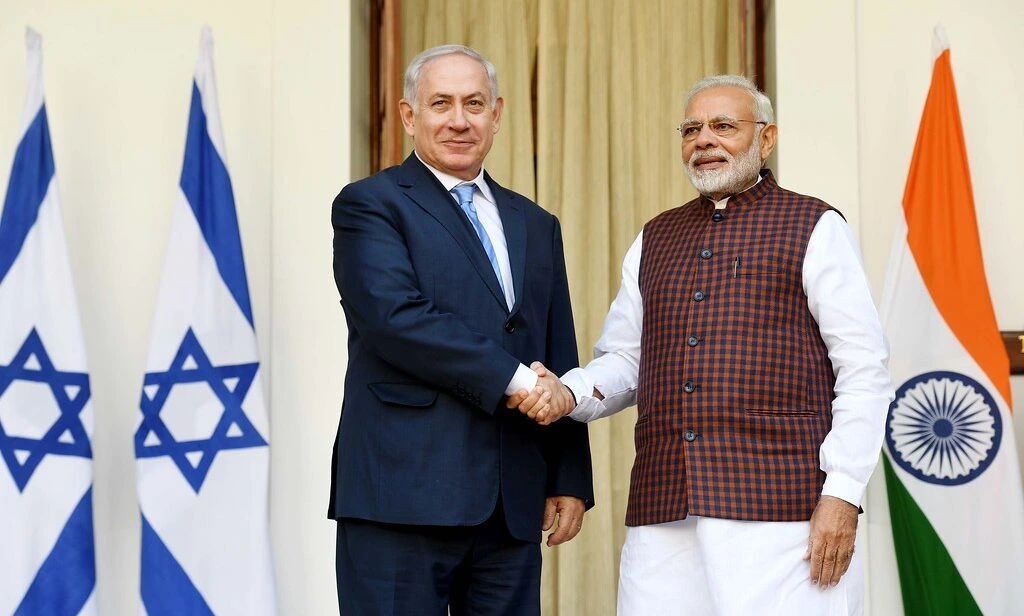
![Modi's visit to France and the US focuses on AI collaboration, strategic partnerships, defense, and trade talks. [Image via AP]](https://southasiatimes.org/wp-content/uploads/2025/02/Paris-Modi-6_1739230446276_1739230456703.webp)
A collaborative approach to the inclusive use of AI and strengthening the India-US partnership will be in focus during Prime Minister Narendra Modi’s two-nation visit to France and the US that began on Monday.
Modi’s visit to France and the US underscores the growing significance of AI in shaping global partnerships and technological collaborations.
Modi has arrived in France, where he will co-chair the AI Action Summit along with French President Emmanuel Macron in Paris on Tuesday. The two leaders will hold bilateral talks before Modi travels to Washington on February 12 for his first meeting with US President Donald Trump in his second term.
In a statement ahead of his departure, Modi said he looked forward to co-chairing the AI Action Summit, where “we will exchange views on collaborative approach to AI technology for innovation and larger public good in an inclusive, secure and trustworthy manner”.
The summit in Paris, the third of its kind, will be attended by world leaders such as US vice president JD Vance and Chinese vice premier Zhang Guoqing and global tech CEOs such as OpenAI’s Sam Altman and Google’s Sundar Pichai. Besides the launch of an AI Foundation, the summit is expected to focus on collaboration to ensure the safe and trustworthy use of AI.
Following the AI Summit, Modi and Macron will travel to the port city of Marseille, where they will hold bilateral talks and inaugurate a new Indian consulate on February 12.
Modi said the bilateral segment of his trip to France will be an opportunity to review progress on the 2047 Horizon Roadmap for the India-France strategic partnership along with Macron.
“We will also travel to the historic French city of Marseille to inaugurate the first Indian consulate in France and also visit the International Thermonuclear Experimental Reactor project, in which India is a member of the consortium of partner countries including France, to harness energy for the global good,” Modi said.
People familiar with planning for the trip said on condition of anonymity that the two sides will unveil a bilateral AI road map, a partnership for collaboration on small modular reactors (SMRs) and other measures aimed at deepening civil nuclear cooperation.
Modi will also pay tribute to Indian soldiers who died during World Wars 1 and 2 at the Mazargues War Cemetery.
From France, Modi will travel to the US at the invitation of Trump.
“I look forward to meeting my friend, President Trump. Although this will be our first meeting following his historic electoral victory and inauguration in January, I have a very warm recollection of working together in his first term in building a Comprehensive Global Strategic Partnership between India and the US,” Modi said.
The visit will be an “opportunity to build upon the successes of our collaboration in his first term and develop an agenda to further elevate and deepen our partnership, including in the areas of technology, trade, defence, energy, and supply chain resilience”, Modi said.
“We will work together for the mutual benefit of the people of our two countries and shape a better future for the world,” he said.
Also See: Modi and Trump Hold First Phone Call Since US Inauguration
Modi’s visit to the US will come a week after an American military flight brought back 104 illegal migrants to Amritsar. Images of deportees in handcuffs and shackles triggered a nationwide outcry and the Indian side is expected to bring up this issue in Washington.
India has already registered its concerns about the US treatment of the deportees, including the shackling of women. The US is currently in the process of sending back close to 600 more illegal migrants to India, including 96 whose nationality has been confirmed by the Indian side.
Trade, investment and energy procurement are expected to figure in the talks between Modi and Trump, who asked India to buy more US-made defence hardware and move towards a “fair bilateral trading relationship” during a recent phone call between the two leaders.
During Trump’s first term, Modi visited the US in 2017 and 2019, and was one of the first world leaders to call Trump and congratulate him after his election victory last year. After Trump’s inauguration, Modi called him again to wish him and the two leaders agreed to meet soon during this conversation. India was represented at Trump’s inauguration by external affairs minister S Jaishankar.
This news is sourced from Hindustan Times and is intended for informational purposes only.


![A view of Islamabad, as evolving regional dynamics reshape Pakistan’s security environment. [Image via Wikimedia].](https://southasiatimes.org/wp-content/uploads/2026/03/Islamabad_top_view.webp)