![Pakistan's remittances surge 34% amid a crackdown on illegal dollar trade, boosting reserves to a 2-year high. [Representational Image via Propakistani]](https://southasiatimes.org/wp-content/uploads/2024/12/Pakistans-foreign-exchange-reserves-e1734335931440.webp)
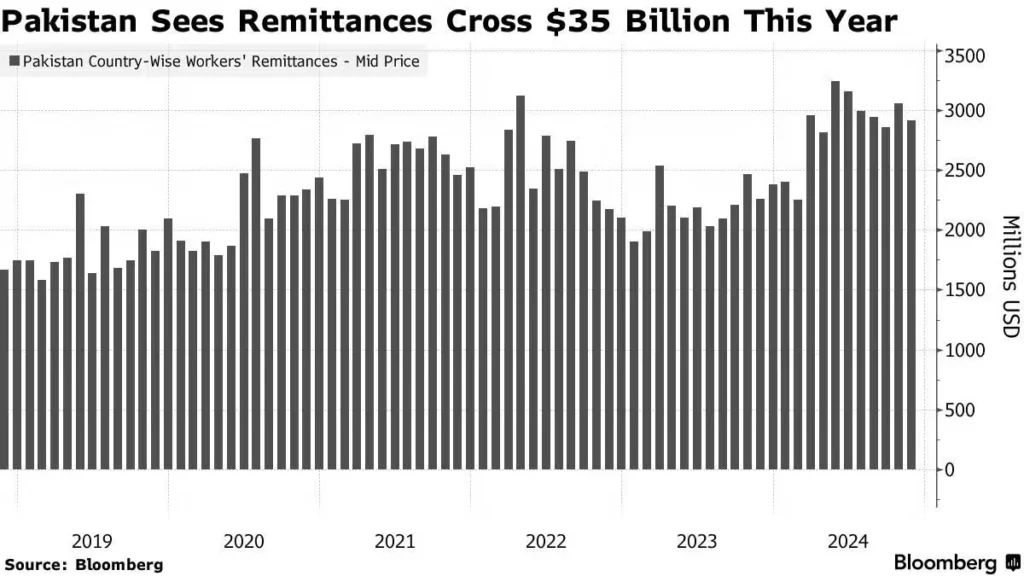
Pakistan’s crackdown on illegal foreign exchange (specifically the dollar trade) is showing signs of success, with remittances expected to reach a record high this year, as per the latest report from Bloomberg.
Central bank figures reveal that the money sent home by overseas workers jumped by 34% to $14.8 billion in the five months leading up to November, compared to the same period last year.
This surge in remittances follows the nation’s intensified efforts to combat the illegal dollar trade. Finance Minister Muhammad Aurangzeb is now forecasting that total remittances will hit an unprecedented $35 billion by the end of the year, a significant increase from the $30 billion recorded last year.
John Ashbourne, emerging-market economist at BMI, a Fitch Solutions company in London said:
The currency reforms do seem to have boosted remittances. This increase might be because remittances that had previously been sent using the black market are now being sent via official channels.
Pakistan’s foreign exchange reserves have seen a significant boost, potentially easing the economic pressures that nearly triggered a default last year. Increased es are likely a key factor, bolstering these reserves and mitigating a critical vulnerability.
This positive development follows a period of stringent economic reforms implemented under the International Monetary Fund’s (IMF) guidance, culminating in a crucial $7 billion loan secured from the multilateral agency in September.
A crackdown on informal dollar trading appears to have redirected transactions into official banking channels, further contributing to the reserve increase. By the end of November, reserves had surpassed $12 billion, reaching their highest level since March 2022.
Also See: Pakistan Cuts Interest Rates to Two-Year Low to Aid Economy
This news is sourced from Propakistani and is intended for informational purposes only.