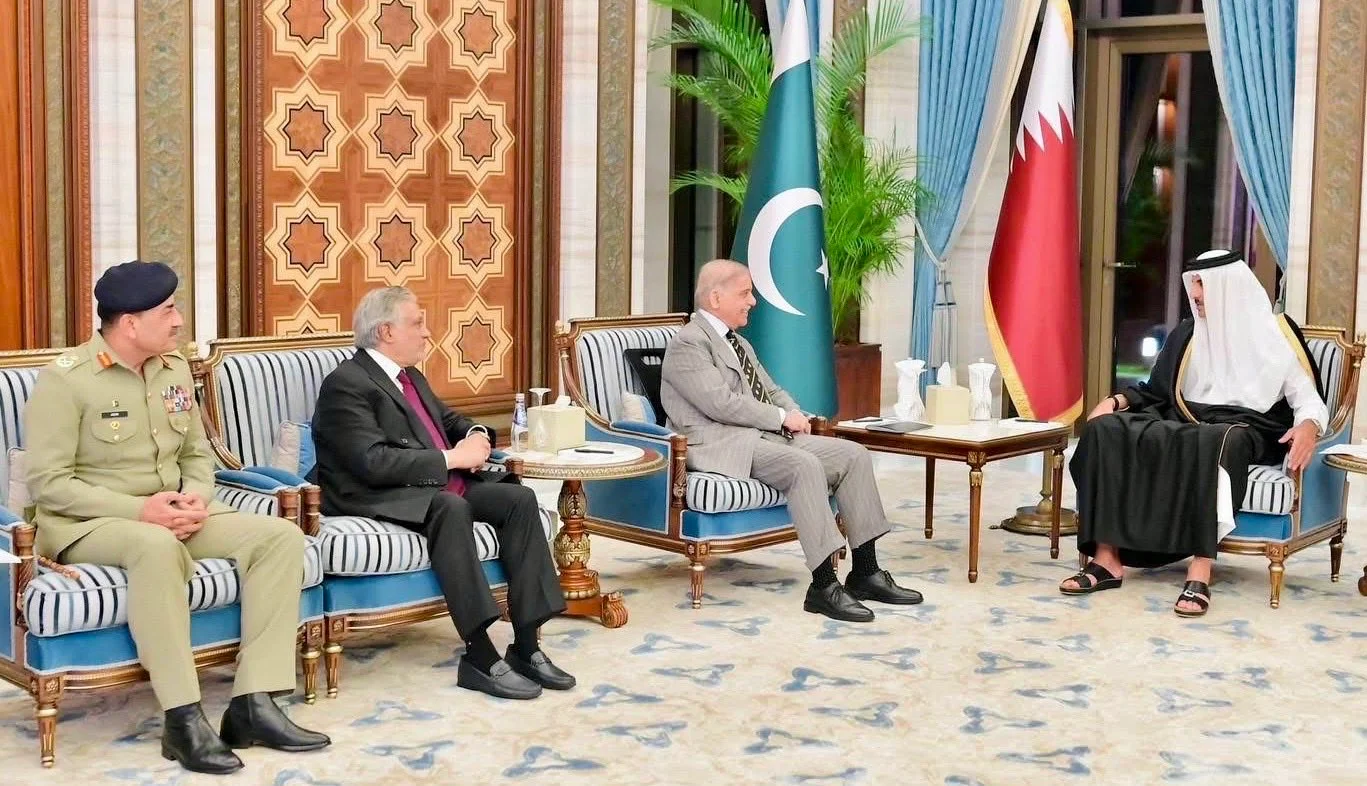
On Saturday, Pakistani Foreign Minister Makhdoom Shah Mahmood Qureshi arrived in the United Arab Emirates for a three-day official visit. Senior officials from the UAE Foreign Ministry and Pakistan\’s Ambassador to the UAE, Afzal Mahmood, greeted the foreign minister upon his arrival at Dubai International Airport. This is Shah Mehmood second visit to UAE in less than five months.
Meeting with Top Officials:
Foreign Minister Qureshi will meet with his counterpart, Sheikh Abdullah Bin Zayed Al Nahyan, and other UAE dignitaries during his visit, according to the Pakistan Foreign Office. The Foreign Minister will also consult with members of the Pakistani diaspora and speak with local and international media.
The Pakistani foreign minister will address important regional and global issues of common concern at these sessions. These will include bilateral ties and multilateral cooperation. Further, also discuss trade and investment cooperation and employment prospects for Pakistani workers. He\’ll speak about regional and global topics of common concern.
Importance of Pakistan in the Region:
“Pakistan and the UAE enjoy strong fraternal ties, rooted deep in common faith and shared history and values. High-level visits between the two countries have played a pivotal role in providing further impetus to strengthening bilateral cooperation and collaboration on a wide range of issues,” reads the Pakistan Foreign Office statement.
Enhancing the Relationship:
Qureshi\’s visit is part of a series of high-level meetings between Pakistan and the United Arab Emirates. The visit is expected to further boost Pakistan\’s and the UAE\’s long-standing friendship. As part of Pakistan\’s diplomatic attempts to reach an agreement on the Afghan crisis, Qureshi will travel to Iran, Qatar, and Turkey. The UAE has the second-largest Pakistani population outside of Pakistan.
Jaishankar Controversy:
The Indian government declared that External Affairs Minister Dr S Jaishankar will be in Abu Dhabi for a day trip on April 18 as soon as Qureshi arrived in the Gulf region. Qureshi and Jaishankar will therefore be in Abu Dhabi at the same time. If the two foreign ministers meet, neither side has sent an official announcement.
According to some sources, the UAE was mediating between the two nations. There were also claims that Pakistani and Indian senior intelligence officials met in Dubai in January, resulting in a truce between the two countries along the Line of Control (LoC).


![Ukrainian and Russian flags with soldier silhouettes representing ongoing conflict. [Image via Atlantic Council].](https://southasiatimes.org/wp-content/uploads/2026/02/2022-02-09T000000Z_1319661209_MT1NURPHO000HXCNME_RTRMADP_3_UKRAINE-CONFLICT-STOCK-PICTURES-scaled-e1661353077377.jpg)