Pakistani Taliban Claim Responsibility for Killing 10 Security Personnel

10 Pakistani security personnel were killed in a militant attack near Dera Ismail Khan, claimed by the TTP in retaliation.

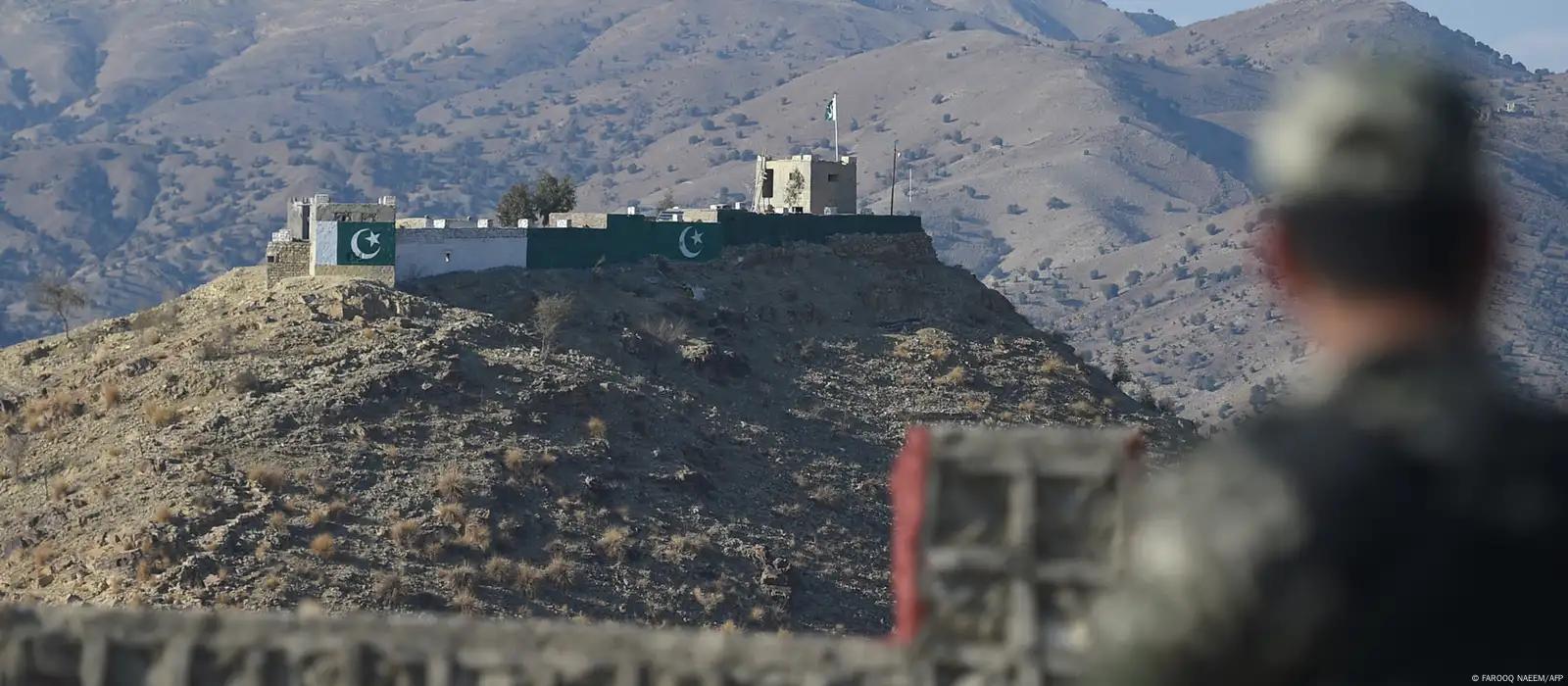
Militants killed at least 10 Pakistani security personnel. They attacked the personnel’s outpost, as reported by AFP and Reuters news agencies on Friday.

The militants launched the attack near the northwest city of Dera Ismail Khan late on Thursday. Reuters reported that Ali Amin Khan Gandapur, chief minister of the northwestern province of Khyber Pakhtunkhwa, confirmed the attack.

Also See: Taliban attack Police HQ in Karachi Pakistan

Information about the attack

“The intense exchange of fire lasted for nearly an hour. Militants martyred 10 Pakistani Frontier Constabulary security personnel and wounded seven during the attack,” a senior intelligence officer told AFP on condition of anonymity.

Intelligence sources estimate that around 20 to 25 militants participated in the assault. This attack occurred about 70 kilometers (around 43 miles) east of the Afghan border.

Pakistani Taliban claim responsibility

The Pakistani Taliban, or Tehreek-e-Taliban Pakistan (TTP), claimed responsibility for the attack in a statement and said it was in retaliation for the killing of senior leader Ustad Qureshi.

Pakistan’s military reported that a military operation in the district of Bajaur killed Qureshi along with eight other militants.

There has been an increase in militant attacks in Pakistan since the Afghan Taliban seized power in 2021. The Pakistani group — which pledged allegiance to its Afghan counterpart but maintains its own command structures — has been carrying out attacks mostly targeting security forces.

The TTP historically has roots in Afghanistan and shares the same ideology as the Afghan Taliban.

Islamabad says the TTP uses Afghanistan as a base and believes the ruling Taliban administration has been sheltering the group near the border, something the Afghan Taliban has denied.

In September, Pakistan’s permanent representative to the United Nations, Munir Akram, warned the Security Council that the TTP could soon become the “spearhead of global terrorist goals,” allying itself with groups such as al-Qaeda.

This news is sourced from DW and is intended for informational purposes only.

News Desk

Your trusted source for insightful journalism. Stay informed with our compelling coverage of global affairs, business, technology, and more.

Recent

AQAP’s Threat to China: Pathways Through Al-Qaeda’s Global Network

AQAP’s Threat to China: Pathways Through Al-Qaeda’s Global Network

AQAP’s threat against China marks a shift from rhetoric to execution, rooted in Al-Qaeda’s decentralized global architecture. By using Afghanistan as a coordination hub and relying on AQIS, TTP, and Uyghur militants of the Turkistan Islamic Party as local enablers, the threat is designed to be carried out far beyond Yemen. From CPEC projects in Pakistan to Chinese interests in Central Asia and Africa, the networked nature of Al-Qaeda allows a geographically dispersed yet strategically aligned campaign against Beijing.

Read More »
The Enduring Consequences of America’s Exit from Afghanistan

The Enduring Consequences of America’s Exit from Afghanistan

The 2021 US withdrawal from Afghanistan was more than the end of a long war, it was a poorly executed exit that triggered the rapid collapse of the Afghan state. The fall of Kabul, the Abbey Gate attack, and the return of militant groups exposed serious gaps in planning and coordination.

Read More »
The Afghan Crucible

The Afghan Crucible

Recent reporting underscores Afghanistan’s transformation into a strategic hub for transnational jihadist networks. Far from being a localized security problem, the Afghan landscape now functions as an ideological, logistical, and digital anchor linking extremist affiliates across Africa, Southeast Asia, and beyond, signaling the collapse of regional containment and the rise of a globalized threat architecture.

Read More »
Economic Statecraft and the New Geography of Power in Regional Politics

Economic Statecraft and the New Geography of Power in Regional Politics

Strategic competition has moved beyond decisive wars toward a subtler synthesis of economic leverage, proxy networks, and calibrated force. Infrastructure, finance, and trade routes now function as instruments of power, quietly reshaping regional orders while preserving the façade of restraint. In this environment, security is no longer confined to the battlefield but embedded in supply chains, data networks, and development choices, forcing states to rethink deterrence, sovereignty, and resilience.

Read More »
The Manufacturing of a False Equivalence

The Manufacturing of a False Equivalence

As scrutiny mounts over the Taliban’s tolerance of TTP sanctuaries, Kabul has attempted to deflect blame by alleging that ISIS-K operates from Pakistan. This false equivalence ignores the historical origins of ISIS-K in eastern Afghanistan, its sustained campaign of violence against Pakistan, and verified intelligence showing that the group’s operational depth remains rooted inside Afghan territory.

Read More »