![Pakistan and UAE sign multiple MoUs to boost trade, investment, and cultural cooperation during UAE FM's visit. [Image via Ministry of Foreign Affairs]](https://southasiatimes.org/wp-content/uploads/2025/04/4594520-951930130.png)
ISLAMABAD: Pakistan and the United Arab Emirates on Monday signed multiple memoranda of understanding (MoUs), including to set up a joint committee for consular affairs and a UAE-Pakistan Business Council.
The agreements were inked during a two-day visit to Islamabad by UAE Deputy Prime Minister and Minister of Foreign Affairs Sheikh Abdullah bin Zayed Al Nahyan.
The UAE is Pakistan’s third-largest trading partner after China and the United States, and a major source of foreign investment, with over $10 billion invested in the last two decades. Approximately 1.8 million Pakistanis reside in the UAE, forming the second largest expatriate group there after Indians. Pakistanis contribute significantly to the UAE’s economy and are seen as a source of livelihood for many families in Pakistan.
“Prime Minister emphasized upon the need to enhance cooperation in trade, investment, energy, and people-to-people contacts,” Pakistani Premier Shehbaz Sharif’s office said in a statement after he met the visiting UAE dignitary.
“He reiterated Pakistan’s strong desire to elevate the excellent political ties between Pakistan and the UAE to a mutually beneficial economic partnership.”
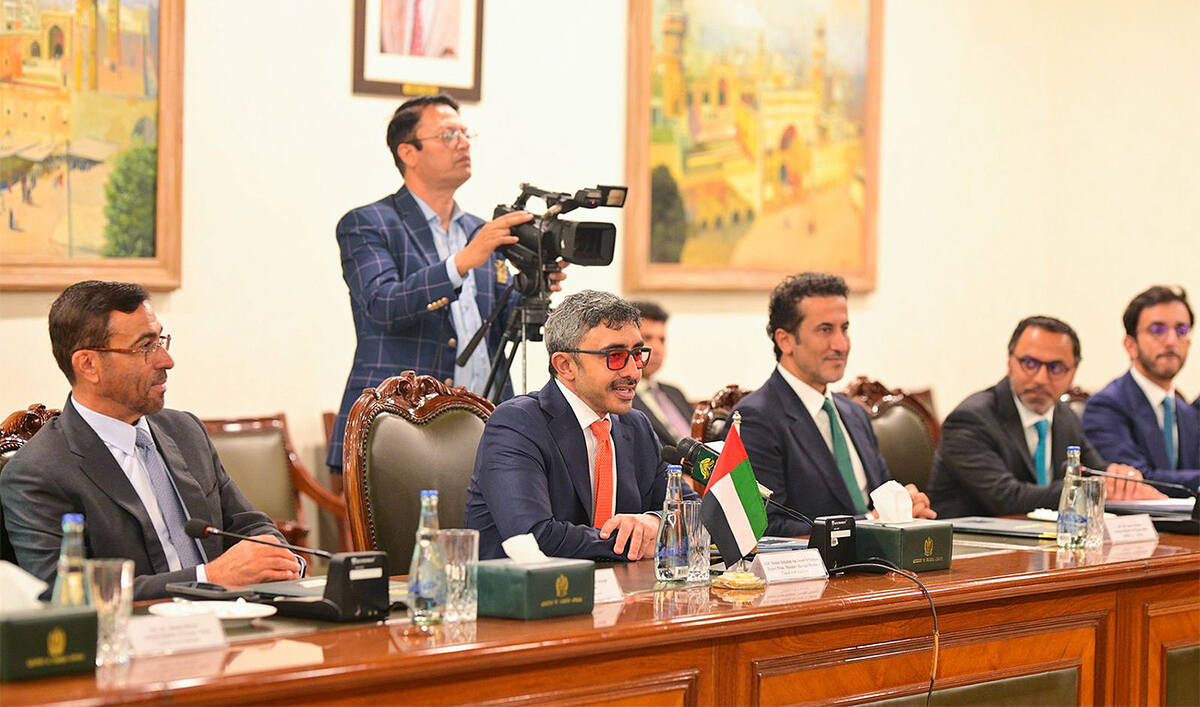
The two leaders also discussed the regional situation and global developments during the meeting.
Also See: UAE to Grant 5-Year Visas to 100,000 Pakistanis: Al-Zaabi
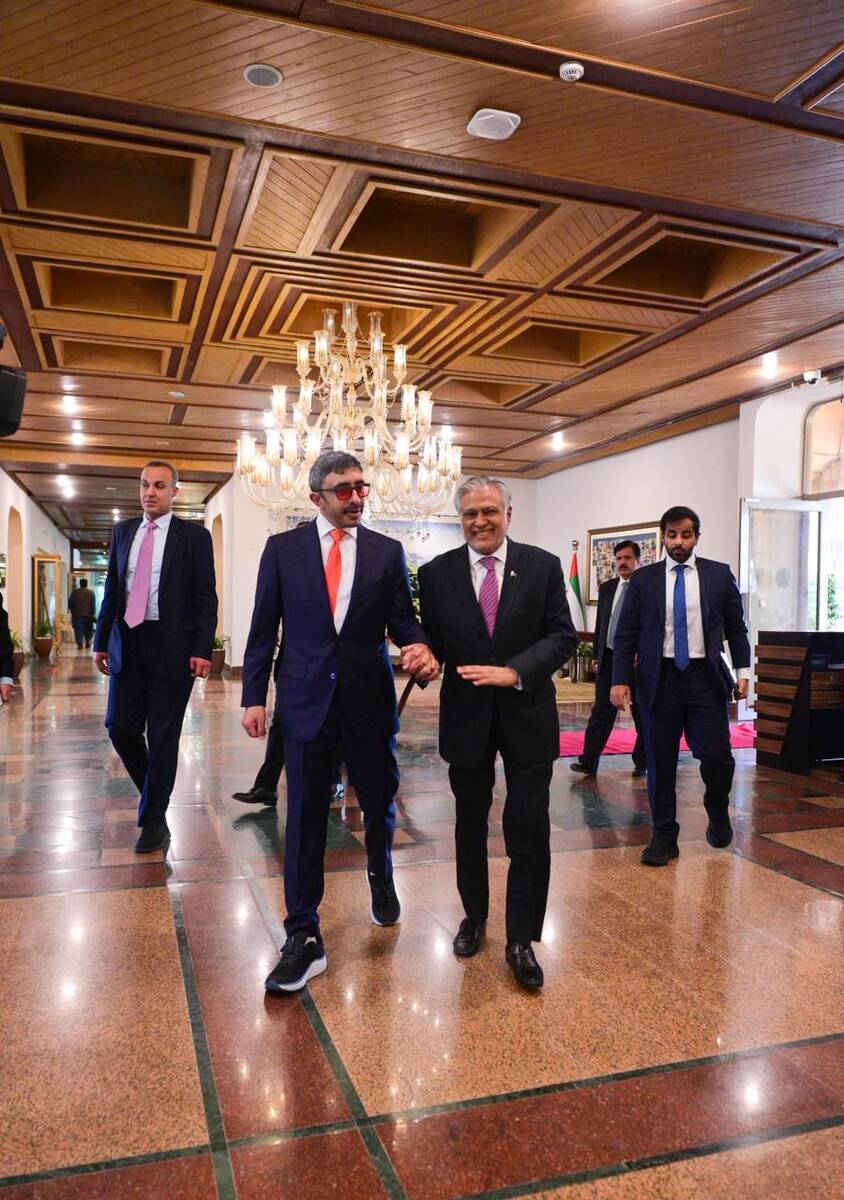
Earlier, Al Nayhan addressed a joint press conference with Pakistani deputy prime minister Ishaq Dar, who is also the foreign minister.
“I must say that our relationship has been growing on a good pace,” Al Nayhan said. “I think both our leaders, the people of Pakistan and the UAE do want to see more development in the relationship.”
The UAE deputy prime minister said relations between the two countries, over the past few years, have been “moving faster than they have for a while.”
“And I really look forward that the good spirit that has been moving the relationship in the last few months would continue on so many different cycles, if it’s trade, investment, aviation,” Al Nayhan added.
Dar and Al Nayhan also oversaw the signing of MoUs in multiple sectors, including one between the UAE ministry of culture and the culture division of Pakistan to promote cooperation in the culture sector. Another MoU was signed between the Federation of UAE Chambers of Commerce and Industry and the Federation of Pakistan Chamber of Commerce and Industry to set up a UAE-Pakistan Joint Business Council, while a third was for the establishment of a joint committee for consular affairs.
The setting up of the consular affairs committee comes days after officials in Pakistan and the UAE confirmed that a months-long visa rift had been resolved and Pakistanis could now apply for five-year visas to the Emirates. Previously, Pakistanis had increasingly reported visa rejections from the UAE and an overall decrease in employment opportunities, allegedly due to their lack of respect for local laws and customs, as well as their participation in political activities and sloganeering while abroad.
Last year, the Pakistan Business Council (PBC) was set up at the Sharjah Chamber of Commerce and Industry, aiming to increase Pakistan’s bilateral trade volume with the UAE to $40 billion within three fiscal years, according to the head of the new body.
Pakistan and the UAE have also moved in recent months to strengthen trade ties in other ways.
The two sides signed accords in mining, railways, banking and infrastructure in February during the Abu Dhabi crown prince’s visit to Pakistan. Last year, Pakistan and the UAE signed deals worth more than $3 billion covering railways, economic zones and infrastructure development.
This news is sourced from Arab News and is intended for informational purposes only.

Your trusted source for insightful journalism. Stay informed with our compelling coverage of global affairs, business, technology, and more.