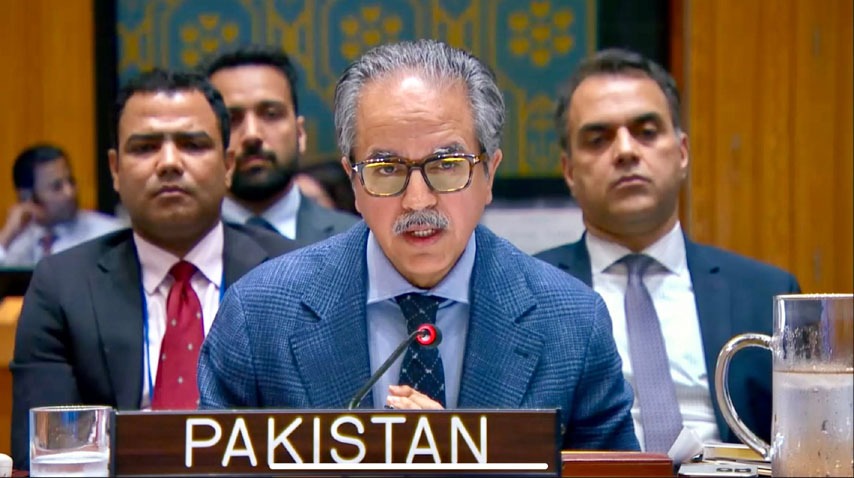
![Pakistan to engage in "constructive diplomacy" with US over trade tariffs, says Ambassador Rizwan Saeed Sheikh. [Image via Foreign Office website/File]](https://southasiatimes.org/wp-content/uploads/2025/04/1297783_7093100_Rizwan-Saeed_akhbar.webp)
ISLAMABAD: After the imposition of trade tariffs on Pakistan by the US government, Ambassador Rizwan Saeed Sheikh said on Thursday that Islamabad would engage in “constructive diplomacy” with Washington to negotiate on the matter.
Sheikh, speaking on Geo News programme “Aaj Shahzeb Khanzada Kay Sath”, he said that he was scheduled to meet the US trade representative today where both sides would discuss the matter related to the newly imposed trade tariff.
Sheikh clarified that the imposition of trade tariffs by the US government was not aimed at Pakistan alone but at many other countries having trade links with the US. He added that it was already predicted before it came into effect.
Commenting on the Trump administration’s decision, the envoy said Islamabad would be among all other countries that would initiate dialogue with Washington. He added that Islamabad will do constructive diplomacy with the US authorities.
Pakistan considered the US as its most important trading partner. If Islamabad filters out those countries in terms of trade volume, then the US would be top of the list, the envoy said adding that the US is an important market for Pakistan.
He also emphasised that trade ties remained a key dimension in bilateral relations between both countries which stayed constant in all phases of the history.
Pakistan is also seeking enhancement of trade volume with the US and expects good results from the upcoming negotiations, the ambassador said.
He detailed that the talks will be held under a comprehensive process under the Trade and Investment Framework Agreements (TIFAs) where the matters related to tariffs will be discussed.
Both sides are to hold talks on enhancing bilateral cooperation in diverse fields, especially the IT sector as Pakistani youth are ranked second after the US in freelancing, he said.
He also said that Prime Minister Shehbaz Sharif’s announcement to reduce electricity rates would also help Pakistan to compete with other countries in product exports as the move would significantly reduce the production cost for local industries.
Also See: Trump Announces 25% Tariffs On Cars, Ramping Up Trade War
Responding to a query related to potential visa and travel restrictions on Pakistanis, Ambassador Sheikh admitted that the US government was reviewing its visa and travel policies, however, no final decision has been taken by the Trump administration so far.
When questioned about whether the US government conveyed any reservations regarding the Pakistani diaspora, Sheikh replied that Pakistan has always cooperated with the US and will continue cooperating with US authorities on international laws in case of any reservations.
This news is sourced from The News and is intended for informational purposes only.

Your trusted source for insightful journalism. Stay informed with our compelling coverage of global affairs, business, technology, and more.