Outrage in Tamil Nadu over Cases of Custodial Death

Outrage in Tamil Nadu over Cases of Custodial Death

The sad demise of a father and son in police custody in Santhakulam, Thoothukudi district, Tamil Nadu, has left many shocked. Mr. P. Jayaraj, 58, and his son Mr. J. Bennix, 31, were detained by the police last Friday (June 19) for allegedly defying lockdown measures and keeping their shop open after 8 pm. Mr. Jayaraj was summoned to the station and detained. When his son, Mr. Bennix went to inquire about his father, the police detained him too.

The duo was kept at the sub-jail of Kovilpatti for two days. The sub-jail is around 100km away from their residence. Relatives allege they were beaten brutally by the police while they were retained.

Eyewitnesses, family, and friends, saw the two men when they were brought to the government hospital for a general check-up. This was in the morning on June 20th, before a magistrate approved an extension of their police custody.

“Their legs and hands were swollen, and Bennix was bleeding from the buttocks. (Jayaraj) had bad injuries in his knees. The police even asked for new lungis (sarongs) because the ones they wore were bloody,” said Mr. S. Rajaram, a lawyer, and Mr. Bennix’s friend.

A police complaint, however, alleges that Mr. Bennix and Mr. Jayaraj “violated the lockdown, and picked a fight with and assaulted the police.” It also states that they “rolled on the ground and injured themselves.”

The father-son duo died in the hospital between the evening of the 22nd and the morning of the 23rd of June. The family of the deceased is accusing the police of sexual assault and custodial murder.

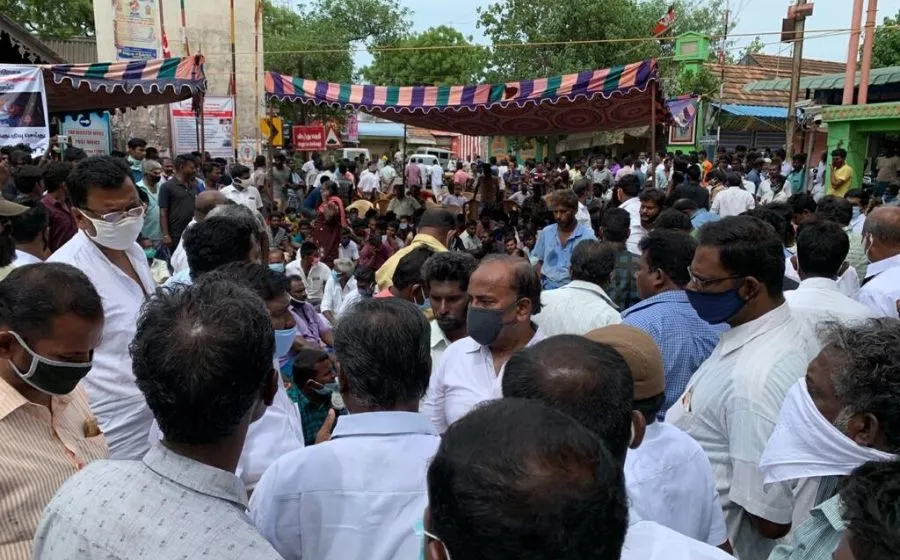
Angry traders in Santhakulam closed their shops on June 24 and staged protests.  There are rising demands for an inquiry against the police officials involved. Soon after the strike, two sub-inspectors were suspended and 12 other policemen transferred.

The Madurai bench of the Madras High Court has demanded a judicial magistrate’s inquiry report. Post-mortems took place on Thursday and were recorded. The deaths have sparked outrage across Tamil Nadu. Film director Karthik Subbaraj, actors Jayam Ravi and Jiiva, and singer Suchitra took to twitter demanding urgent action against the police officials.

Mr. Jayaraj is survived by his wife and three daughters. Chief Minister, E. Palaniswami announced a donation of 4 million rupees to them and a government job for a family member.

Shocking data from India’s National Human Rights Commission show nearly 1,400 people died in police custody in the last decade. A 2016 Human Rights Watch report said that nearly 600 people died in police custody, between 2010 and 2015, but no police officer was ever convicted.


News Desk

Your trusted source for insightful journalism. Stay informed with our compelling coverage of global affairs, business, technology, and more.

Recent

A critical analysis of Drop Site News’ report alleging a UK–Pakistan “swap deal,” exposing its reliance on anonymous sources, partisan framing, and legally impossible claims.

Anonymous Sources, Big Claims, Thin Ground

A recent Drop Site News report claims a covert UK–Pakistan exchange of convicted sex offenders for political dissidents. But a closer look shows the story rests on hearsay, anonymous insiders, and a narrative shaped more by partisan loyalties than evidence. From misrepresenting legally declared propagandists as persecuted critics to ignoring the legal impossibility of such a swap, this report illustrates how modern journalism can slip into activism. When sensational claims outrun facts and legality, credibility collapses, and so does the line between holding power accountable and manufacturing a story.

Read More »
A sharp critique of Zabihullah Mujahid’s recent evasive remarks on the TTP, exposing Taliban hypocrisy and Afghan complicity in cross-border militancy.

Zabihullah Mujahid’s Bizarre Statement on TTP: A Lesson in Hypocrisy and Evasion

Zabihullah Mujahid’s recent statement dismissing the TTP as Pakistan’s “internal issue” and claiming Pashto lacks the word “terrorist” is a glaring act of evasion. By downplaying a UN-listed militant group hosted on Afghan soil, the Taliban spokesperson attempts to deflect responsibility, despite overwhelming evidence of TTP sanctuaries, leadership, and operations in Afghanistan. His remarks reveal not linguistic nuance, but calculated hypocrisy and political convenience.

Read More »
Beyond the Rhetoric: What Muttaqi’s Address Reveals About Afghan Policy

Beyond the Rhetoric: What Muttaqi’s Address Reveals About Afghan Policy

Interim Foreign Minister Amir Khan Muttaqi’s recent address sought to reframe Afghanistan’s strained ties with Pakistan through a narrative of victimhood and denial. From dismissing cross-border militancy to overstating economic resilience, his claims contradict on-ground realities and historical patterns. A closer examination reveals strategic deflection rather than accountability, with serious implications for regional peace and security.

Read More »
We Want Deliverance

We Want Deliverance

Political mobilization in South Asia is not rooted in policy or institutions but in a profound yearning for deliverance. From Modi’s civilizational aura in India to Imran Khan’s revolutionary moral narrative in Pakistan, voters seek not managers of the state but messianic figures who promise total transformation. This “Messiah Complex” fuels a cycle of charismatic rise, institutional erosion, and eventual democratic breakdown, a pattern embedded in the region’s political psychology and historical imagination.

Read More »