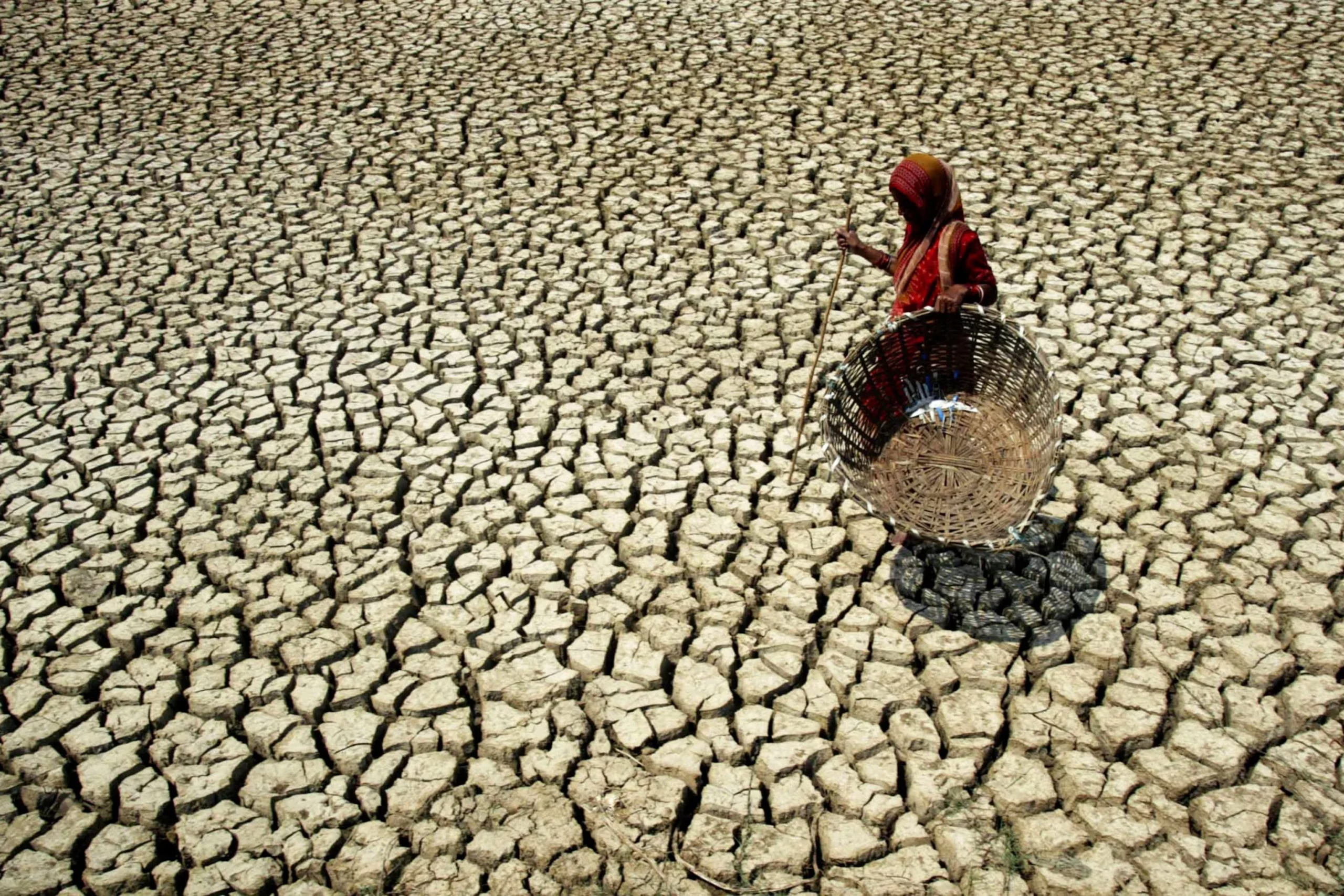
South Asian countries fall in the top 20 most vulnerable countries in the Climate Risk Index 2026 . Yet, at COP30 this year, these highly vulnerable countries failed to form a South Asian bloc to negotiate. Granted that the COPs have repeatedly failed to truly be inclusive to those most affected by climate change, but it is precisely this power imbalance that stronger regional blocs can help change. Some regional bodies understand this, while other countries try to form smaller blocs, like Bangladesh, Bhutan and Nepal. However, these efforts fall flat in front of the herculean task of negotiating with the giants in the Global North.
South Asia has been on the frontlines of climate change for nearly two decades now. From the receding glaciers of the Himalayas to rising seas threatening the Maldives. From Pakistan’s catastrophic floods, to Bangladesh’s salinity crisis, and from deadly heatwaves in India to landslides in Nepal, the climate crisis is reshaping the region with unprecedented force. These impacts are transboundary, indifferent to borders and sovereignty, the 2025 monsoon flooding in India and Pakistan have made this clear.
Despite this, South Asia remains one of the least regionally integrated regions in the world. Intra-regional trade in South Asia makes up only 5% of the entire region’s trade, and initiatives to promote integration, such as South Asian Association for Regional Cooperation (SAARC), SAARC Preferential Trade Agreement (SAPTA), and South Asian Free Trade Area (SAFTA), have repeatedly failed. Despite centuries of shared history, culture, and trade, the subcontinent has failed to build the institutional and political capacity to act collectively. Climate change now exposes the true cost of this fragmentation: without regional cooperation, South Asia will remain underfunded, underprepared, and unable to negotiate effectively on the global stage or with countries in their own region.
The argument is clear. South Asia needs regionalism to survive the climate crisis. But historic divisions and contemporary elites, both within the region and in the Global North, act as barriers, benefiting from disunity while ordinary people pay the price.
On paper, South Asia appears a natural candidate for regional integration. The subcontinent was historically an interconnected space of trade, migration, and cultural exchange, where rivers, monsoons, and mountain ranges tied communities through thousands of years of intertwined history. The violent history of colonialism, ending in a bloody Partition in 1947 fractured this common space into rival sovereignties. The rivalry between India and Pakistan, rooted in both security dilemmas and elite political utility, has poisoned nearly every regional initiative.
Climate impacts, however, are inherently regional. The Himalayan glaciers are melting at record speed, creating glacial lake outburst floods that imperil Nepal, Bhutan, India, and Pakistan simultaneously. Air pollution and extreme heat waves spill across borders, producing shared health crises that no single state can manage. No national policy, no matter how ambitious, can tackle such interconnected threats alone.
At the same time, the era of bilateral development aid is fading, replaced by competitive climate finance, where funds such as the Green Climate Fund (GCF) increasingly prioritize large-scale, cross-border projects. Africa, through the African Development Bank, and Southeast Asia, through ADB’s ASEAN Catalytic Green Finance Facility, have positioned themselves to absorb these resources effectively. South Asia, by contrast, lacks any credible regional pipeline of projects. Its countries compete against one another, often with overlapping or duplicative proposals, leaving billions of dollars untapped.
South Asia’s own political and economic elites profit from the status quo. National political classes use regional rivalries, particularly between India and Pakistan, to consolidate domestic legitimacy, even at the cost of regional cooperation. Economic elites profit from protectionism and fragmented markets, while development-sector elites thrive on bilateral donor competition, consulting contracts, and projectized aid flows. The Global North also benefits. A divided South Asia is easier to negotiate with bilaterally, easier to discipline through conditionalities, and less able to collectively demand structural reform in climate finance. The shift from traditional aid to competitive climate finance mechanisms only intensifies this dynamic, leaving weaker, divided regions at a disadvantage.
The cost of non-cooperation is borne not by elites, but by ordinary people: farmers losing crops to floods, women walking farther for water, urban poor suffocating under heatwaves, and migrant laborers displaced by disasters.
Climate must become the entry point for a regional rethink. If security and trade have failed to galvanize integration, the urgency of climate change offers both necessity and opportunity. This would mean reviving SAARC or creating a new climate-focused bloc. A South Asia Climate Finance Facility, modeled on Africa50 or ASEAN’s green finance platform, could pool resources, aggregate smaller projects, and negotiate collectively with international funds. Regional mechanisms for adaptation and disaster preparedness, such as shared early-warning systems, basin-wide water governance, coordinated disaster response, and replication of successful models from other regions would not only save lives but also demonstrate the concrete value of integration.
South Asia cannot continue to frame climate change as a purely national issue when its rivers, air, monsoons, and disasters cut across every border. The question is not whether integration is politically convenient, but whether survival is possible without it.
Yes, the Global North must be held accountable for its broken climate finance promises. But South Asia’s political, economic, and development-sector elites must also face scrutiny for clinging to myths of sovereignty while their people suffer. Climate change is the ultimate test of whether South Asia can act like a region. If it cannot unite to confront a threat that transcends every boundary, then it will remain defined by collective vulnerability and collective failure.
Disclaimer: The views expressed in this article are the author’s own. They do not necessarily reflect the editorial policy of the South Asia Times.