A nation that forgets its heroes is condemned to oblivion.
In July 2024, the streets of Dhaka witnessed a massive political shift that challenged the dominant story told by the Bangladeshi state. Amidst the tear gas and the roar of a generation rising against authoritarian rule, a chant erupted that shook the very foundations of the country’s founding myth: “Tui ke? Ami ke? Razakar, Razakar!” (Who are you? Who am I? Razakar, Razakar!).
For over five decades, Razakar was the worst insult in Bengali politics. It was a label used to dehumanize anyone who questioned the secular-nationalist history of 1971, serving as a synonym for traitor and enemy. Yet, the university students fighting to take down Sheikh Hasina’s regime reclaimed this slur, wearing it as a badge of defiance against a state that had used history to suppress them.
This slogan did more than unseat a dictator, it accidentally forced a rethink of history. It demands a fresh look at the political actors who originally bore that title, not through the lens of the victors’ justice, but through an analysis of their own beliefs. It requires us to examine the groups who stood for a united Pakistan, what drove them, and how they were systematically erased by the very state they fought to save.
The Ideological Vanguard and the Great Betrayal
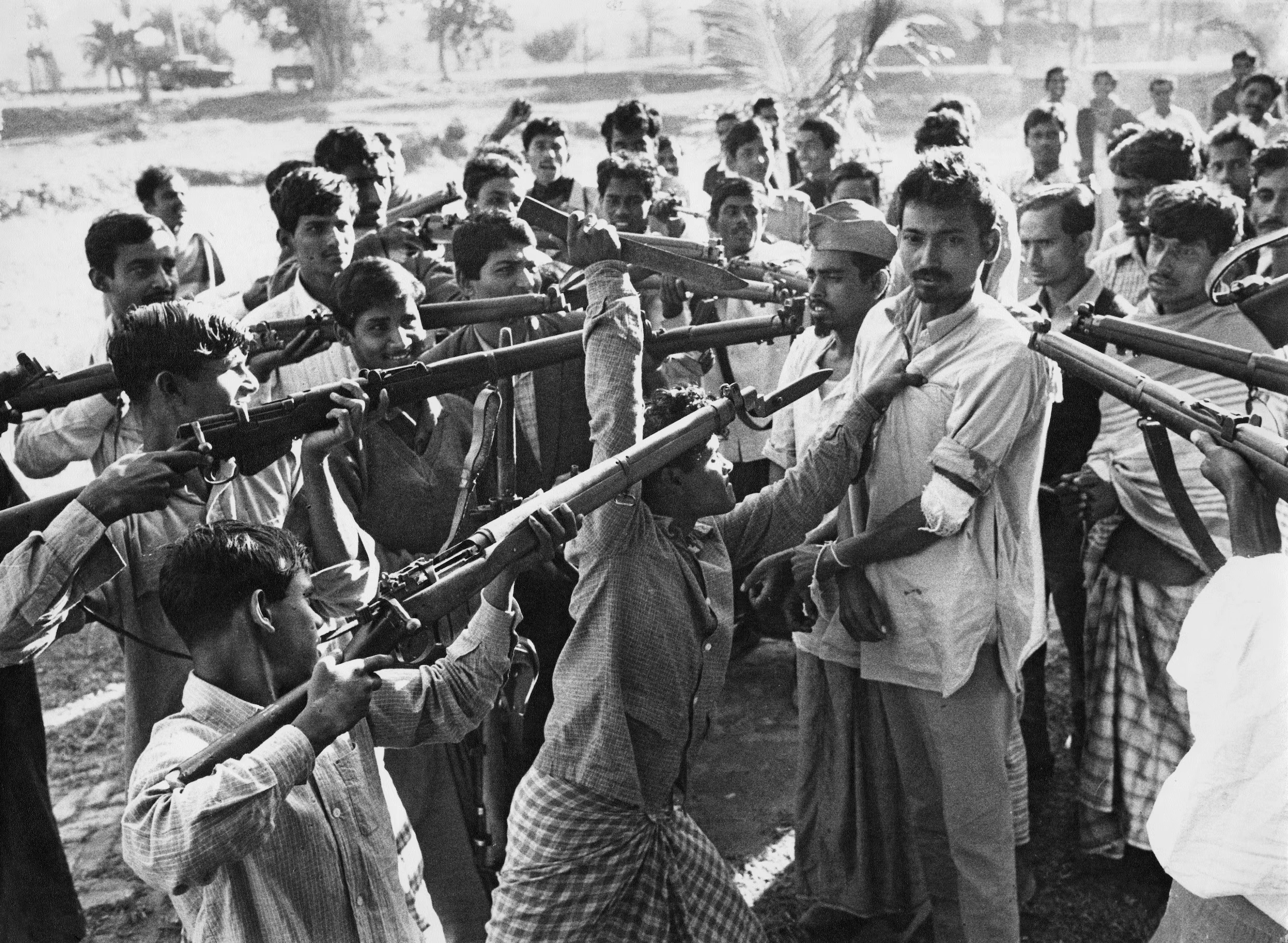
To understand the role of pro-Pakistan elements in 1971, we must look past the cartoonish image of the mercenary. The main story told in Bangladesh, and increasingly in a forgetful Pakistan, is that the Razakars, Al-Badr, and Al-Shams were just hired thugs of the Pakistan Army. This simple view ignores the deep ideological commitment that motivated tens of thousands of Bengalis.
These were not mercenaries, they were the ideological anchors of the state. Groups like the Jamaat-e-Islami, the Muslim League, and the Nizam-e-Islam Party viewed the conflict not as a fight for freedom, but as a rebellion supported by India aimed at breaking up the Idea of Pakistan. For them, the Two-Nation Theory was a sacred promise, and the breakup of the country was seen as a disaster for the Muslim world.
This distinction is most structurally evident in the formation of the Al-Badr. Unlike the Razakars, which functioned as a broad and often loosely organized auxiliary force, Al-Badr was a strictly regimented paramilitary unit derived directly from the Islami Chhatra Sangha (ICS), the student wing of Jamaat-e-Islami. The group was formally organized in May 1971, initially in Mymensingh before expanding its operations nationwide.
The organization maintained a distinct hierarchy separate from the standard military command. Recruitment was selective, prioritizing educated youth from colleges and universities over general volunteers. Its command structure mirrored the discipline of its parent organisation, with specific commanders appointed for districts and subdivisions who coordinated with the Pakistan Army while retaining their own organizational identity. They named themselves after the Battle of Badr, symbolizing a small, disciplined force fighting for an ideological cause against superior numbers. This was not a chaotic mob, it was a mobilized intelligentsia that provided critical intelligence, logistical support, and defense of key installations.
The genealogy of this sacrifice can be traced to the polarization of the 1960s, epitomized by the death of Abdul Malek, a student at Dhaka University. His killing by secular nationalists was not merely an isolated tragedy but a watershed moment that crystallized the violent ideological schism within campus politics. Malek’s martyrdom established a crucial precedent. It demonstrated that this cadre was mobilized by an existential commitment to their ideology well before the onset of formal hostilities.
This same conviction drove thousands of other volunteers to join the war. Operating outside the logic of mercenary warfare, they were engaged in a civil war within a war. Their actions were a manifestation of their belief that the political survival of Pakistan was inextricably linked to the preservation of Islamic identity in the region.
The tragedy of these groups goes beyond their military defeat, it lies in their erasure by the state they fought to save. When General A.A.K. Niazi signed the Instrument of Surrender on December 16, 1971, the Pakistani state’s priority shifted immediately to the return of its official personnel, including officers and soldiers.
But the civilian loyalists, the Razakars, the Al-Badr, the Peace Committee members, were left behind.
In the chaos following the surrender, a campaign of revenge began. Historical accounts and memoirs describe brutal scenes: young men having their skin peeled off, eyes gouged out, and bodies displayed in public squares as warnings. Their families were hunted, properties taken, and social standing destroyed. Meanwhile, Islamabad retreated into collective amnesia. The post-1971 state sought to move on, and acknowledging the sacrifice of Bengali loyalists was politically inconvenient and painful.
This abandonment was made official in the 1974 Tripartite Agreement. Signed by Pakistan, India, and Bangladesh, this treaty was intended to normalize relations in the subcontinent. This contained a clear guarantee from Bangladesh to forget the past and grant clemency, theoretically protecting all combatants from future prosecution. Pakistan accepted this promise, believing the safety of its loyalists was now a matter of settled international law.
It was a fatal miscalculation. The Awami League regime never truly respected the spirit of this agreement. While they used Pakistan’s recognition to gain international legitimacy, they merely delayed their revenge. They waited decades to openly violate the treaty’s core promise of clemency, launching the very tribunals the 1974 accord was designed to prevent. Pakistan, relying on the paper protection of the treaty, failed to hold Dhaka accountable when that protection was torn apart.
Decades of Persecution and the Historiographical Rupture
The suffering of these groups was not limited to the immediate post-war period, it was built into the system. For decades, they lived as second-class citizens, but the persecution reached its peak in 2009 with the establishment of the International Crimes Tribunal (ICT) by the Awami League.
Under the guise of justice, Sheikh Hasina launched a judicial witch-hunt aimed at removing the leadership of the Jamaat-e-Islami and the Bangladesh Nationalist Party (BNP). The tribunals were widely criticized by international human rights organizations, including Human Rights Watch and Amnesty International, for lacking due process, relying on rumors, and restricting the defense.
The tribunal’s net was cast wide, catching not just the Islamists of Jamaat but the political opposition in the BNP. Salauddin Quader Chowdhury, a six-time Member of Parliament and senior leader of the BNP, was executed in November 2015, signaling that no political status offered protection.
We watched as elderly leaders were dragged to the gallows. Motiur Rahman Nizami and Ali Ahsan Mohammad Mojaheed, former commanders of the Al-Badr, were executed not for specific crimes, but effectively for their political loyalty to Pakistan in 1971. Reports of their final moments describe a quiet bravery, they went to the gallows bravely, refusing to seek presidential mercy which would imply an admission of guilt.
And the reaction in Pakistan? A handful of resolutions in the National Assembly, weak diplomatic statements of concern, and then silence. The state failed to own them. This failure was not confined to the corridors of government; it was deeper and more profound. The media failed to tell their history. Some academics, meanwhile, sought to recast them as genocidal auxiliaries of the Pakistani state. In doing so, we allowed them to be branded as war criminals, both in Bangladesh and within influential circles in Pakistan, without ever seriously challenging a narrative that treated loyalty to the state itself as a crime.
Sheikh Hasina operated under the assumption that she could bury the opposition by executing its leaders and banning parties. She spent fifteen years constructing a one-sided history where she was the only owner of the liberation war.
But history is rarely so easy to control. The uprising of 2024 demonstrated that ideas cannot be killed by the hangman. The resurgence of the Jamaat-e-Islami and the re-entry of pro-Pakistan political streams into the Bangladeshi mainstream is proof of their resilience.
When the students shouted Ami Razakar, they were stripping the word of its power to hurt. But in doing so, they also signaled the failure of the Awami League’s indoctrination project. The generation that Hasina tried to brainwash against the “Islamists” and “Pakistan-lovers” ended up being the generation that drove her into exile.
Today, with the ban on Jamaat lifted, the political descendants of those persecuted are organizing and rebuilding. They survived fifty years of brutal suppression, social isolation, and state terror. Their survival proves that their roots in society were far deeper than the collaborator label suggested. They represented a genuine, local segment of the population that believed in an Islamic identity for the region, an identity that could not be erased by secular force.
It is time for the state and intellectuals of Pakistan to make their peace with history. We have hidden the history of 1971 in the shadows of shame for too long. In our rush to forget the defeat, we forgot the people who stood by us until the bitter end.
We owe a debt to the forgotten heroes of 1971. We owe it to the families of the Razakars/Albadr members who were executed. We owe it to the Biharis suffering in camps. We owe it to the political workers who kept the Pakistani flag flying on their rooftops until the Mukti Bahini broke down their doors.
Pakistan must officially recognize these sacrifices. This does not imply interference in the internal politics of Bangladesh, but rather a correction of our own historical record. It means honoring the memory of those who died for the love of this country. It means acknowledging that when the army surrendered, these civilians did not.
The youth of Bangladesh have shown the courage to rethink their past, to question established truths, and to forge a new future. Pakistan must find the same courage. We must reclaim the lost chapter of 1971 and give proper recognition to the ideological warriors who lost everything for a country that, until now, has refused to remember them. They were not traitors. They were the last line of defense, and they deserve to be remembered as heroes.
Disclaimer: The views expressed in this article are the author’s own. They do not necessarily reflect the editorial policy of the South Asia Times.