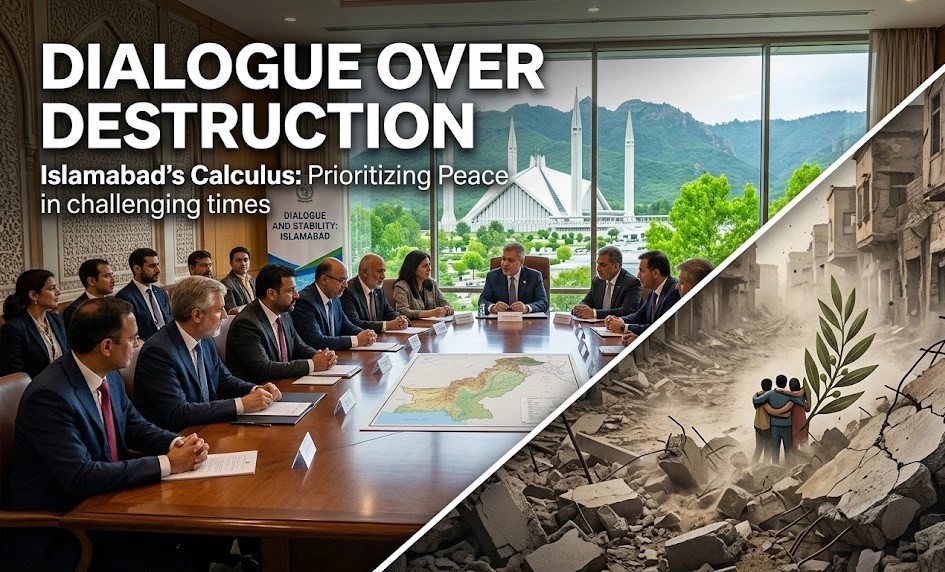
![India downgrades ties with Pakistan after deadly Pahalgam attack; Shehbaz convenes NSC meeting to plan response. [Image via PID/File]](https://southasiatimes.org/wp-content/uploads/2025/04/4595236-1437089316.webp)
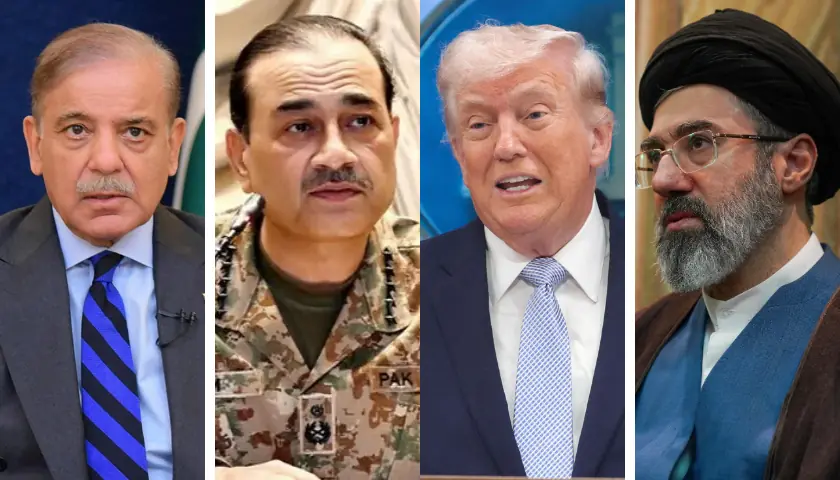
ISLAMABAD: Pakistani Prime Minister Shehbaz Sharif has called a meeting of the National Security Committee today, Thursday, after New Delhi announced a raft of measures to downgrade its ties with the neighbor following a deadly militant attack in Pahalgam in Indian-occupied Kashmir.
The shooting, the deadliest attack on non-combatants in Kashmir in decades, occurred Tuesday afternoon in Pahalgam, a popular resort town in the Anantnag district, where armed men emerged from forest cover and opened fire on crowds of mostly domestic tourists. A little-known militant group, the “Kashmir Resistance,” claimed responsibility for the attack in a social media message. Indian security agencies say Kashmir Resistance, also known as The Resistance Front, is a front for Pakistan-based militant organizations such as Lashkar-e-Taiba and Hizbul Mujahideen.
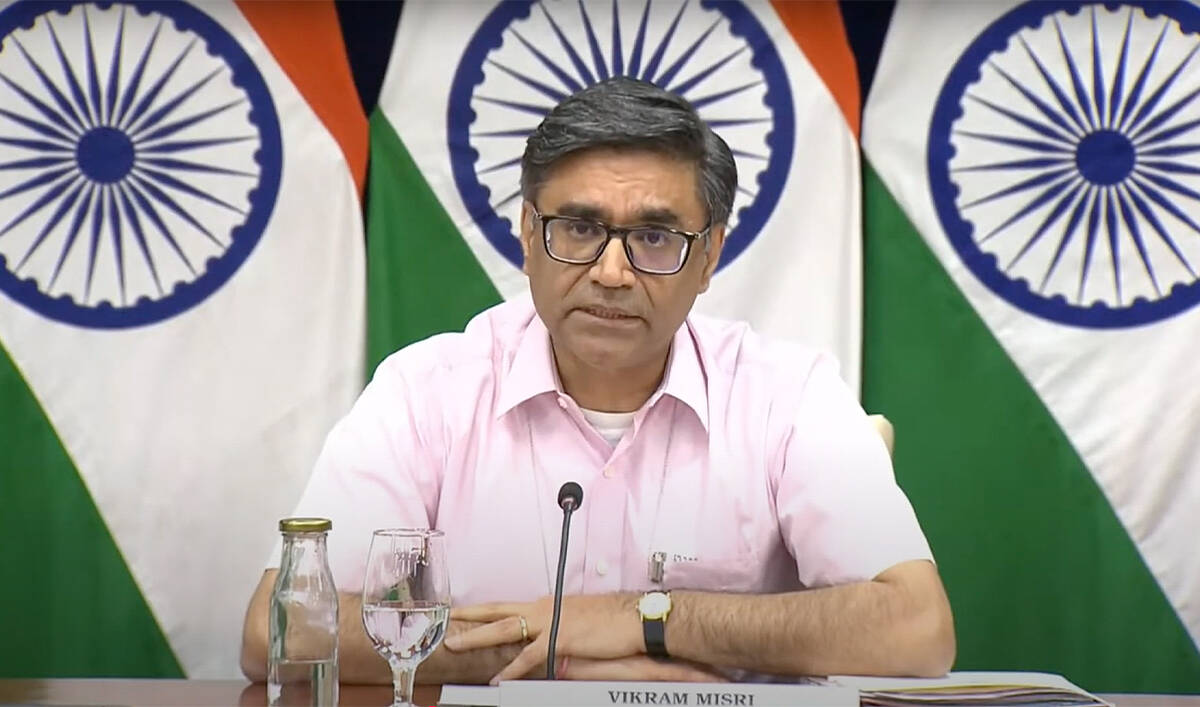
Indian Foreign Secretary Vikram Misri told a media briefing that the cross-border linkages of the attack had been “brought out” at a special meeting of the security cabinet, after which it decided to act against Pakistan.
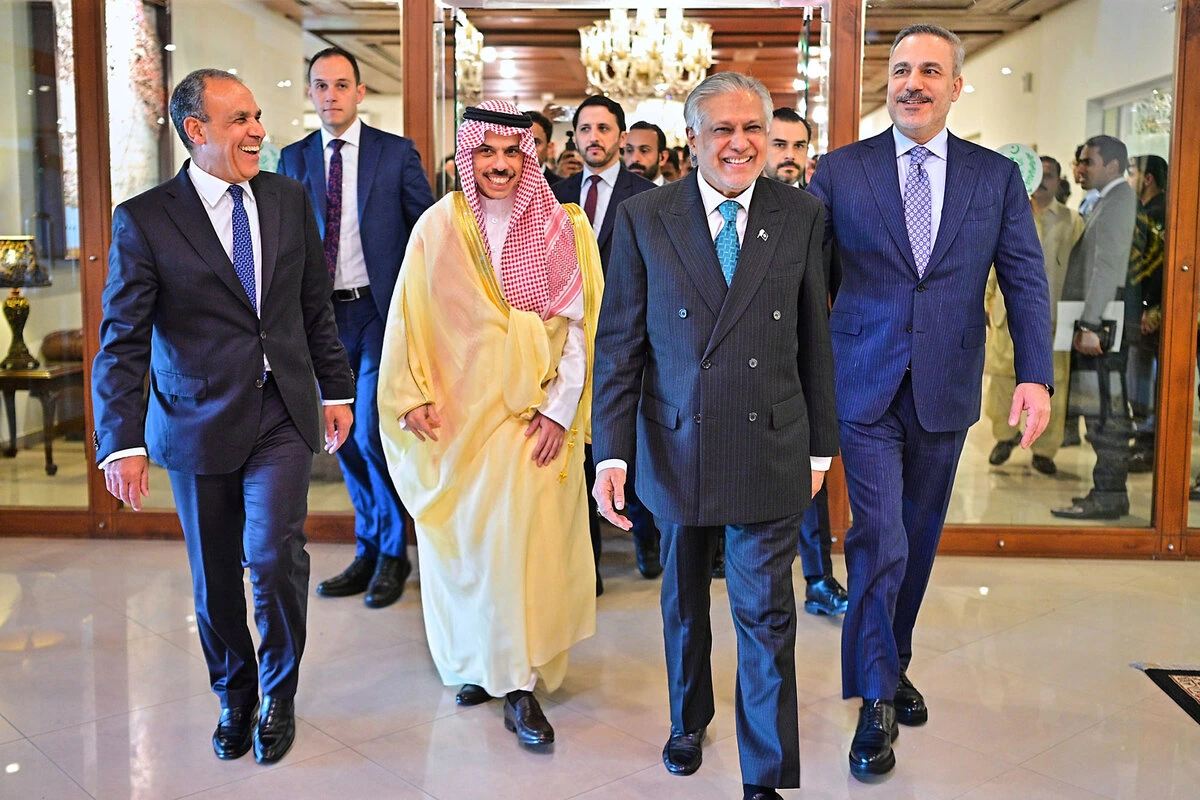
“Prime Minister Shehbaz Sharif has convened the meeting of the National Security Committee on Thursday morning … to respond to the Indian government’s statement,” Deputy Prime Minister Ishaq Dar said on X.
Among the measures announced by Misri was the suspension with immediate effect of the Indus Waters Treaty that allows for sharing the waters of the Indus river system between the two countries. The defense advisers in the Pakistani high commission in New Delhi were declared persona non grata and asked to leave within a week, Misri said, adding that the overall strength of the Indian high commission in Islamabad would be reduced to 30 from 55.
A main border crossing check post between the two countries would be closed immediately and Pakistani nationals would not be allowed to travel to India under special visas, Misri said.
“Pakistani nationals will not be permitted to travel to India under the SAARC Visa Exemption Scheme visas,” the Indian foreign secretary said.
“Any SVES visas issued in the past to Pakistani nationals are deemed canceled. Any Pakistani national currently in India under SVAS visa has 48 hours to leave India.”
Indian Prime Minister Narendra Modi, who cut short a state visit to Saudi Arabia after the attack, called it an “heinous act” and pledged justice against the perpetrators.
The Pakistan army has not yet responded to the Indian measures.
Also See: IIOJK Attack: Pakistan Expresses Concern, Extends Condolences to Victims’ Families
“RECKLESS”
Kashmir has been divided between India and Pakistan since 1947, which both claim fully but rule in part, and has been plagued by years of insurgent violence that New Delhi says is supported by Islamabad. Pakistan denies the accusations, saying it only provides diplomatic support to Kashmiris in their struggle for self-determination.
Such attacks have historically strained ties between India and Pakistan. In 2019, a suicide bombing in Pulwama that killed 40 Indian paramilitary personnel triggered cross-border air strikes, pushing the neighbors to the brink of war.
“It is not appropriate to vent anger over terrorism on Pakistan,” Deputy PM Dar told Pakistan’s Geo News in an interview, saying the foreign office would present its recommendations at the national security meeting on how to respond to India’s measures.
“India has a habit of shifting the blame for its own problems onto Pakistan. If India has any evidence instead of mere accusations, it should present it,” he added, promising that Pakistan would give a “fitting response” to New Delhi’s actions.
Minister for Power Awais Leghari called India’s suspension of the Indus Waters Treaty “reckless” and an “act of water warfare, a cowardly, illegal move.”
The Indus Water Treaty is a 1960 agreement between India and Pakistan that divides the water of the Indus River system between the two countries. It allocates the eastern rivers (Ravi, Beas, and Sutlej) to India for unrestricted use, and the western rivers (Indus, Jhelum, and Chenab) to Pakistan, giving them a larger share of the total water flow. The treaty, brokered by the World Bank, has been a crucial factor in maintaining peace and cooperation between the two nations despite political tensions.
The suspension removes current restrictions, allowing India more freedom to control water flows from the western rivers.
“Every drop is ours by right, and we will defend it with full force, legally, politically, and globally,” Leghari said on the Indus Waters Treaty’s suspension.
HISTORY OF CONFLICT
A violent separatist insurgency has simmered in the Indian-occupied part of Kashmir since the late 1980s, although militant violence had declined in recent years.
After partition of the subcontinent in 1947, Kashmir was expected to go to Pakistan, as other Muslim majority regions did. Its Hindu ruler wanted to stay independent but, faced with an invasion by Muslim tribesmen from Pakistan, acceded to India in October 1947 in return for help against the invaders.
Kashmir ended up divided among Hindu-majority India, which governs the Kashmir Valley, Jammu, and Ladakh; Muslim-majority Pakistan, which controls Azad Kashmir (“Free Kashmir“) and the Northern Areas, and China, which holds Aksai Chin.
Indian-occupied Kashmir has a population of around 7 million, of whom nearly 70 percent are Muslim.
Article 370 of the Indian constitution which provided for partial autonomy for Jammu & Kashmir was drafted in 1947 by the then prime minister of the state, Sheikh Abdullah, and accepted by India’s first prime minister Jawaharlal Nehru. Although intended as temporary, it was included in India’s Constitution in 1949 by the constituent assembly.
In August 2019, Prime Minister Narendra Modi’s government revoked Kashmir’s semi-autonomous status in a move it said would better integrate the region with the rest of the country. The state was reorganized into two federally administered union territories- Jammu and Kashmir, and Ladakh. Pakistan strongly objected, downgrading diplomatic ties with India and cutting off trade.
India and Pakistan have fought three wars since independence, two of them over Kashmir, in 1947 and 1965. A third in 1971 led to the creation of Bangladesh. In 1999, they clashed again in the Kargil region in what was described as an undeclared war. A UN-brokered ceasefire line, the Line of Control, now divides the region.
Many Muslims in Indian Kashmir have long resented what they see as heavy-handed rule by India. In 1989, an insurgency by Muslim separatists began. India poured troops into the region and tens of thousands of people have been killed.
India accuses Pakistan of arming and training militants, which Islamabad denies, saying it offers only moral and diplomatic support.
Modi says his 2019 decision brought normalcy to Kashmir after decades of bloodshed. Violence has tapered off in recent years, according to Indian officials, with fewer large-scale attacks and rising tourist arrivals. Targeted killings of civilians and security forces, however, continued to be reported.
In 2024, Jammu and Kashmir held its first local elections since the 2019 revocation of autonomy. Several newly elected lawmakers urged a partial restoration of Article 370. Key regional parties had boycotted or criticized the polls, saying the winners would not get any real political power.
This news is sourced from Arab News and is intended for informational purposes only.