Ishaq Dar, Marco Rubio Discuss U.S. Arms Left in Afghanistan

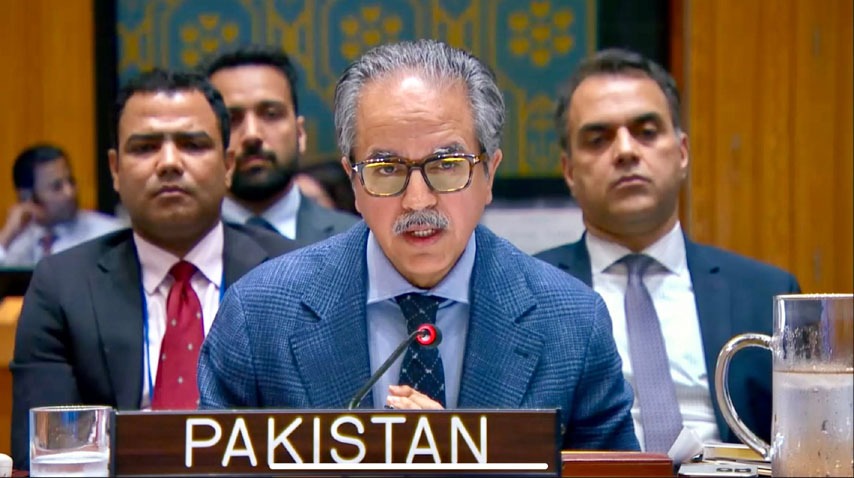
Foreign Minister Ishaq Dar and US Secretary of State Marco Rubio discuss bilateral ties, economic cooperation, and security. [Image via The Express Tribune]

Foreign Minister Ishaq Dar held his first official phone call with US Secretary of State Marco Rubio on Monday, discussing bilateral ties, economic cooperation, and regional security, according to a statement from Foreign Office.

The call marked the first direct communication between the two leaders since Rubio assumed his role as America’s top diplomat.

“During the call, Dar reiterated Pakistan’s commitment to strengthening its partnership with the United States,” the statement said. Dar emphasised increased cooperation in areas such as trade, investment, and counterterrorism.

Rubio, in turn, expressed the United States’ desire to expand economic engagement, particularly in sectors like critical minerals. “He said that cooperation in economy and trade would be the hallmark of future relations between the two countries,” the Foreign Office noted.

Also See: The Afghanistan Crisis: Pakistan’s Unpaid Bill for a War It Didn’t Start

The conversation also touched on counterterrorism. Dar highlighted Pakistan’s efforts between 2013 and 2018, which Rubio acknowledged with appreciation, while reaffirming the US commitment to enhancing counterterrorism cooperation.

The two officials also addressed the situation in Afghanistan, agreeing on the need to resolve the issue of US military equipment left behind after the American withdrawal in 2021.

“DPM/FM Dar and Secretary of State Rubio agreed to remain in close contact and to work together to advance the shared interests of both countries,” the statement concluded.

This news is sourced from The Express Tribune and is intended for informational purposes only.

News Desk

Your trusted source for insightful journalism. Stay informed with our compelling coverage of global affairs, business, technology, and more.


Recent

The Istanbul dialogue between Pakistan and the Afghan Taliban collapsed over the TTP issue, exposing the limits of regional diplomacy and mediation.

The Istanbul Dialogue: How the Taliban’s Intransigence Doomed Diplomacy

The highly anticipated Istanbul dialogue, facilitated by Turkey and Qatar, has ended in deadlock. The Taliban’s refusal to act against the Tehrik-e-Taliban Pakistan (TTP) and their introduction of provocative counter-demands have effectively derailed the diplomatic process, underscoring the ideological rigidity driving Kabul’s foreign policy.

Read More »
Centralized Power and the Core–Periphery Divide in Afghanistan

Centralized Power and the Core–Periphery Divide in Afghanistan

The Islamic Emirate of Afghanistan’s return in 2021 brought rapid consolidation of power, but also the revival of a historical flaw. By concentrating authority in the hands of southern Pashtun elites, the Taliban have recreated the core–periphery divide that has destabilized every Afghan regime since the 19th century. This hyper-centralization, rooted in ethnic exclusivity and Kandahar dominance, risks a repeat of past collapses as non-Pashtun regions turn toward functional autonomy.

Read More »
Broken Promises: The Taliban’s Betrayal of Global Commitments

Broken Promises: The Taliban’s Betrayal of Global Commitments

Nearly three years after seizing power, the Taliban’s systematic violation of their international commitments under the 2020 Doha Accord has transformed Afghanistan into a sanctuary for terrorism, entrenched an autocratic regime, and institutionalized gender apartheid. Beyond moral failure, this deceit poses a grave threat to regional stability, international counterterrorism efforts, and the credibility of global diplomacy. Holding the regime accountable is now a strategic necessity, not a choice.

Read More »
Do You Remember 6/11/ 1947?: A Forgotten Jammu Genocide and the Continuing Erasure of Kashmiriyat

Do You Remember 6/11/ 1947?: A Forgotten Jammu Genocide and the Continuing Erasure of Kashmiriyat

On November 6, 1947, one of South Asia’s earliest genocides unfolded in Jammu, where hundreds of thousands of Muslims were massacred or forced to flee. Yet, unlike other global tragedies, this atrocity remains buried in silence. The Jammu Genocide not only reshaped the region’s demography but laid the foundation for India’s ongoing campaign of identity erasure in Kashmir. From demographic engineering to cultural censorship, the spirit of Kashmiriyat continues to face systematic annihilation.

Read More »
India’s Climate Policy after COP28: Net Zero 2070 — A Fair Promise or a Risky Postponement?

India’s Climate Policy after COP28: Net Zero 2070 — A Fair Promise or a Risky Postponement?

India’s Net Zero 2070 target reflects a delicate balance between development equity and climate urgency. While progress in renewables, green finance, and adaptation is visible, the absence of clear interim milestones risks turning ambition into delay. The real challenge lies in translating a distant horizon into measurable, near-term climate action before 2030.

Read More »