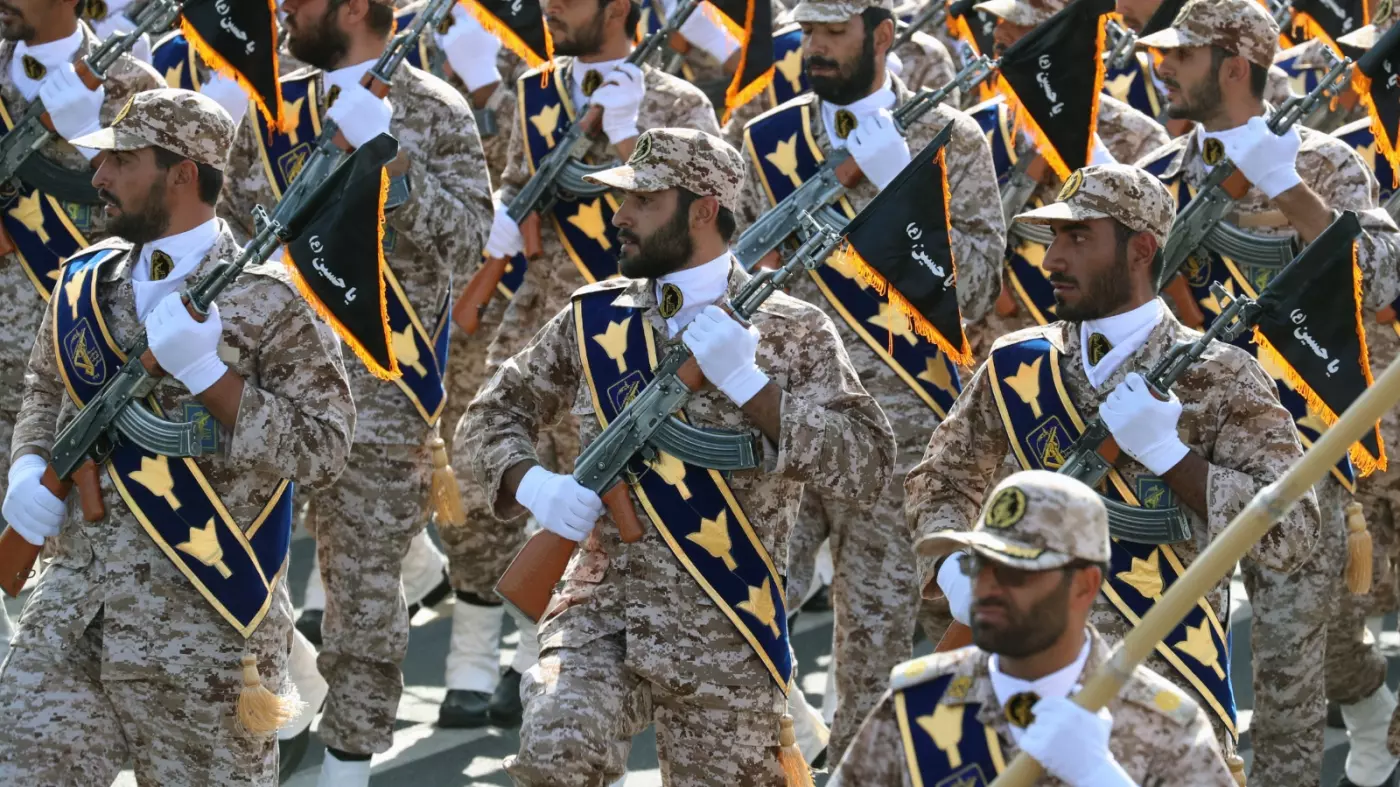
Iran allocated more funds to security and the military amid the economic crisis, legislators meet in Tehran to discuss a new budget bill.
In January, in the heart of Tehran, Iranian legislators were busy holding meetings discussing the new year’s budget bill as Iran boosts Defense spending.
The streets bore the aftermath of months of harsh crackdowns on protests, with severe gas cuts and reports of suicides.
Even as Iranians endure an unrelenting economic crisis, proposed cuts target health and public sectors while military budgets increase.
On January 22, lawmakers approved outlines of the budget bill submitted by President Ebrahim Raisi, for the upcoming Iranian year.
Increased brutality, increased budgets
The annual increase in the security and military forces’ budget is not something new in Iran. This year, it coincides with the final sparks of months-long anti-government protests, ignited after Mahsa Amini’s death in police custody. Authorities detained the Iranian-Kurdish woman for not wearing the hijab properly.
“The government is very audaciously laughing in the face of Iranians” an economist living in Tehran told Middle East Eye on condition of anonymity for fear of reprisal by security forces.
“The police first killed an innocent young girl in custody and then killed those who protested against that incident. Now they are being [granted] a budget increase” the economist added.
According to HRANA, police and the IRGC killed over 500 protesters since Amini’s death on September 16, 2022.
The economist references a 44.5 percent rise in the country’s police budget, part of a 40 percent total budget increase.
In this economic situation, prioritizing higher salary increases for lower-income citizens, more funds to the public sector, is crucial. But instead, more is given to police forces” the economist said.
The proposed salary increase for government workers is only 20%, despite the forecast of a 40% annual inflation.
“We see that once again, the government have sided against the people” the economist added.
Security forces, military and other winners
Beyond the police, other forces in the crackdown on Iranians also benefit from the Raisi administration’s generosity.
Next year’s budget grants the Ministry of Intelligence a 43 percent increase.
Other intelligence organizations, aside from this ministry, actively engage in systematic forced disappearance of dissidents and obtaining coerced self-incriminating confessions. The IRGC’s own infamous intelligence apparatus has long had a vital role in these practices.
Iranians expected the IRGC, the country’s most powerful entity, to receive a 37% budget increase, but sources suggest it’s higher.
An informed reformist politician stated that the government keeps certain parts of the annual budget bill secret from the public, mostly related to the IRGC.
The politician explained that the budget dedicated to the missile and nuclear programs are among those secret funds.
Moreover, the IRGC would benefit from the increases granted to other military and public organizations.
“For example, there is a specific budget for the General Staff of the Armed Forces of the Islamic Republic of Iran, but no one knows how that money will be exactly shared between the official army and the IRGC” the source said.
Even a small increase in public sector funds benefits the IRGC, as it owns shares in various industries.
Making people poorer
As Iran increases defense spending, police, army, and IRGC budgets rise amid reports of decreased meat and fruit consumption due to poverty. In October, local media reported that one-third of the country’s 87.9 million population lived in extreme poverty.
Ignoring expert warnings on Iranians’ worsening economic plight, the government invests oil income in entities shielding it from opposition.
A budget expert working for the Plan and Budget Organization of the Islamic Republic of Iran told MEE that analysts and economists had warned the government about the impacts of spending billions of rials on military and security plans while ordinary citizens face difficulties in making ends meet.
“The budget plan that Ebrahim Raisi submitted to the parliament is very different from what the experts drafted and handed in to the government” the expert said.
“This year’s budget will make people poorer, and this will lead to more social dissatisfaction, which the authorities must find a solution for.
“The budget draft for next year shows that the only solution the government could think of was giving more power to the police, security forces and armed services.”
Original Source: Middle East Eye