![Iran and Pakistan's Foreign Ministers discuss regional issues, Israeli aggression, and D8 summit outcomes in Cairo. [Image via Iranian Ministry of Foreign Affairs]](https://southasiatimes.org/wp-content/uploads/2024/12/2024121821594296847251683.webp)
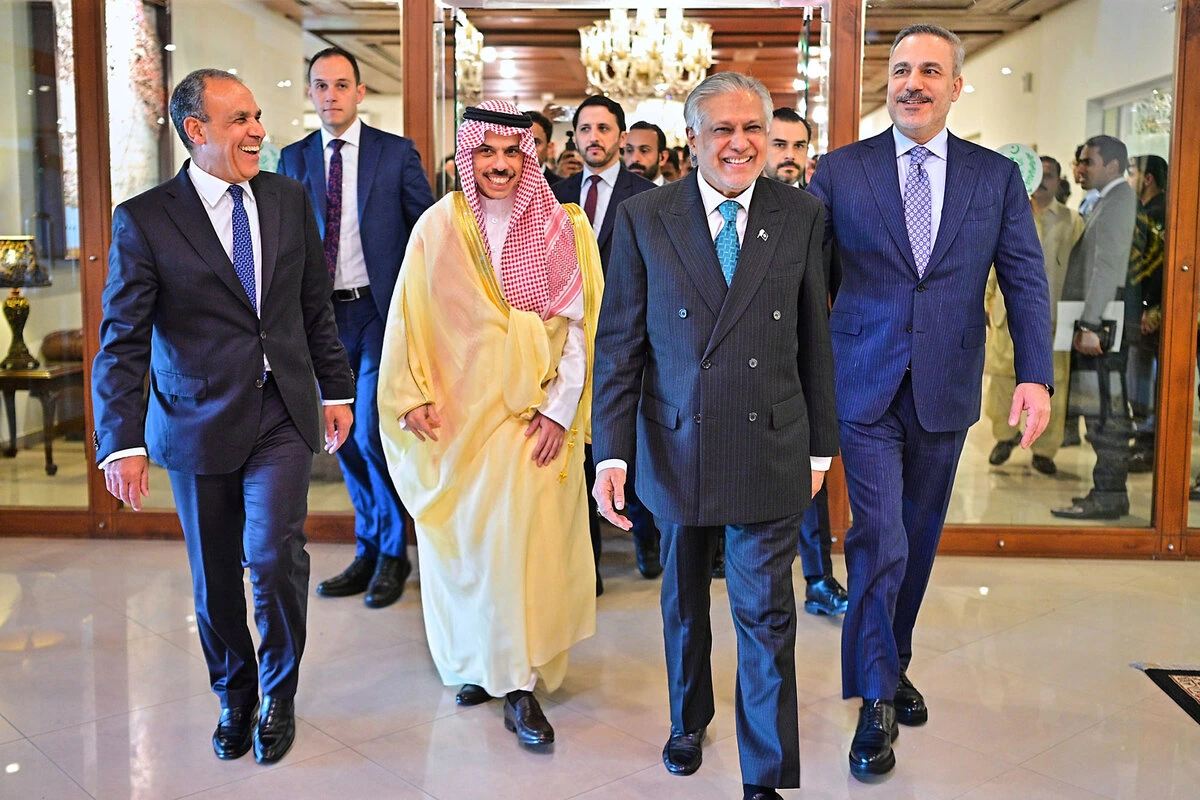
Foreign Ministers Seyed Abbas Araghchi of Iran and Muhammad Ishaq Dar of Pakistan continued their consultations on the sidelines of the D8 summit in Cairo, Egypt.
In the meeting, Araghchi referred to the sensitivity of the regional situation due to the escalation of aggression by the Zionist regime, saying, “Unfortunately, with the continued full support from the US and some Western countries, we are witnessing that the aggressive Israeli regime is destroying Syria’s defensive and economic infrastructure and continuing its crimes in Gaza and Lebanon”.
The Iranian foreign minister pointed to the joint statement by the guarantor countries of the Astana process and several Arab countries in Doha in support of Syria’s national sovereignty and territorial integrity. He stressed that all countries in the region are concerned about the current situation in Syria and added that Americans and Zionists are plotting to partition and weaken Islamic countries to benefit the Zionist regime, which lays the groundwork for a resurgence of the ominous phenomenon of Daesh terrorism in the region.
Pakistan’s Deputy Prime Minister and Foreign Minister Muhammad Ishaq Dar praised Iran’s hospitality and the successful holding of the recent Economic Cooperation Organization (ECO) Foreign Ministers’ meeting in Mashhad. He expressed hope that the results and agreements reached in the meeting will further strengthen relations among regional countries in various spheres.
The Pakistani foreign minister reiterated Islamabad’s clear stance regarding current developments in the region, including the situation in Syria and his country’s condemnation of the acts of aggression by the Zionist regime.
He then called for enhanced consultations and cooperation among Muslim nations to condemn these acts of aggression and to support people in Palestine, Lebanon, and Syria.
The foreign ministers of the Islamic Republic of Iran and Pakistan also discussed topics on the agenda of the D8 summit in Cairo and also the sensitivity of developments in the region, particularly the escalation of Israeli aggressions and crimes in Gaza, Lebanon, and Syria.
Araghchi and Ishaq Dar emphasized the necessity of using the opportunity presented by the Cairo summit to continue synergy among major Islamic countries, especially Iran and Pakistan, to defend regional interests and those of the Muslim world.
Also See: Pakistan, Bangladesh Deepen to Expand Bilateral Cooperation
This news is sourced from Iranian Ministry of Foreign Affairs and is intended for informational purposes only.