The case of Ibrahim Kayumi, a 19-year-old Afghan-American accused of an attempt to detonate homemade explosives in front of the residence of the New York City Mayor Zohran Mamdani, together with the 18-year-old Emir Balat, requires a more subtle analysis of the situation of homegrown extremism, especially when such a phenomenon is revealed within families that escaped the chaos in Afghanistan.
The parents of Kayumi are Afghans who immigrated to the United States several decades ago during the longstanding conflict in the country, Taliban rule, and instability and were naturalized U.S citizens in 2004 and 2009, respectively. They had a lawful source of living by means of hard work since they owned a large 2.255.5 million house in Pennsylvania, and they also had business interests in franchise management. This story is an ideal immigrant narrative: A runaway persecution and war in Afghanistan, American opportunity and a significant economic stability in a safe suburban setting.
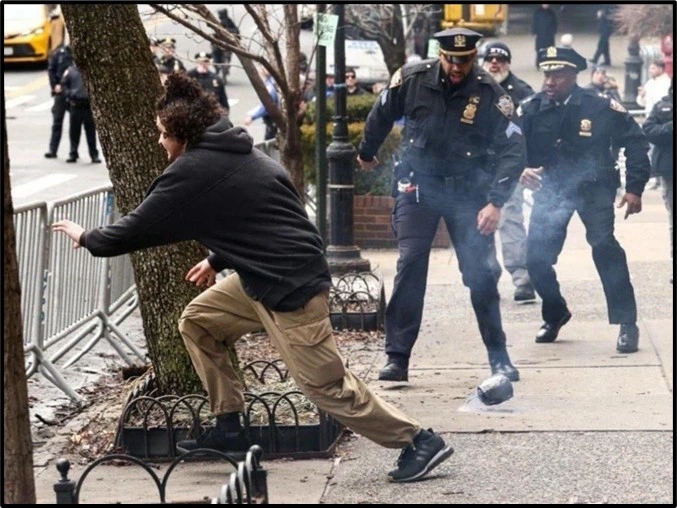
Ironically, the given background makes the alleged betrayal especially emotional and confusing. Kayumi is a second-generation Afghan-American who grew up in the United States, yet he is accused of rejecting the society that sheltered his family and raised it to a higher level. The case was brought about by an event in ongoing demonstrations outside Gracie Mansion, one marching against being perceived as Islamized and the other marching in defense of Muslim rights, during which the accused reportedly carried and tried to ignite improvised devices that contained triacetone phosphate (TATP), a combustible explosive linked to many attacks of ISIS globally. Even though the bombs did not go off fully, and thus there were no casualties, what the suspects said after being arrested was chilling; Kayumi claimed to be acting under the name of ISIS, and Balat even said that he wished to do something bigger than Boston. Online footprints show that there is contact with ISIS propaganda, which is a typical route to radicalization in the remote online space.
The Afghan relation shows irony and tragedy. Many Afghan refugees have escaped violence and settled in the new environment where they live a peaceful life; however, some people still succumb to extremist beliefs. This fact means that radicalization is largely fueled by strong ideological forces and not by poverty, and ideologies have the power to cut off ties between generations and a sense of gratitude to the family background.
The event disrupts naive views that radicalization exists within the incarcerated outcasts. It follows the trends of Western settings, where second generation migrants of stable immigrant families become jihadists using encrypted communications infrastructure, extremist propaganda video content, and echo chambers that capitalize on personal identity crisis or perceived injustice. The liberalism of the American society, which is manifested by the freedom of the internet, relative mobility and limited surveillance of the state, establishes the vulnerability, which can be used by the extremist actors, even in the prosperous suburban environment.
Mayor of New York condemned the act as heinous terrorism thus laying more emphasis on accountability without regard to the background of the perpetrator. The politics should be avoided: the incident does not involve the problem of immigration of Afghans in general, many Afghan-Americans have been serving in the army, the field of work and community life with dignity. Neither does it give the reason to profile based on religious affiliation or ethnicity. Instead, it depicts the blatant extent of radicalization that does not care about any class, heritage or generational gap between conflict regions.
To prevent effectively, it is necessary to have balanced and evidence-based measures: more but rights-based surveillance of online jihadist networks; community-based des-radicalization programmes to be implemented on youth both in learning institutions and the digital world; and effective prosecution when ideological intent morphs into operational one. Families like the Kayumis who fled the extremists just to see it re-appear in a child deserve to be assisted in to control such risks as opposed to being branded suspects.
The supposed path of Ibrahim Kayumi, who was a well-built Afghan immigrant character to an ISIS-invested conspiracy, is a clear warning. The American Dream is able to offer shelter, wealth and identity but fails to provide protection against the spread of detrimental ideologies that cross digital borders.