Economists call on China to adopt a new development model based on “well-being” to head off climate risks
SINGAPORE: A team of influential economists warns China to adopt a new development model. They suggest focusing on “wellbeing” rather than GDP growth. This change is necessary to fulfill China’s 2060 net-zero emissions goals. It is also crucial to address the mounting threats of climate change.
In a report published on Thursday (Feb 23), the team, which includes two former chief economists of the World Bank, made several recommendations. They called on China to cap total fossil fuel consumption. They also recommended establishing a detailed “pathway” for reducing emissions.
The Chinese government has already received the report and its recommendations. Co-author Nicholas Stern, chair of Britain’s Grantham Research Institute on Climate Change and the Environment, told reporters he hoped it would play a constructive role in China’s 2026-2030 “five-year plan”, as economists warn China.
The old development model drove rapid growth in China over the last four decades. However, the report said this model is putting the world at “grave risk.”
China is aiming to bring emissions to a peak by 2030, though it currently remains unclear at what level they will peak. Stern said it needed to set a specific numerical target in order to bring “clarity” to its decision-making.
The report also called on China to give greater prominence to public transport and set a timetable for the elimination of fossil-fuel vehicles. China should also promote low-carbon agriculture, including plant-based meat and dairy, it said.
SEE ALSO: https://southasiatimes.org/china-covid-19-aid-efforts-for-south-asian-region/
Green GDP
China began experimenting with “green GDP” in 2005 as concerns mounted about the environmental damage done by rapid industrialization. A 2006 government report concluded that environmental losses amounted to 3 per cent of total GDP, but critics believed the actual figure was much higher.
Though China cancelled the green GDP project in 2009, it promised in 2013 to abandon a “growth at all costs” model. China also stated that it would no longer assess officials solely based on GDP.
Some provinces have recently resumed efforts to create new indicators reflecting the environmental costs of development, with central China’s Hubei using a pilot “gross ecosystem product” that can be applied to individual districts, rivers or development projects.
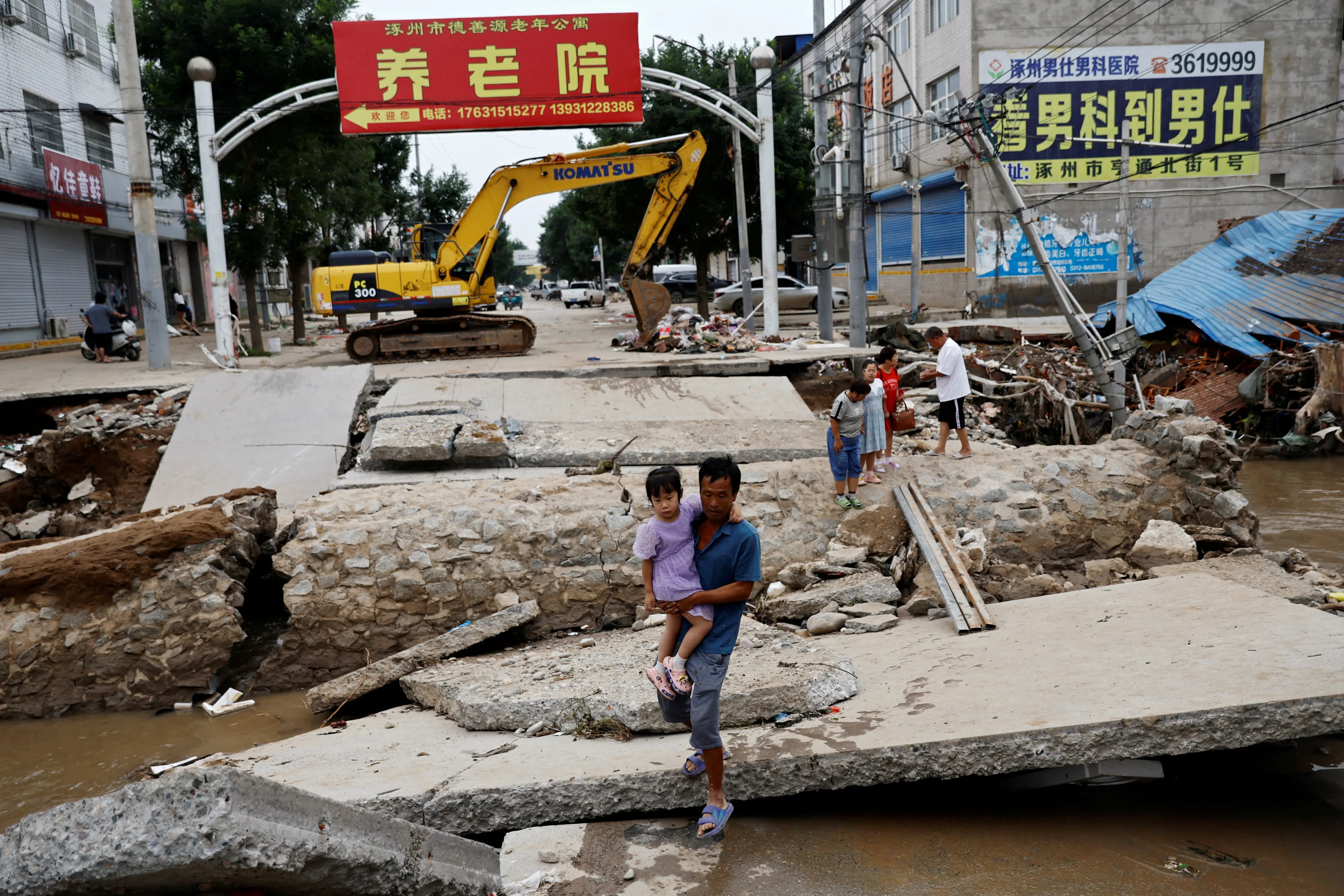
China is home to 16 of the 20 global regions most vulnerable to climate change, data showed on Monday.
Source: CNA

Your trusted source for insightful journalism. Stay informed with our compelling coverage of global affairs, business, technology, and more.