Ongoing Locusts Plague in Pakistan
Pakistan has carried out anti-locust operations in the country\’s 32 impacted districts, covering 2.6 million acres of land. According to data from the National Locust Control Center (NLCC). As many as 1028 joint teams containing over 5336 individuals and 676 vehicles engaged in the anti-locusts operations including aerial spraying. In the meantime, Pakistan\’s Faisalabad University of Agriculture is making biopesticides to combat locusts.
Moreover, the locust invasion was proclaimed as a national disaster earlier this year. According to an FAO report, an estimated 38 per cent of Pakistan\’s land is a potential locust’s breeding ground.
Technology saves the Day
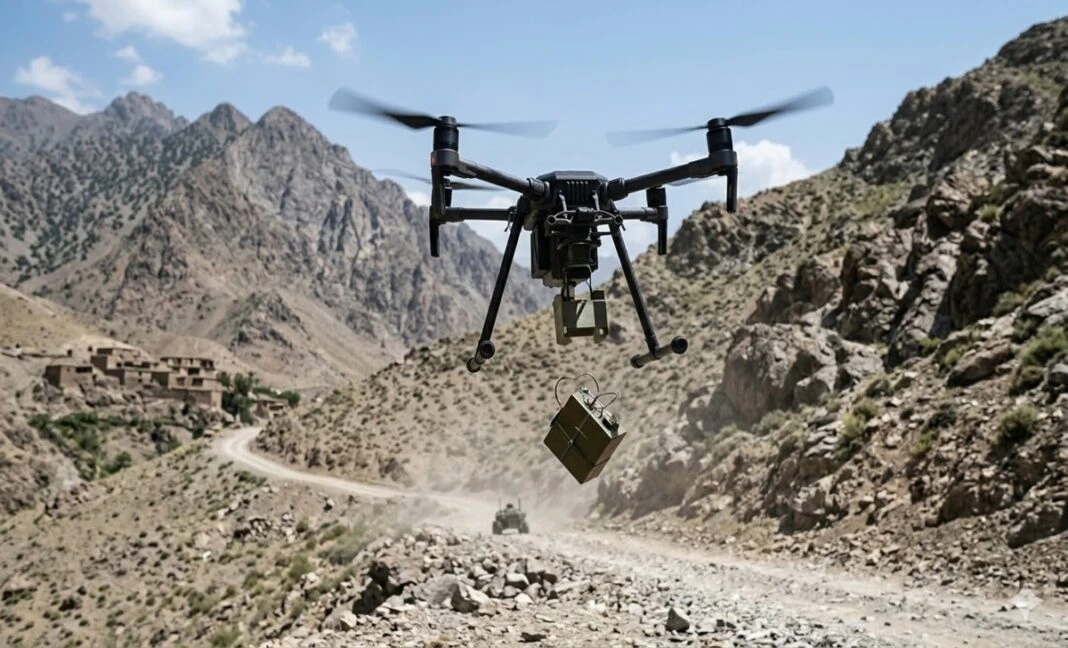
Even though, in a worst-case situation, the Ministry for Food projected the losses from locusts to agriculture could vary from a minimum of Rs490 billion to Rs2.451 trillion. In such dire circumstances, sparks the hope of technology! Pakistan unveiled local drones on Tuesday to fight the locust attack which threatens food security.
Furthermore, Pakistan-made \”drones are going to revolutionize the agriculture industry in the country,\” Federal Science & Technology Minister Fawad Chaudhry said, sharing the drone photo on Twitter. Pakistan\’s Ministry of Science and Technology has signed an agreement with ABM-SATUMA, a private company, to produce and use the drones for agriculture to cope with the locust crisis.
Views and opinions from industry leaders
Minister Fawad said, urging young people to work on aggrotech startups. \”With the launch of drone technologies to improve agricultural production, the ministry is now focused on precision farming,\”
Additionally, Dr Suleiman Ashraf, CEO of Surveillance and Target Unmanned Aircraft (ABM-SATUMA), said the company that has been working with the country\’s defence industry for more than two decades has decided to develop agricultural drones to help farmers save crops and achieve efficiency.\”
Also, the farmers don\’t have to purchase the drones or maintain them. The government plans to launch an Uber-like rent-a-drone service. Which would link farmers to the drone according to their requirement, clarified Minister Fawad.
Working & service provision
Moreover, the drones equipped with mapping sensors will be used to spray pesticides. Nearly 60 districts in all of Pakistan\’s provinces are fighting an invasion of desert locusts that devour crops. Pesticide spraying using drones is highly effective over traditional methods, such as sprayers mounted on vehicles.