China, Pakistan to hold 1st Counter-Terrorism Drills Since 2019

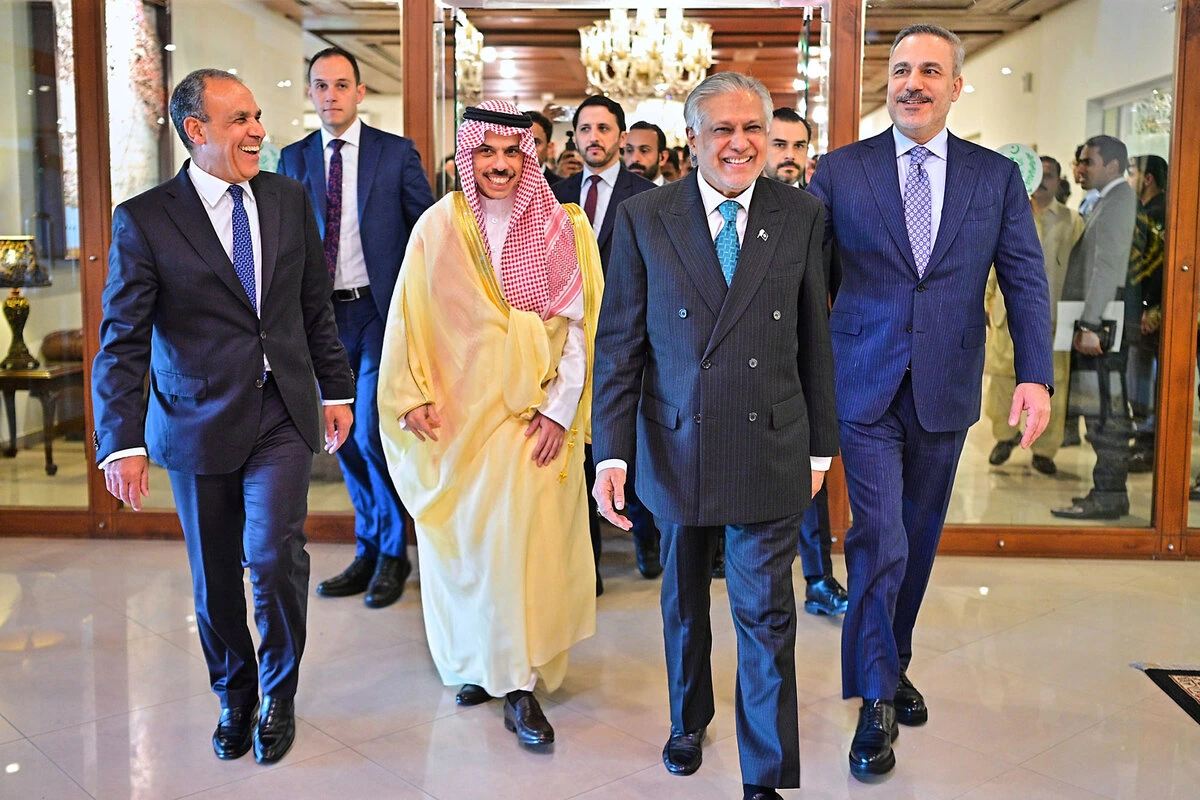
China and Pakistan to conduct joint counter-terrorism drills, enhancing military ties amid rising security concerns. [Image via Anadolu Ajansi]

China and Pakistan will hold their first joint counter-terrorism military drills in five years, the Chinese Defense Ministry announced Tuesday.

Codenamed Warrior-VIII, the counter-terrorism drills will run between China and Pakistan from late November to mid-December. The drills come amid heightened concerns over targeted attacks on Chinese nationals in Pakistan. They will focus on joint counter-terrorism clean-up and strike operations.

The two militaries will engage in multi-level training across various specialties and live troop drills simulating real combat scenarios.

The event is part of a broader effort to enhance practical military cooperation and the capability to tackle terrorism, according to the ministry.

The most recent joint exercise in this series took place in 2019, with this year’s exercise marking the eighth between the two nations. The exact location of the exercises was not revealed.

Also See: The Afghanistan Conundrum: Pakistan’s Challenge, China’s Role

In October, a suicide bombing in Pakistan killed three people, including two Chinese nationals, and injured 17 others. In March, an attack in northwestern Pakistan claimed the lives of five Chinese workers and their Pakistani driver.

Following these incidents, China dispatched investigators to Pakistan to assist in probing the October killings.

Earlier in the day, the Pakistani government approved a military operation against terrorist organizations operating in Balochistan province.

The authorities will launch the operation against the organizations targeting local civilians as well as foreign nationals. They aim to “scuttle Pakistan’s economic progress by creating insecurity at the behest of hostile external powers,” state-run media reported.

This news is sourced from Anadolu Ajansi and is intended for informational purposes only

News Desk

Your trusted source for insightful journalism. Stay informed with our compelling coverage of global affairs, business, technology, and more.

Recent

Pakistan-Only? The TTP’s Transnational Reality

Pakistan-Only? The TTP’s Transnational Reality

While the TTP publicly claims its insurgency targets only Pakistan, evidence reveals a transnational reality. Supported by Afghan fighters and resources, and shaped by the Afghan Taliban’s strategic interests, the TTP exemplifies cross-border proxy warfare. Understanding its structure, motivations, and operational networks challenges simplistic “Pakistan-only” narratives and underscores the enduring complexities of South Asian security.

Read More »
Pakistan’s Heritage and Rights Ethos: Unlocking Cultural Diplomacy

Pakistan’s Heritage and Rights Ethos: Unlocking Cultural Diplomacy

Pakistan’s diverse cultural heritage, from the hospitality of Pashtunwali and Sufi music in Sindh to folk traditions in Punjab, Balochistan, and Gilgit–Baltistan, reflects an enduring rights-based ethos. These living practices promote dignity, justice, and social inclusion. By integrating these traditions into cultural diplomacy, Pakistan can showcase its soft power while supporting custodians of heritage, artisans, and local communities.

Read More »
A deep dive into how the Afghan Taliban weaponises anti-Pakistan rhetoric to mask governance failures, rising poverty, and Afghanistan’s growing security meltdown.

The Politics of Blame

Afghanistan’s leadership has responded to recent international backlash by amplifying a narrative that frames Pakistan as the root of all Afghan crises. This rhetoric, pushed by senior Taliban officials, serves as a diversion from Kabul’s own administrative paralysis, economic collapse, and its complicity in enabling militant groups like the TTP. As poverty deepens and Afghanistan becomes a hub for dozens of terrorist outfits, the politics of blame has become the Taliban’s primary tool for deflecting scrutiny.

Read More »
Sanctuary and Sovereignty: The Tribal Ethics Behind the Pakistan–Taliban Rift

Sanctuary and Sovereignty: The Tribal Ethics Behind the Pakistan–Taliban Rift

The piece analyzes the Pakistan–Taliban rift through the lens of Pashtunwali, highlighting how Kabul’s sheltering of the TTP and its revival of Durand Line irredentism conflict with the tribal code’s principles of hospitality, sanctuary, and reciprocity. These choices undermine decades of Pakistani support and have transformed a historically interdependent relationship into one marked by distrust and hostility.

Read More »