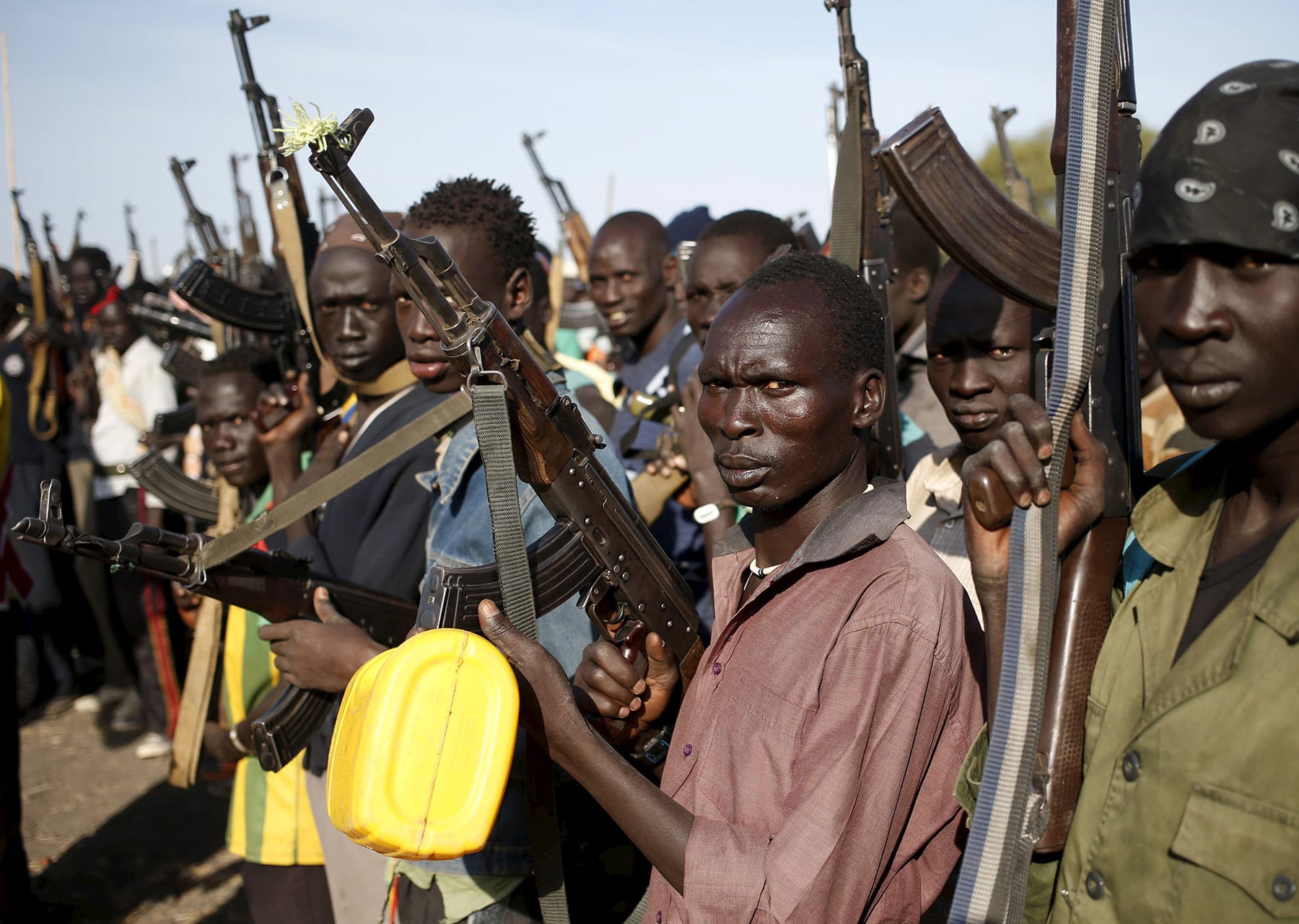
In the silence surrounding Sudan’s collapse, every bullet, every bar of gold, and every child buried in famine tells the same story that the world only counts African lives when they’re gone. Sudan is not a forgotten war. It is an ignored one and that distinction is everything.
For nearly two years, the country has been torn apart by a war that the world pretends is too complicated to care about. But what is happening in Sudan is not complex. It is deliberate.
A deliberate collapse.
A deliberate starvation.
A deliberate silence.
When the Sudanese Armed Forces (SAF) and the paramilitary Rapid Support Forces (RSF) turned on each other in April 2023, the headlines lasted a few days. Then came the quiet. Behind the headlines,a nation of 45 million began to disintegrate not just from bombs, but from the international architecture that allowed it to happen.
The Anatomy of a War Built on Greed:
To understand Sudan’s agony, one must follow the money, and the gold.
The RSF’s leader, Mohamed Hamdan Dagalo (Hemedti), didn’t rise from ideology or vision. He rose from profit. His empire began in the dusty gold mines of Darfur, where his family company, Al Junaid, turned stolen land into private wealth. From those mines, gold was smuggled through Sudan’s porous borders, across Chad, and into the United Arab Emirates.
There, in Dubai’s gleaming refineries, it was reborn washed clean of its origins in displacement and death. According to Reuters, more than $16 billion in Sudanese gold left the country between 2018 and 2024, much of it unrecorded. Global Witness traced this shadow economy to refineries tied to the UAE, showing how Sudan’s war now funds itself through the veins of global trade. And what comes back into Sudan in return?
Guns.
Drones.
Mercenaries.
The same reports show weapons and technology shipments linked to Emirati supply chains feeding the RSF while the UAE simultaneously hosts humanitarian summits about “African stability.”
It’s a new colonial paradox: profit from the bleeding, then donate bandages.
When Gold Buys Silence:
The silence around Sudan is not born of ignorance, it is the silence of profit.
The UAE’s economy benefits from the same trade that starves Sudanese children. Western corporations depend on the minerals extracted under RSF control. And global financial institutions turn away because admitting complicity would mean rewriting the moral script of modern diplomacy.
The gold that funds the RSF circulates through legitimate markets. It adorns wrists in Paris, sits in vaults in Zurich, and props up economies that preach human rights by day and trade with killers by night. Every ounce of that gold carries fingerprints of miners enslaved by militias, of villages burned for profit, of corpses left in shallow graves along trade routes.
But the silence persists, because Africa’s pain has been normalized into background noise. When Europe suffers, the world demands justice. When Africa burns, the world demands patience.
From Empire to Empire: The Blueprint Endures:
Sudan’s dismemberment is not new; it is the modern replay of a colonial script.
When Britain ruled Sudan in the early 20th century, it was governed by a North versus South, Arab versus African, Muslim versus Christian. Those divisions never healed. Independence in 1956 only transferred the burden of empire to the shoulders of those it had divided. Every civil war since from 1955 to 1983 to 2003 has been a continuation of the same colonial logic: divide, exploit, and extract.
Now, the new empires have Gulf money instead of British administrators, corporate contracts instead of bayonets. They no longer need to conquer African land, only its markets, its minerals, and its silence. The RSF’s war is a franchise of that colonial design, executed with drones instead of horses, financed by global partners instead of local chiefs. Sudan is no longer ruled from Cairo or London; it is ruled from Dubai’s trading floors and Riyadh’s meeting rooms.
The Human Rights Vacuum:
By October of 2025, the war had forced 13 million people from their homes (UNHCR, Latest). Over 30 million Sudanese more than half the population now depend on food aid. Yet humanitarian agencies struggle to access even a fraction of the country.
In Darfur, Human Rights Watch reports mass graves, sexual violence, and targeted ethnic killings eerily reminiscent of 2003 the same genocide that the world once vowed “never again.”
But there are no tribunals this time. No sanctions that bite. No emergency summits demanding justice. Sudan’s civilians are being slaughtered in real time, and the global human rights system built after the Holocaust, polished after Rwanda is performing exactly as designed: selectively.
The architecture of global justice has always been built on geography.
In some places, human rights mean protection. In others, they mean paperwork.
Bodies are being burnt currently and there is no clue how many are the casualties.
Africa’s Invisibility Clause
The neglect of Sudan is not an isolated event. It is part of a long-standing pattern, the invisibility clause of African suffering. From Congo’s cobalt to Mali’s gold to Libya’s collapse, Africa’s tragedies are discussed only when they threaten the comfort of others.
Sudan doesn’t have the privilege of visibility. It has no oil crisis to ripple through global markets, no refugees welcomed with open arms. Its people die quietly because they were born in the wrong part of the world’s conscience. And in the global imagination, Africa is still a continent of “complications”, a euphemism for indifference.
Even the UN, while documenting atrocities, struggles to mobilize the urgency it showed for Ukraine or Gaza. Western media covers Sudan’s famine as if it were weather: predictable, regrettable, distant.
Sudan Still Speaks:
But Sudan’s story is not only a tragedy it is also testimony. In the ruins of Khartoum, ordinary citizens have become human rights defenders in the truest sense. Women lead community networks that distribute food and document war crimes. Youth groups run underground clinics. Diaspora journalists risk arrest to record testimonies.
This resilience is not survival; it is resistance.
It defies the entire premise that Africa must be saved from itself. Sudanese people know their enemies and they know that many of them wear international respectability. Their revolution in 2019 was not only political; it was moral. It was a declaration that dignity was not negotiable, even in a world that trades it for gold.
The Price of Our Silence
Someday, the war in Sudan will end not because the world intervened, but because there will be nothing left to take. And when that day comes, the archives will record who bombed the hospitals, who armed the militias, who laundered the gold. But they will also record who looked away. The greatest human rights failure of our time is not that Sudan burned, it is that the world watched it burn and called it “complex.”
Because nothing about it is complex. It is the oldest story we know: profit over people, greed over grief, empire over empathy.
The world doesn’t need another promise of “never again.” It needs the courage to mean it, even when the victims are African.
Disclaimer: The views expressed in this article are the author’s own. They do not necessarily reflect the editorial policy of the South Asia Times.