In the rugged topography of Afghanistan, history does not merely repeat itself, it echoes off the walls of the Hindu Kush, returning in distorted but recognizable frequencies. For decades, the high-altitude valleys of the north, specifically Panjshir, have served as the final fortress against totalitarian encroachment. It is a geographical redoubt where the state’s monopoly on violence typically ends. However, the resistance that is currently coalescing in these mountains differs fundamentally from its historical predecessor.
The silence of the Afghan winter, traditionally a period of dormancy for warfare, was shattered in December 2025 by a coordinated surge of violence that signaled a new strategic reality. Within a tight seventy-two-hour window, the insurgency demonstrated a reach that extended far beyond rural harassment. In Kunduz, operatives from the National Resistance Front (NRF) executed a motorcycle-borne raid on a security checkpoint, eliminating Commander Hashmatzada. Less than twenty-four hours later, the Afghanistan Freedom Front (AFF) brazenly penetrated the Red Zone of the same city, striking a recruitment center and killing Commander Qari Obaida. Simultaneously, in the provincial capital of Fayzabad, Badakhshan, a precision strike targeted a governor’s security unit during a shift change, resulting in the death of Commander Tayeb Qandhari.
These were intelligence-driven, urban-centric operations designed to degrade the Taliban’s mid-level command structure. This surge serves as a grim punctuation mark to a broader thesis: while the first era of anti-Taliban resistance (1996–2001) was defined by a state-backed coalition holding territory and frontlines, the current phase operates without external lifelines. Yet, far from being a frantic last stand, post-2021 resistance represents a calculated evolution. It is in its initial phase of regrouping, with the intensity and frequency of operations slowly building as a new generation adapts to the grueling demands of asymmetric warfare.
Phase 1: The Fortress of the North (1996–2001)
To understand the current trajectory, one must first dissect the anomaly that was the Northern Alliance. Formally known as the United Islamic Front for the Salvation of Afghanistan, this coalition emerged from the chaos of the post-Soviet power vacuum. Following the Taliban’s seizure of Kabul in 1996, former rivals who had spent the early 1990s shelling one another found unity in their shared existential threat.
This resistance was unique in the annals of insurgency because it functioned less like a guerrilla movement and more like a government in exile. Anchored by the charismatic military strategist Ahmad Shah Massoud, the “Lion of Panjshir,” the Alliance maintained a semblance of statehood. They controlled key urban centers for periods of time, including Mazar-i-Sharif under the Uzbek warlord Abdul Rashid Dostum and Bamyan under the Hazara leader Karim Khalili. This was semi-conventional warfare characterized by defined frontlines, the deployment of tanks and artillery, and the use of a modest air force.
Read: Ahmad Shah Massoud: Hero, Warlord, Legend
Geography was their greatest asset. A Resistance Highway connected the Shomali Plains north of Kabul through the Panjshir Valley and into Badakhshan, creating a contiguous belt of territory that the Taliban could never fully sever. This territorial integrity allowed them to maintain a temporary capital, print their own currency, and host diplomatic envoys.
Crucially, the Northern Alliance was never truly isolated. The geopolitical chessboard of the 1990s ensured that regional powers, specifically Iran, Russia and Tajikistan, kept the supply lines open. Helicopters ferried ammunition and fuel across the Amu Darya river, and logistical support was consistent. The resistance of the 1990s was a war of attrition fought between two entities that both possessed the machinery, however dilapidated, of a state.
Phase 2: Strategic Evolution (Post-2021)
The collapse of the Islamic Republic in August 2021 obliterated the paradigm of conventional resistance. The psychological shock of Kabul’s fall was compounded by the swift loss of the Panjshir Valley in September 2021. For the first time, the resistance lost its territorial sanctuary. However, contrary to the narrative of total defeat, this loss necessitated a strategic pivot from a defensive war of position to a mobile insurgency of maneuver.
The resistance withdrew into the inaccessible side-valleys of the Hindu Kush, effectively trading territory for time. This was not a retreat into oblivion, but a shift to the mountains to preserve force strength for a protracted struggle. The geographic core of this new phase remains the non-Pashtun north, but the map of resistance has evolved. The kinetic heart of the fighting is located in the Panjshir and Andarab valleys of Baghlan province, where terrain nullifies the Taliban’s numerical superiority. Yet, activity is spreading. In Takhar and Badakhshan, favorable terrain and deep-seated ethnic grievances have allowed for growing pockets of resistance. Closer to the capital, in Parwan and Kapisa, insurgent cells utilize their proximity to Kabul to launch high-profile strikes that challenge the regime’s narrative of security.
The primary actors driving this evolution are the National Resistance Front (NRF), led by Ahmad Massoud, and the Afghanistan Freedom Front (AFF), commanded by the former Chief of General Staff, General Yasin Zia. While the NRF relies on the symbolic and dynastic legacy of Massoud to mobilize the Tajik base, the AFF has attracted former special forces and technocrats, bringing a level of tactical professionalism to the insurgency.
Beyond the battlefield, a quiet political consolidation is occurring. The scattered political figures of the previous era, the Old Guard of warlords and powerbrokers, are beginning to coalesce in exile. While they have yet to achieve the cohesion of the 1990s United Front, the trend suggests a realization that political legitimacy must eventually complement military action.
Another defining feature of Phase 2, however, is the emergence of a civic front that was virtually nonexistent in the 1990s. The resistance to Taliban rule is not solely kinetic, it is also social. In Kabul, Herat, and Mazar-i-Sharif, women have led the most visible opposition, protesting for the right to work and education. This civic resistance, though brutally suppressed, provides a moral anchor for the armed groups and complicates the Taliban’s quest for international recognition.
Continuity and Rupture
Comparing these two eras reveals a distinct shift in the patterns of warfare, geography, and leadership.
A critical divergence between the two eras is the information environment. The war of the 1990s was fought in a media black hole. Massacres, such as those in Mazar-i-Sharif (1998) or Yakawlang (2001), often went unreported for weeks, allowing the Taliban to operate with impunity. Today, the resistance fights on a digital front as much as a kinetic one. Every ambush, such as the AFF’s strike in Kabul, is filmed and uploaded to social media platforms within minutes. This forces the Taliban regime into a reactive posture, constantly having to deny or spin security incidents. The NRF and AFF utilize this visibility not just for recruitment, but to psychologically degrade the Taliban’s narrative of total control, creating a virtual insurgency that amplifies the physical one.
Economically, the contrast is stark. The Northern Alliance possessed the apparatus of a state: they held Afghanistan’s UN seat, printed official currency, and maintained formal bank accounts. Massoud Sr. could procure weapons through state-to-state channels. In contrast, the post-2021 resistance faces a total economic blockade. They rely on opaque networks of hawala dealers, cryptocurrency, and diaspora crowdfunding. This makes them vulnerable to financial choking but also ironically grants them independence; unlike the 90s, they are not beholden to the foreign policy whims of a single patron state like Russia or Iran, forcing them to be leaner and more indigenous.
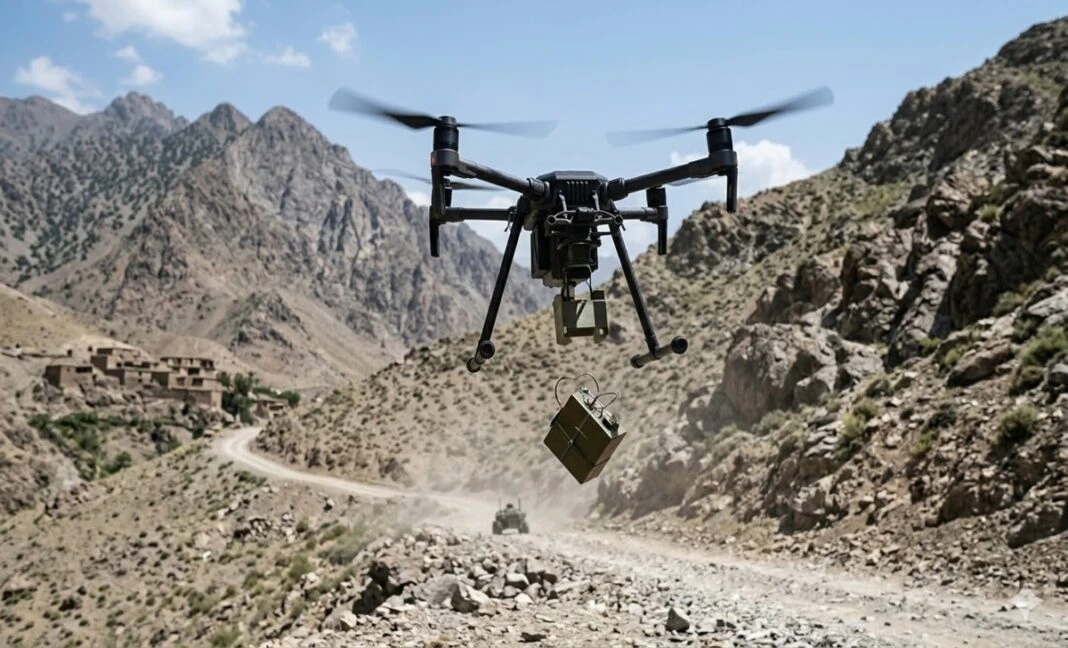
The transition from holding ground to spoiling attacks is absolute. In the 1990s, commanders obsessed over holding districts to maintain supply lines to Tajikistan. Today, holding ground is a liability. Without air support, any fixed position becomes a target for Taliban drone strikes, a capability the Taliban 1.0 lacked. Consequently, the resistance has adopted a strategy of sting operations. These include night raids and targeted assassinations designed to harass and exhaust the Taliban forces without exposing insurgents to decisive battles.
The social composition has also shifted. The Northern Alliance was a coalition of equals, Massoud (Tajik), Dostum (Uzbek), and Mazari (Hazara) each commanded vast, semi-autonomous fiefdoms. Today, that ethnic coalition is fractured. The NRF is predominantly Tajik, and while the AFF has made strides in recruiting across ethnic lines, the Uzbek and Hazara communities lack the unified military leadership they possessed in the 90s. This lack of a broad, multi-ethnic united front remains the current movement’s greatest strategic weakness compared to its predecessor.
Finally, the transition from warlords to technocrats marks a significant evolution in tradecraft. Ahmad Shah Massoud was a singular military genius born of the anti-Soviet jihad. In contrast, figures like General Yasin Zia represent a new archetype, the technocrat-fighter. Trained by NATO and the US military, these leaders bring professional military planning and a nuanced understanding of information warfare to the insurgency.
The Long War Ahead
The trajectory of the anti-Taliban insurgency suggests a conflict that will be measured not in months, but in years. Unlike the rapid collapse of the Republic, this resistance is built on a strategy of patience and survival. The transition to asymmetric warfare places the burden of defense on the Taliban, forcing a regime already struggling with governance to stretch its resources across a hostile geography.
The critical variable in this equation remains the cohesion of the opposition versus the internal discipline of the Taliban. If the NRF and AFF can maintain their operational tempo and bridge the ethnic divides that fractured the opposition in the past, they present a chronic, unresolvable threat to the Emirate’s stability. Conversely, the Taliban’s challenge is to transition from a fighting force to a governing body without fracturing under the weight of economic isolation and internal dissent.
As the snows melt in the Hindu Kush each spring, they historically herald the start of the fighting season. However, the events of December 2025 demonstrate that the seasons of war have changed. The resistance has proven it can strike in the depths of winter and in the heart of urban centers. The ghosts of the Northern Alliance have not merely returned, they have evolved. In the shadows of the mountains, a new, more complex chapter of Afghan history is being written, one where the outcome will be decided by endurance rather than brute force.