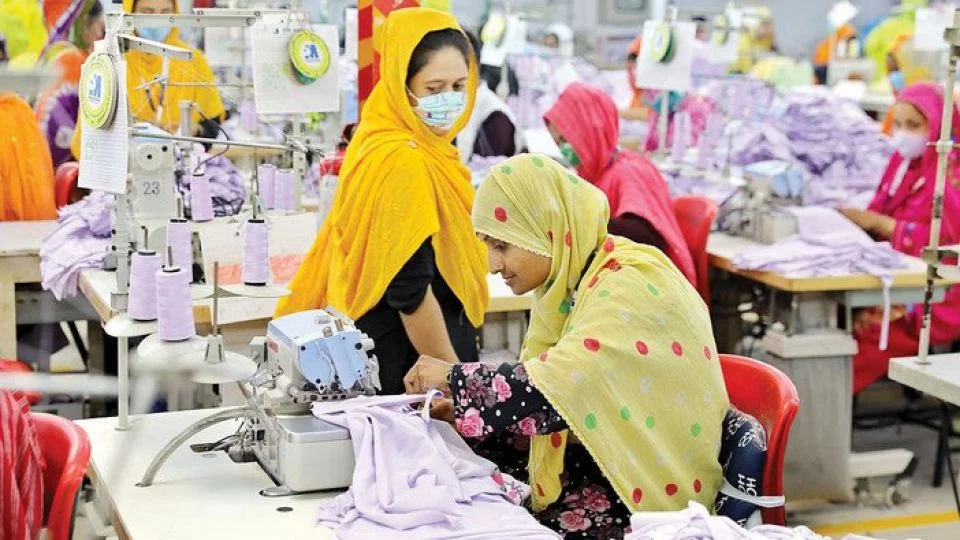
Bangladesh, the world’s second-largest garment producer, has chosen to ship its textile exports to global markets via the Maldives, bypassing India. This move impacts the cargo revenue potential of Indian airports and ports amid strained bilateral ties, reports Mint.
The Indian business newspaper, citing three people aware of the development, reports that Bangladesh was rerouting its textile exports to the Maldives by sea and then dispatching cargoes by air to its global customers, including H&M and Zara.
“Previously, Bangladeshi goods were shipped through Indian airports, but now they are rerouting shipments from other locations,” Deepak Tiwari, managing director of MSC Agency (India) Pvt Ltd, told Mint over the phone.
“This shift means India’s airports and ports lose revenue previously earned from handling these cargoes,” he said.
The Mediterranean Shipping Company (MSC) is a leading global container shipping company.
The redirection of textile exports could weaken trade relations between India and Bangladesh and reduce the collaborative opportunities in logistics and infrastructure projects, said the newspaper.
It could also potentially threaten India’s revenue from port and transit fees, alongside business generated from Bangladesh’s exports that pass through Indian borders, it said.
Seized by the issue, the Indian government is exploring a balanced solution to ensure that Bangladesh’s textile exports—significant in volume and linked to Indian manufacturing hubs in Bangladesh—remain beneficial to Indian interests, one person said.
“A significant portion of these Bangladeshi textile exports are being produced in facilities or factories owned or operated by Indian companies based in Bangladesh,” the first person said.
Bangladesh’s textile industry contributes 80 percent of its exports and 13 percent of its GDP.
“The issue is under the government’s attention. We are currently reviewing its impact on India,” the second person said.
Industry experts suggested that Bangladesh took this step to gain greater control over its supply chain and meet its shipment deadlines by avoiding delays caused at India’s airports, said Mint.
“This new route offers Bangladesh a strategic advantage along with improved reliability, which is crucial for meeting tight deadlines in the international clothing market,” said Arun Kumar, president of the Association of Multimodal Transport Operators of India.
“Furthermore, by avoiding reliance on Indian ports, Bangladesh is ensuring greater control over its supply chain,” said the chief of the association advocating seamless, efficient transportation solutions across sea, rail and road networks in India.
Kumar explained that textiles were also treated as perishable goods and that failure to deliver them on time results in the rejection of consignments. Garments meant for a specific season lose their value if they are delivered late.
Also See: Trouble for the Leather Sector in Bangladesh
Indian textile exporters had a different perspective on the rerouting of exports by Bangladesh.
“There’s nothing to read into this,” Anil Buchasia, executive member, eastern region, Apparel Export Promotion Council, told Mint over the phone.
“Indian airports are already congested, and we had also requested the government to restrict Bangladeshi textiles from passing through Indian airports,” he said.
The third person aware of the developments dismissed suggestions that the move was linked to the ouster in August of former Bangladesh prime minister Sheikh Hasina, who is currently said to be staying in India.
The International Crimes Tribunal (Bangladesh) had issued an arrest warrant against her in October.
“The government does not see this as a reaction to Sheikh Hasina’s asylum. Textiles are the backbone of Bangladesh’s economy, so they must have made this decision to promote their textile exports,” the third person said.
Bangladesh’s garment exports fell 4.34 percent to $44.47 billion in FY24, according to Bangladesh Bank.
The decline was attributed primarily to reduced shipments of readymade garments, reflecting broader economic challenges.
This news is sourced from Asia News and is intended for informational purposes only.