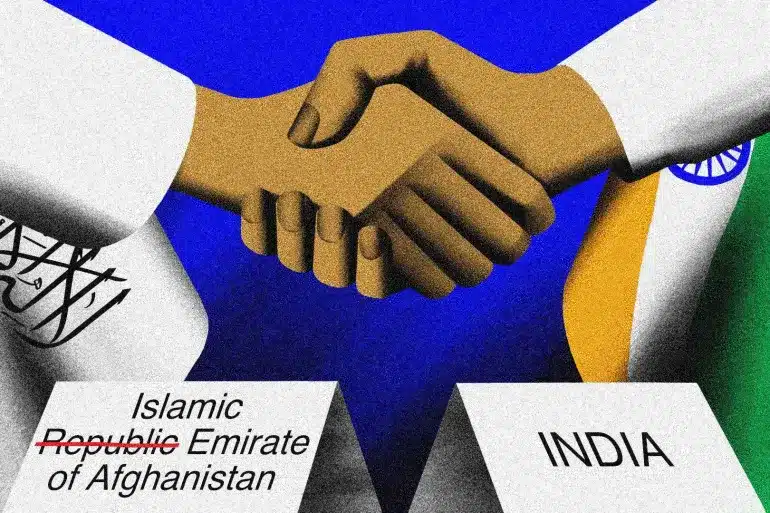
Recently, the assertion that India and Afghanistan have had diplomatic ties since before the former emerged as an independent state has become more prevalent. Without a doubt, over the course of many centuries, Afghanistan and India—or more specifically, the areas of what is now known as India—have had considerable commercial and cultural linkages. Among other instances of outspoken affirmations of sincere affinity, Indian national security adviser Ajit Doval recently participated in the 5th Multilateral Security Dialogue on Afghanistan in Moscow. In his speech, Doval emphasized India’s need for an “inclusive and representative” Afghan government and stated that the Afghan people were one of India’s “foremost priorities.” In light of recent developments and how the region has evolved, particularly over the past two decades, it is imperative to examine the trajectory of these ties.
India, Pakistan, and Afghanistan
As early as 1950, India and Afghanistan signed a treaty of friendship that established a strong foundation for their friendly and cooperative relations. India, therefore, enjoyed cordial diplomatic ties with all Afghan governments, including those that were brought to power following the Soviet invasion of Afghanistan in December 1979. However, another intriguing aspect also aided the emergence of India-Afghanistan relations. Given that both countries had territorial disputes with Pakistan, ties between India and Afghanistan dramatically improved after Pakistan was formed.
In contrast to one another\’s conceptions of nationhood, India and Pakistan have long been at odds with one another.
Although it is true that Afghanistan has traditionally served as the focal point of international and intra-regional conflicts, the rivalry between India and Pakistan is the most prominent one.
As soon as Pakistan began to suspect that Indo-Afghan ties were a danger to its ethnic and territorial integrity, Afghanistan was drawn into this regional conflict. For Pakistan, its tumultuous relationship with Afghanistan is a reflection of its fear of encirclement. Thus, Pakistan\’s objectives in Afghanistan since the 1970s have largely involved ensuring a balance of power in Kabul that serves its interests while reducing India\’s influence. India interprets Pakistan\’s pursuit of \”strategic depth,\” as it is widely referred to, as a bid to exert political sway over Afghanistan and use it as a defensive line against the country.
Notwithstanding the relative pragmatism with which the current Taliban leadership has been approached by regional countries, including India, it harbors concerns that a hardline government could fuel terrorism on the subcontinent by expanding its influence there.
To Afghanistan and Beyond
India\’s willingness to take the lead and increase global cooperation on counterterrorism issues is not solely a consequence of its geopolitical rivalry with Pakistan in the Afghan theate
Following the disintegration of the Soviet Union, India restructured its ties with Central Asia by adopting the \”Connect Central Asia\” initiative in 2021. The lack of connectivity between the two regions, however, means that there is still a trade deficit. India sees its attempts to foster economic and trade relations with Central Asian and Eurasian countries hindered by Pakistan and what it perceives as China\’s aims to establish hegemony in Eurasia through the Belt and Road Initiative (BRI). With US$62 billion invested in energy and infrastructure projects in Pakistan, the China-Pakistan Economic Corridor (CPEC) has raised concerns for India\’s geostrategic, geoeconomic, and security interests. Not only have recent events in Afghanistan heightened India\’s interest in the region, but they have also enhanced the significance of the Chabahar Port route through Afghanistan to reach the Central Asian Republics.
As it happens, the withdrawal of NATO forces from Afghanistan has provided countries in its larger neighborhood with tremendous opportunities, along with a fair share of challenges. Both of India\’s rivals, China and Pakistan, perceive an avenue for expanding their economic leverage through Afghanistan. When it comes to China, there is little doubt that it has the ability to significantly contribute to Afghanistan\’s post-conflict reconstruction and development in the form of aid and economic resources. It also has definite stakes in Afghanistan\’s stability and security, which might pave the way for investment in the country\’s mineral resource sector. The Chinese government believes that while China is a potentially important player in terms of security and development in Afghanistan, the country\’s other neighbors can and should also collaborate to address the impediments to reconstruction and reintegration into regional security, economic, and diplomatic networks. China has been actively encouraging regional and extra-regional interoperability on multilateral forums for at least the past ten years.
Careful Strides
Considering that all countries in the region have a vested interest in the security and stability of Afghanistan, it is only rational for each to take rapid yet careful strides. In a recent interview with an Indian magazine, Zamir Kabulov, Russia\’s Special Representative for Afghanistan, echoed similar sentiments.
He advocated for a regional approach for Afghanistan by creating a core format with India, Pakistan, Iran, China, and Russia but rejecting any role for “outsiders” in the country.
He argued that Pakistan should not be excluded from any such framework despite India being a strong regional player and having a role to play. He underlined the significance of reciprocal cooperation for regional peace and security, noting China\’s support for the idea of creating a five-member format despite the distinctive dynamics of its relations with India and Pakistan.
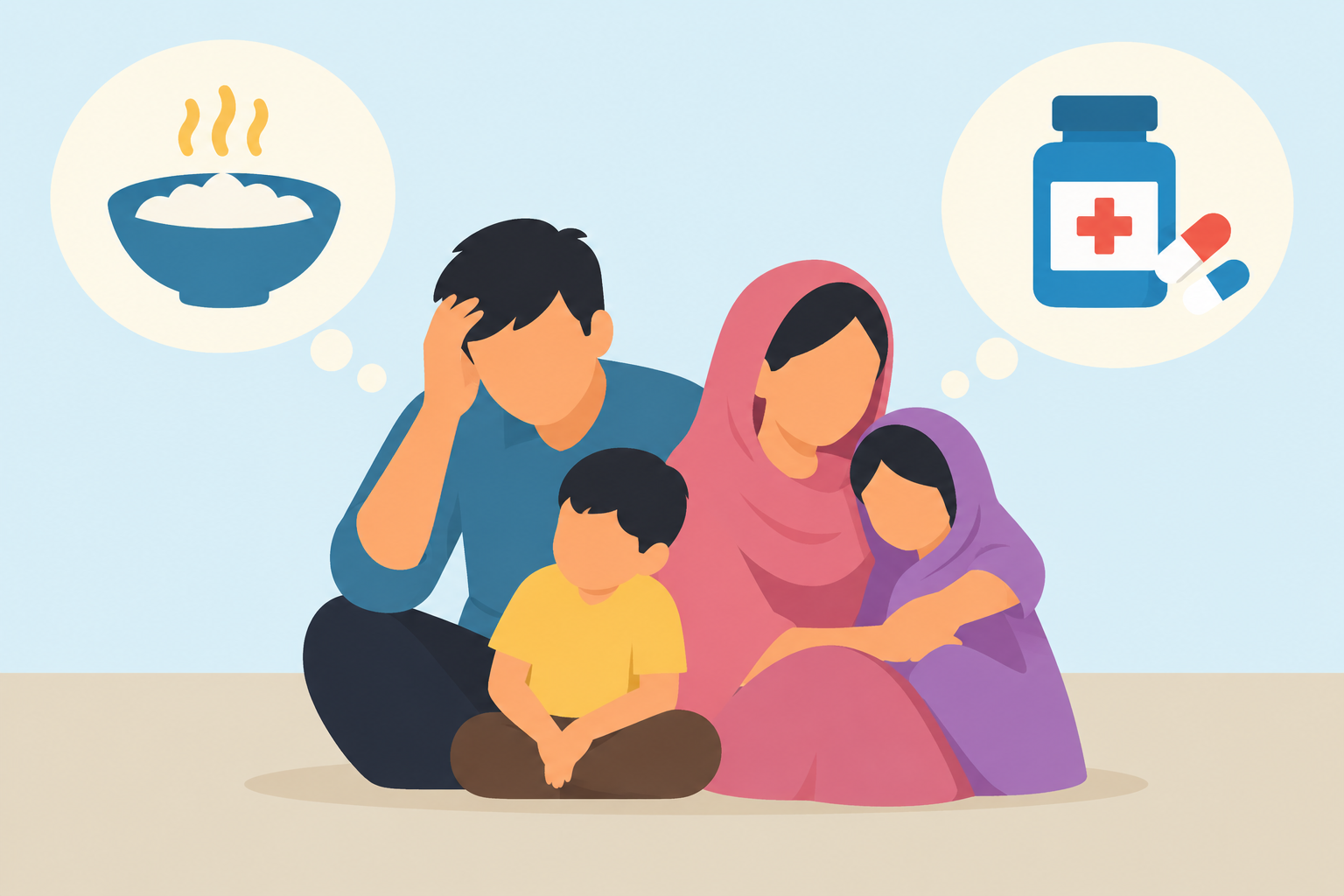
However, even if a consensus was reached among the participants, including India and its adversaries, it is vital to remember that there are challenges that must be overcome for such a framework to be effective. The socioeconomic situation in Afghanistan is a major cause for concern, which is compounded by other issues, most notably terrorism. In addition, the Taliban have not shown the flexibility and moderation in their policies that many had anticipated. While the regional countries seek to ease the pressure on the Afghan people by expanding trade with Afghanistan and delivering humanitarian aid, it is imminent that the Taliban take institutional measures to ameliorate the situation or at least lay the groundwork for the country’s progress.[/vc_column_text][/vc_column][/vc_row]

Your go-to editorial hub for policy perspectives and informed analysis on pressing regional and global issues.