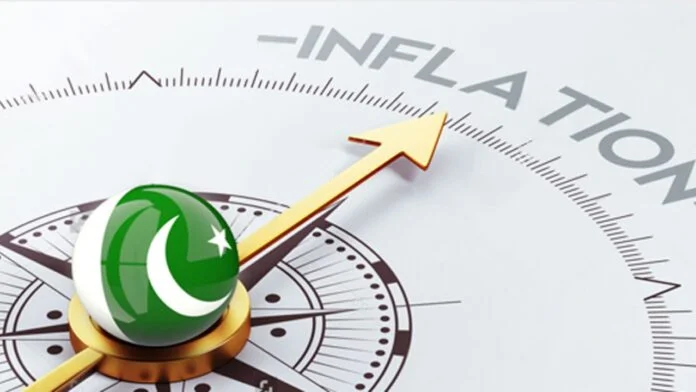
Pakistan’s consumer price index hits its highest rate in 50 years with food, beverage, and transportation prices up by over 45% and the government aims to increase revenues through taxes and secure funding from the IMF.
ISLAMABAD: Last month, prices rose at the fastest pace ever in the country’s history, according to available data, with food, beverage and transport costs driving inflation to a point where analysts fear “families will have to make choices and sacrifices”, as February records highest Inflation.
Monthly inflation, measured by a basket of products called the Consumer Price Index (CPI), jumped to 31.6 per cent in February year-on-year, the Pakistan Bureau of Statistics said on Wednesday.
This was the highest annual rate since available data, i.e. July 1965, according to the research firm Arif Habib Ltd, and is also expected to rise even further in the coming months.
Inflation surpassed 30pc last month after having stayed above 20pc for eight months from June to January. “The 30 per cent figure is where families will have to make choices and sacrifices,” analyst Torek Farhadi told AFP. Inflation was 12.2pc in February last year.
The goods and services in the CPI basket are divided into 12 major components with different weights. Of them, costs in four categories — transport, food and non-alcoholic beverages, alcoholic beverages and tobacco, and recreation and culture — jumped by around half.
Prices in February rose 4.3pc compared to January, the highest rate since October’s 4.7pc.
The government passed a supplementary bill last month that lifted the goods and services tax to 18pc from 17pc to help raise Rs170 billion ($639 million) in extra revenue for the fiscal year through July.
The government is undertaking belt-tightening, aims to increase revenues through taxes, and has allowed the rupee to depreciate as it thrashes out a deal with the International Monetary Fund (IMF) to secure more than $1 billion in funding.
The rupee shed 1.73pc, closing at 266.11 against the dollar on Wednesday. The rupee has depreciated nearly 15pc since the start of the calendar year, adding to inflation.
“This is still not the peak. March is expected to be higher. Food prices are expected to go even higher as we approach Ramazan,” said Fahad Rauf, head of research at Ismail Iqbal Securities, a local brokerage firm.
Mustafa Pasha, chief investment officer at Lakson Investments, said: “Inflation is expected to continue rising in the months ahead as IMF-mandated structural adjustments and currency devaluation filter through the supply chain.”
Core inflation increased 17.1pc and 21.5pc year-on-year for urban and rural centers, respectively.
“Core inflation is something the central bank will need to keep an eye on when deciding the quantum of increase for the policy rate,” Reuters quoted Mr Pasha as saying.
With February’s reading, average inflation has now reached 26.2pc this fiscal year compared to 10.52pc in the previous year. A PBS spokesperson told Reuters that the yearly average inflation for the 1973-74 financial year was 32.78pc.
Also See: IMF to end talks with Pakistan
Change in prices
The food items whose prices saw the highest increase in February compared to a year ago were onions (416.74pc), chicken (96.86pc), eggs (78.73pc), rice (77.81pc), gram whole (64.93pc), pulse moong (56.43pc), pulse gram (55.99pc), wheat flour (55.92pc), pulse mash (50.77pc), cooking oil (50.66pc), mustard oil (48.11pc), dry fruits (47.88pc), vegetable ghee (45.89pc), and fresh fruits (45.17pc).
In contrast, the price of tomatoes dropped by 62.7pc and that of gur by 1.87pc.
In the non-food category, the items whose prices saw the highest rise from the same month last year included textbooks (74.13pc), motor fuel (63.2pc), gas charges (62.82pc), stationery (61.37pc), washing soap/detergents/matchbox (51.63pc), liquified hydrocarbons (48.37pc), motor vehicles (38.77pc), construction input items (38.51pc), motor vehicle accessories (37.04pc), transport services (33.13pc), marriage hall charges (25.50pc), major tools and equipment (24.63pc), tailoring (23.59pc), mechanical services (20.51pc), woolen cloth (19.83pc), cotton cloth (18.82pc), medical tests (17.90pc) and household servant (17.25pc).
Source: Dawn News

Your trusted source for insightful journalism. Stay informed with our compelling coverage of global affairs, business, technology, and more.