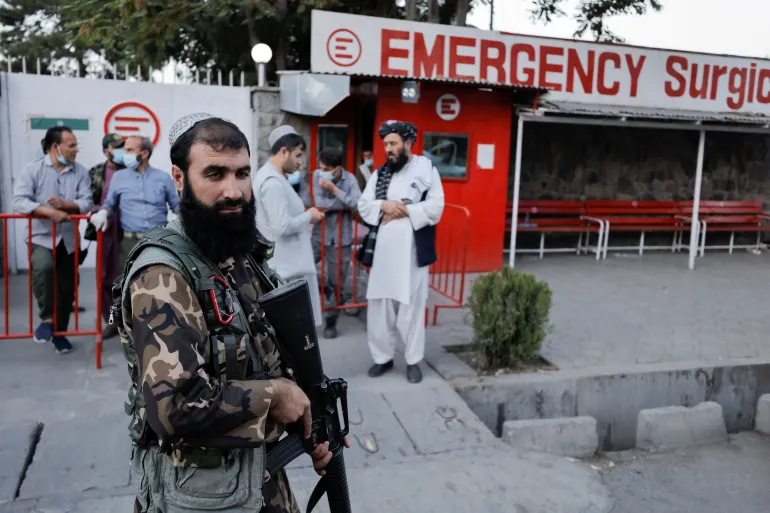
The looming humanitarian crisis and the increasing volatility and instability in Afghanistan are evidence of how a forever war has been thrown upon Afghanistan. The irresponsible exit by the U.S administration has put Afghanistan and the entire region in an unending quagmire. The U.S. left Afghanistan in a state where there was no working security mechanism and no trained force. It has been already discussed that the resumption of activities by terrorist groups will be one of the most important and alarming consequences of the unplanned U.S. withdrawal. Islamic State (ISKP) has somehow started its operations in Afghanistan, nearly a month after the Taliban take over. Taliban’s government is confronted with a huge humanitarian and economic crisis, besides the emerging security threats posed by the presence of the Islamic State.
Taliban and ISKP Tussle
The tussle between the Taliban and ISKP is more than visible now. ISKP and other terrorist groups are getting active so much so that they have targeted a memorial service for Taliban spokesman Zabiullah Mujahid’s mother, near Kabul Mosque. It was a clear indication and a warning to the Taliban that they can be attacked anywhere. The ISKP is challenging the Taliban-styled security, which we know is not enough in any way. In a span of just one week, two bomb blasts have shaken Afghanistan. On 8th October, an explosion at a mosque in Kunduz killed at least 72 people and left more than 140 injured. ISKP took responsibility for the attack. Another deadly explosion hits a Shia mosque during Friday prayers on 15th October in Kandahar, killing at least 32 people.
ISKP has changed its tactics and now operates mainly as “sleeper cells” or in a clandestine mode, which can strike almost anywhere, and the Taliban security apparatus lacks almost everything from trained officials to infrastructure to intelligence gathering.
The recent attacks have established that ISKP and other such factions have become active and confronting the Taliban’s authority. Moreover, the recent wave of deadly attacks has seriously undermined the Taliban’s claim of peace and security, proving it to be insufficient, keeping in view the scale of ISKP activities. Now in a rivalry to control Afghanistan, ISKP may take in other terrorist splinter groups that are operating in Afghanistan to exert a power show.
The recent two attacks were targeted towards the Shia faction in the country, and it seems as if ISKP is deliberately targeting the minority factions in order to aggravate their sentiments to create more chaos and strain for the Taliban to handle. Besides, ISKP seemingly has more advantage over the Taliban, as the latter may face defection from their followers if they try to tilt from their previous ideology or they initiated armed operations against the terrorist factions. ISKP can easily use its ideology card to create a division among the Taliban.
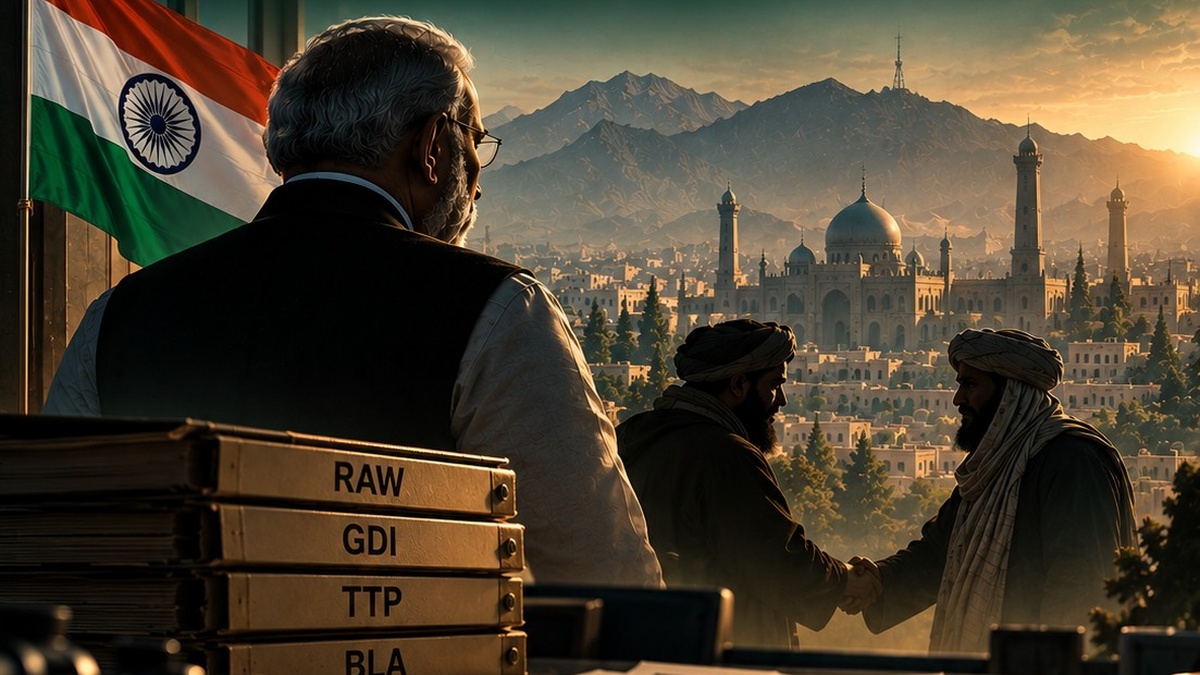
Here, Pakistan needs to be very vigilant, as TTP and ISKP may come into an alliance to disrupt regional peace. Pakistan should not go into any peace deal with TTP, until and unless they give up arms and accept the writ of the state. TTP has a history of operating via sleeper cells and targeting undefined locations, so meanwhile our security apparatus should be on high alert.
Conclusion
A very obvious clash of power and influence is going on between ISKP and Taliban in which a common Afghan is paying the price with his blood.
Taliban needs to realize that they are a political faction and not an insurgent group now; they need to learn to govern and not rule.
Things aren’t going to be easy for Taliban, as they have to keep their followers from becoming defector and govern as per they promised the international community. ISKP may try to use the politically motivated agendas of Taliban against them to gain followers, thus strength in the longer runs. The question is can Taliban handle the ISKP threat on its own? If yes, then how? If not, what can be done? Is joint counter terrorism operations part of the list?
It is such an irony, that the U.S. and allies came to Afghanistan to eliminate terrorism and dismantle the terrorist networks, but there seems to be a rise in their strength and power.
The U.S. needs to be held accountable for abandoning a country in a fragile state, which is now facing a huge humanitarian crisis. The repercussions of an irresponsible withdrawal are consuming the war-torn country which has no financial backup, severe economic meltdown, and almost no security mechanism. The growing security concerns are not only detrimental for Afghanistan but for the entire region, especially for Pakistan.
Besides the security challenges and volatility, there is a dire to need to address the looming humanitarian crisis before it engulfs the country. The world needs to realize that as the winter approaches, more than 12 million Afghans face hunger and malnutrition as they depend on foreign aid/assistance. According to United Nations agencies and Non-Governmental Organizations working in Afghanistan, due to the rise in conflict and lack of funds aids, the health care system has literally collapsed in the country, where clinics are facing an extreme lack of medical supplies and equipment, with thousands of medical staff working without pays for last six months. If the international community, world leaders and INGOs, do not respond and act on an urgent basis, the collapse of Afghanistan’s health care system will result in the deaths of thousands of children under the age of five.

Mariam Shah, a PhD Scholar at the National Defense University, specializes in conflict analysis, terrorism, and military psychology, employing multidisciplinary approaches to research complex societal issues.