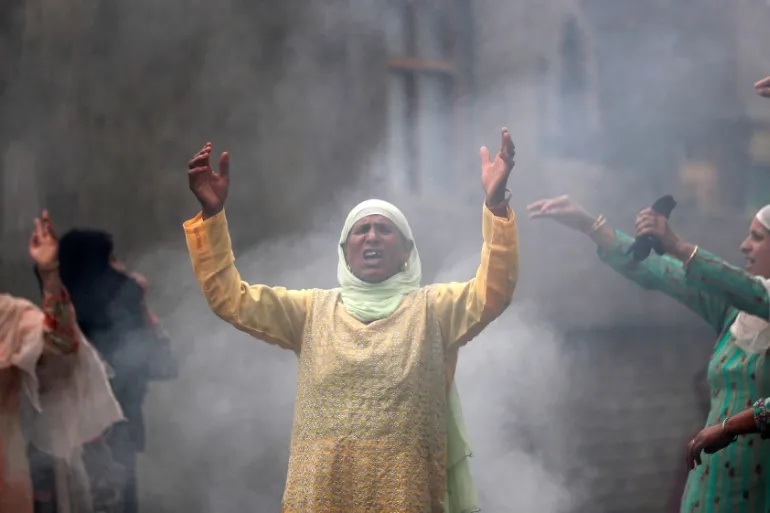
The present-day Kashmir conflict is a consequence of the ill-planned partition of India. As a result to which two neighbours have been antagonistic to each other. This antagonism did not remain limited to mere altercations. It has also translated into armed conflicts that have securitized the region. The unfortunate legacy of the colonial era remains evident to this day. The Kashmiris bear the brunt of miscalculated policies of the British. All the whilst as they continue to suffer abuses committed by Indian forces in the valley.
The genesis of the Kashmir dispute was, in many ways, the product of a quickly framed partition plan.
Lord Mountbatten had a biased role in influencing many rulers of these states to join India. This was a plain disregarding of the very principles he laid down. It was simply to carry out the scheme of partition.
The Tale of Two Kashmirs
As the ill-fated scheme of partition resulted in India sending its forces in the valley. The Muslim majority region witnessed bloodshed as the Dogra’s forces, as well as Indian state armies, pushed to suppress the Muslims. Between Jammu and Kashmir, the latter is particularly witnessing gross human rights violations that have been recorded frequently.
There are two divisions of Kashmir; Azad Kashmir and Indian Occupied Kashmir. Both depict a vivid contrast. On one side a confederation setting with its executives, constitution and identity exist; which Pakistan has never hindered since the beginning of the conflict. On the contrary, India utilized measures that resulted in widespread violations of human rights. India has been on a downward trajectory since the partition. The significant blow to Indian constitutional rationale came when India disavowed the special status granted to Kashmir through articles 370 and 35-A, in the August of 2019. Ever since Kashmir has been equated to prison by the global community.
While Pakistan remained consistent with its policy on Kashmir, India has been changing its policy objectives and tactics with the passage of time.
Indo-Israel Congruence of Contravening International Covenants
The liberal hegemonic order took primacy in the aftermath of the second world war. Ever since then the concept of human rights without any discrimination has been at the forefront. The world witnessed legal treaties that made states bound to keep the ‘element of humanity’ even during conflicts. The most seminal among these were the Geneva convention, the declaration of human rights, the International Covenant on Economic, Social and Cultural Rights, and other agreements that followed.
More recently, Israeli actions in Gaza have completely disregarded the international humanitarian and human rights laws.
It is particularly true when contextualized from UN resolutions and reports by other human rights agencies. Increasing settlements, persecuting Palestinians, bombing civilians without distinctions of combatants and non-combatants are just a few examples of direct violations.
Article 49 of the Geneva convention states that; the occupying power shall not deport or transfer parts of its own civilian population into the territory it occupies. Article 54 entails the protection of objects indispensable to the survival of the civilian population.
For settlements Israel violates 4th Geneva Convention Articles 1, 16, 20, 27, 31, 32, 147. In the context of the Additional Protocol of 1977, articles 51, 52, 85 stand violated.
A similar pattern can be observed in India-Occupied Kashmir where a policy of apartheid is being pursued by changing demographics of Kashmir.
Indian military actions have repeatedly been called out for violating humanitarian rules of combat by killing civilians.
Suppression of Kashmiri Muslims
Dating back to the partition, the Muslims have always been a target of persecution. During October and November of 1947, a systematic genocide of Muslims in Jammu was carried out by Dogra and Indian forces to change the Muslim population ratio, which was greater in Kashmir. Around 237,000 Killings of Muslims took place.
The 90’s insurgency in Kashmir experienced similar attacks. As a result of which, approximately 100,000 killings of civilians took place. In 1990, India promulgated the controversial Armed Forces Special Powers Act which denied accountability for criminal actions committed by Indian security personnel.
As soon as the BJP government revoked the special status, the Indians increased their pace and started taking immediate actions. Kashmiris were denied any sort of political representation which could mitigate the grievances and bring forth a Kashmiri perspective to the conflict. Ever since the revocation of special status, the BJP government is carrying out political and administrative changes that would diminish the Muslim population in Kashmir. It entails settling the non-Kashmiri populace in the valley under the guise of buying property or attaining citizenship in Kashmir.
Rape by Indian Forces in Kashmir
Staggering accounts of rape as a tool of war against the indigenous Muslim population were reported.
A study in 2005 by Medecins Sans Frontieres concluded that the rate of sexual violence against Kashmiri women was one of the highest among the world’s conflict zone.
Dara Kay Cohen, an Assistant Professor at Harvard University, listed the conflict in Kashmir, alongside Bosnia, Sierra Leone, East Timor and Rwanda, as among the worst of the so-called mass rape wars.
In the last three decades only, more than 11,000 Kashmiri women were reported to have been raped by Indian military personnel.
The details of a harrowing incident emerged in February 1991. The Indian military unit, the Rajputana Rifles, carried out mass rapes of over 100 women troops at Kunanposhpora in Kupwara. There was no accountability for these heinous actions.
Mass Graves of Kashmir
The European Union Parliament resolution of 10 July 2008 strongly condemned; unlawful killings, enforced disappearances, torture, rape, and other human rights abuses. All of which have occurred in Jammu and Kashmir since the beginning of the armed conflict in 1989.
The report called for an impartial inquiry into the discovery of mass graves that were discovered in 2006. The Jammu and Kashmir Coalition of Civil Society (JKCCS) and Association of Parents of Disappeared Persons (APDP) confirmed the presence of mass graves.
Reportedly, around 55 villages present in the districts of Indian Occupied Kashmir; Kupwara, Baramulla and Bandipora had 2700 single or mass graves. The graves were reported to contain around 3000 dead bodies.
Conclusion
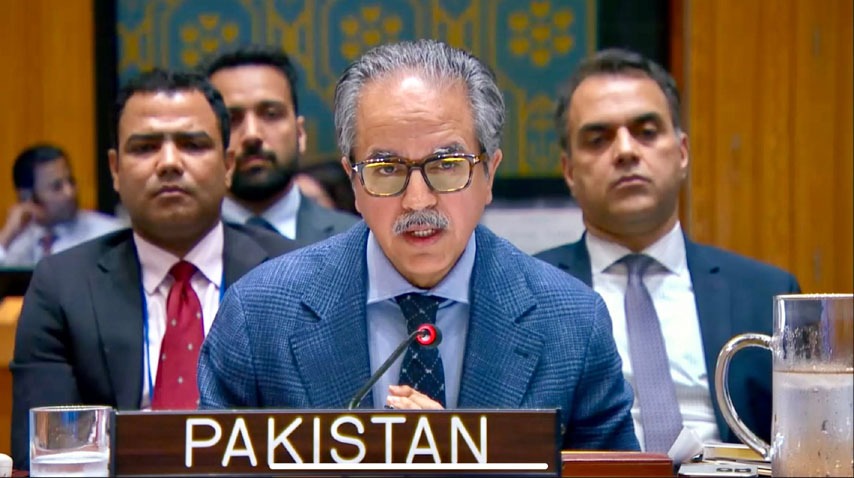
The failure of the multilateral approach is evident. Pakistan still adheres to the resolution of conflict as per the UN resolutions for Kashmir. India on the other hand pressed for a bilateral setting. However, due to India’s adamancy of engaging over Kashmir, this was not possible.
India’s previous actions as well as its plans for the valley directly contend with the articles laid down in international human rights and humanitarian laws. The global community has strongly condemned India’s actions. However, hegemonic states like Russia, the United States, United Kingdom and France have not shown opposition towards the Indian designs. This is noteworthy as these states advocate conceptions of human rights globally.
The present situation of Kashmir calls for access to journalists from the Western and neutral press. To draw a true picture of the on-ground situation, which has been censored since 2018. This is necessary to quell any impending humanitarian crisis for the people of Kashmir.

Your go-to editorial hub for policy perspectives and informed analysis on pressing regional and global issues.