Modi’s Approval Rate Declines Due to COVID-19

India’s COVID-19 crisis hits record cases and deaths. BJP faces political fallout as the health system collapses.

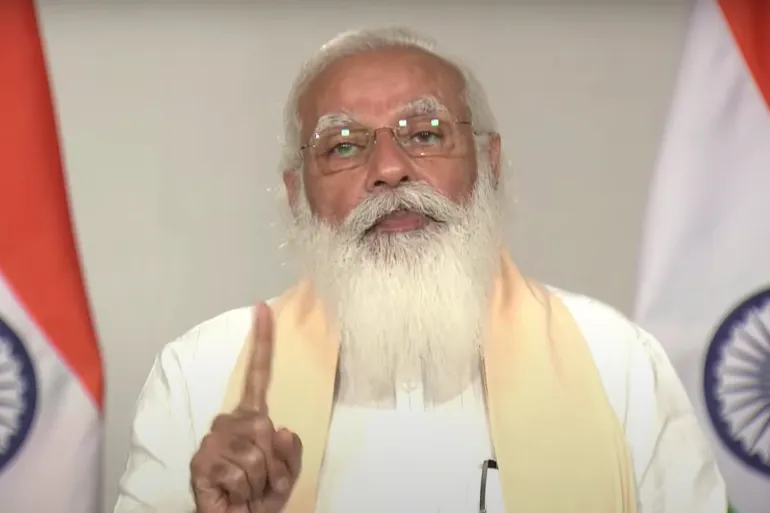
Modi had an approval rate of 64%, but it seems like COVID-19 will be an endgame for his regime. The approval rate has dropped down to 40%, according to Forbes. All of this is coming at the price of hundreds of thousands of dead bodies due to COVID.

The recent Vidhan Sabha election determined the upcoming downfall of the BJP. The BJP government lost in West Bengal to its rival, AITC, led by ‘Didi’ Mamata Banerjee. Banerjee’s party won over a two-thirds majority. Consequently, this makes Banerjee the Chief Minister of West Bengal for the third time in a row.

West Bengal isn’t the only state where the BJP found itself defeated. The BJP also lost in two southern states of India; Kerala and Tamil Nadu. Analysts consider that political failures is the reason for such a loss. However, it is evident that BJP’s failure in tackling COVID-19 is the main reason.

Merely a week ago, India entered the ‘predicted’ devastating third wave of COVID. It has reached record-breaking COVID cases per day. On Monday, India recorded around 368,000 cases with over 3,000 dead. This adds to 18.5million COVID cases and 205,000 deaths in India till now.

The whole health system of India has collapsed. The country is currently facing an oxygen crisis as patients fail to find them. Several hundred patients have died just because of an inadequate supply of oxygen. New Delhi High Court has issued a strict decision the regarding oxygen crisis. The court has ordered the punishment of government officials if oxygen supply is not provided to hospitals.

Also See: Indian Oppression Continues; Kashmiri Leaders Jailed During COVID

Deteriorating Situation in India 

The situation is indeed very grave in India. The international community has offered help. This includes Pakistan. Pakistan has offered to provide India with humanitarian aid. However, New Delhi is yet to reply. Other than Pakistan, even China has entered the field to help India by providing 8,000 oxygen concentrators with 10,000 more to be delivered this week.

Despite such a devastating situation, BJP went on to conduct large rallies for Vidhan Sabha elections, negating and ignoring the threats and danger of COVID fast-spreading. The government even allowed large gathering for religious occasions to take place. The BJP government ignored all warning about the coming wave. This negligence has led to the new variant spreading across the border. It was recently observed in Nepal.

Previously, only a month ago, India was providing assistance to other countries. India was providing vaccines to countries and was also exporting oxygen concentrators.

It is about time that India starts following the SOPs. It must take measurement to fulfil its national needs and demands before this variant spills into the regional countries. The question is whether Modi will do it for the sake of his politics or for his people?


News Desk

Your trusted source for insightful journalism. Stay informed with our compelling coverage of global affairs, business, technology, and more.

Recent

An analysis of Qatar’s neutrality, Al Jazeera’s framing of Pakistan, and how narrative diplomacy shapes mediation and regional security in South Asia.

Qatar’s Dubious Neutrality and the Narrative Campaign Against Pakistan

Qatar’s role in South Asia illustrates how mediation and media narratives can quietly converge into instruments of influence. Through Al Jazeera’s selective framing of Pakistan’s security challenges and Doha’s unbalanced facilitation with the Taliban, neutrality risks becoming a performative posture rather than a principled practice. Mediation that avoids accountability does not resolve conflict, it entrenches it.

Read More »
An analysis of how Qatar’s mediation shifted from dialogue to patronage, legitimizing the Taliban and Hamas while eroding global counterterrorism norms.

From Dialogue to Patronage: How Qatar Mainstreamed Radical Movements Under the Banner of Mediation

Qatar’s diplomacy has long been framed as pragmatic engagement, but its mediation model has increasingly blurred into political patronage. By hosting and legitimizing groups such as the Taliban and Hamas without enforceable conditions, Doha has helped normalize armed movements in international politics, weakening counterterrorism norms and reshaping regional stability.

Read More »
AI, Extremism, and the Weaponization of Hate: Islamophobia in India

AI, Extremism, and the Weaponization of Hate: Islamophobia in India

AI is no longer a neutral tool in India’s digital space. A growing body of research shows how artificial intelligence is being deliberately weaponized to mass-produce Islamophobic narratives, normalize harassment, and amplify Hindutva extremism. As online hate increasingly spills into real-world violence, India’s AI-driven propaganda ecosystem raises urgent questions about accountability, democracy, and the future of pluralism.

Read More »
AQAP’s Threat to China: Pathways Through Al-Qaeda’s Global Network

AQAP’s Threat to China: Pathways Through Al-Qaeda’s Global Network

AQAP’s threat against China marks a shift from rhetoric to execution, rooted in Al-Qaeda’s decentralized global architecture. By using Afghanistan as a coordination hub and relying on AQIS, TTP, and Uyghur militants of the Turkistan Islamic Party as local enablers, the threat is designed to be carried out far beyond Yemen. From CPEC projects in Pakistan to Chinese interests in Central Asia and Africa, the networked nature of Al-Qaeda allows a geographically dispersed yet strategically aligned campaign against Beijing.

Read More »
The Enduring Consequences of America’s Exit from Afghanistan

The Enduring Consequences of America’s Exit from Afghanistan

The 2021 US withdrawal from Afghanistan was more than the end of a long war, it was a poorly executed exit that triggered the rapid collapse of the Afghan state. The fall of Kabul, the Abbey Gate attack, and the return of militant groups exposed serious gaps in planning and coordination.

Read More »