

A multidimensional analysis of how autonomous systems, artificial intelligence, and robotic warfare are transforming the ethics, psychology, and future of global conflict.
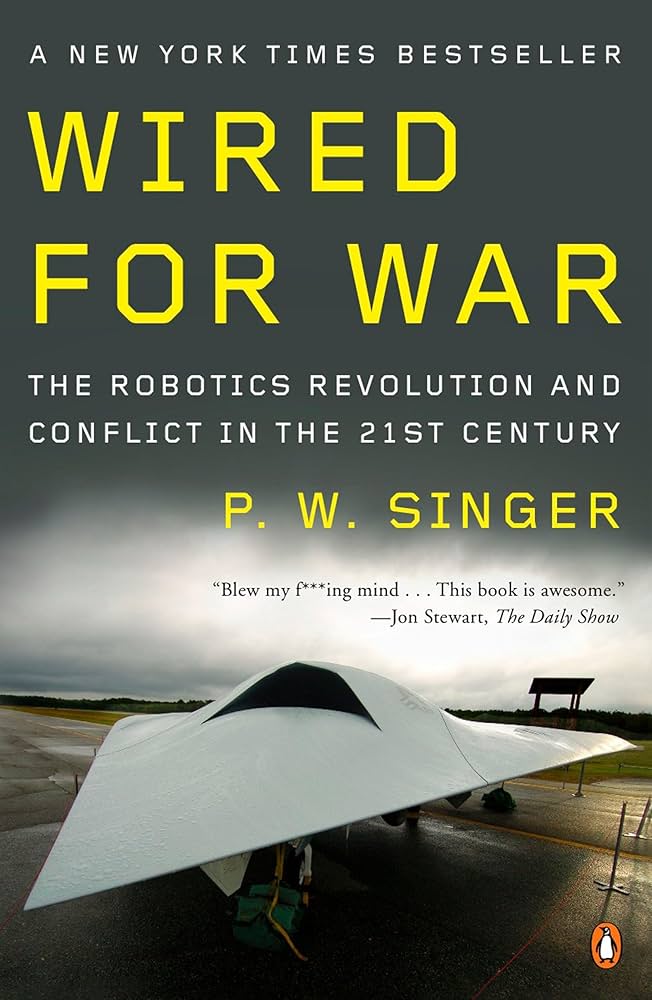
The Book “Wired for War: The Robotics Revolution and Conflict in the 21st Century,” written by Peter W. Singer, explores the future of conflict where the rise of robotics and artificial intelligence is turning science fiction into battlefield reality. Although the book was published in 2009, one and a half decades ago, it is still a remarkable illustration of how robotics is transforming the conduct and ethics of warfare. Instead of providing purely technical analysis, this book integrates geopolitical, historical, psychological, and philosophical dimensions to better understand what happens when war becomes “wired.” The diversity of data collected through various interviews conducted with military officials, insurgents, lawyers, politicians, scientists, defense contractors, and policymakers allows the book to present a multidimensional understanding of robotic warfare instead of giving a single institutional perspective. The result is an academic output that is not only well written but also well researched and intellectually grounded. At some point, the diversity and volume of information tend to overwhelm the reader. But this apparent complexity of the book represents the complexity of the subject.
Singer provides historical foundations to explore the gradual maturity in robotic technology and human understanding associated with it. A few centuries ago, ‘the Mechanical Turk, a chess-playing machine first displayed in 1770 and ‘Digesting Duck’ a mechanical duck with the ability to eat and digest seeds captivated the imagination of people. Later in the 20th century, the technology to design bomb-disposal robots, which were rejected by the Pentagon, was repurposed for civilian applications like autonomous vacuum cleaners. These initial developments, although never reaching the battlefield, laid the foundation of modern robotics. This is also one of the many examples in which technologies designed for military use migrated into the civilian domain, expanding the scope of their application. Such
Besides exploring the historical and technical aspects, the deliberation on the ethical and philosophical dimensions of robotics makes this book a compelling contribution to related literature. He has asked a few basic yet very important questions: Can robots with a high level of autonomy deserve rights akin to human rights? If not, how long can the distinction between human and robot be maintained? More importantly, how much autonomy should lethal weapon systems possess? When an unmanned aerial vehicle identifies a target with 90 percent certainty, should it be authorized to strike independently, or must a human operator retain the final decision? These are not just random questions but key policy challenges humanity is facing right now. Singer has argued that the answers to these questions will determine the nature and configuration of laws of armed conflict, international arms-control and regulatory regimes, socio-ethical accountability, and political norms of the future.
Singer has given special emphasis to the psychological dimension of the proliferating use of unmanned systems in modern warfare. By exemplifying the combat operation of an unmanned aerial vehicle (UAV) in the Middle East flown remotely by pilots sitting thousands of miles away in the United States, he has argued that physical distance and screens create emotional detachment which undermines the psychological barrier traditionally associated with killing. When video games like Call of Duty began to mimic actual military missions in real-time detail, the act of warfare risks becoming sanitized. This increases the likelihood of the use of lethal force, making war a more politically acceptable instrument of policy. According to Singer, robotics not only transforms the conduct of warfare but also increases the likelihood of conflict eruption from a political crisis.
Regarding the technological aspect, the book has aptly highlighted that technological advancement in military systems on one side has increased the efficiency of military power but, on the other hand, created new complications. Modern smart weapons have pinpoint precision, which can significantly reduce losses of civilian lives and infrastructure compared to the past era of indiscriminate bombing raids on cities. Unlike turning the entire city into rubble by dropping thousands of unguided bombs to hit a single military target, today a single guided bomb can neutralize a military threat even situated within an urbanized area with little to no collateral damage. But paradoxically, this level of lethal precision incentivizes the use of force. If conflicts appear cleaner and less costly in human terms, they may become more frequent—even as they grow less destructive per engagement.
Similarly, the ‘privatization of warfare’ is slowly popularizing due to the rise of private military contractors and defense cooperation for earning profits by conducting lethal operations and selling weapons usually outside the domains of legal binding. These profit-driven entities act as pressure groups to incentivize the triggering of wars. These trends are related to the theory of “permanent war economy,” wherein sustained conflict becomes economically beneficial for certain sectors. Robotics, with its high research and development costs and attractive defense deals, fits neatly into this paradigm. Therefore, the book argues, there exists a persistent threat that growing technological and economic incentives may outpace ethical and legal oversight in the longer run.
On technical grounds, the author has explored key technological developments in military robotics. For example, DARPA-funded projects such as exoskeletons designed to enhance soldier performance, SWORDS unmanned ground vehicles (UGVs) as an alternative to humans for high-risk missions, robotic “mule” platforms for logistics and supply, and autonomous underwater vehicles (AUVs) capable of extended deployments for persistent maritime domain awareness and mine-hunting operations. Here Singer mentions an interesting facet of human-machine interaction, i.e., the emotional linkage of humans with robots in the form of comradeship. Soldiers often develop emotional attachment with robots, naming them, learning to trust them, and even grieving their loss when destroyed. This unique aspect demonstrates a profound irony: as warfare becomes more mechanized, the human dimension of conflict does not disappear; instead, it finds new ways to manifest itself through emotional bonds with the very machines designed to reduce human involvement on the battlefield.
In a nutshell, Wired for War provides a future outlook of modern warfare predominantly shaped by robotics. The book wobbles the traditional thought process regarding robotics and makes readers confront uncomfortable realities about autonomy, accountability, and the evolving nature of violence. Singer does not provide comfortable answers; rather, he raises questions and leaves it to readers to interpret their answers. This book is highly recommended for scholars of defense and security studies, military professionals, policymakers, and general readers interested in robotics and the future of warfare.

Author is Research Associate at Maritime Centre of Excellence (MCE) at Pakistan Navy War College (PNWC), Lahore.