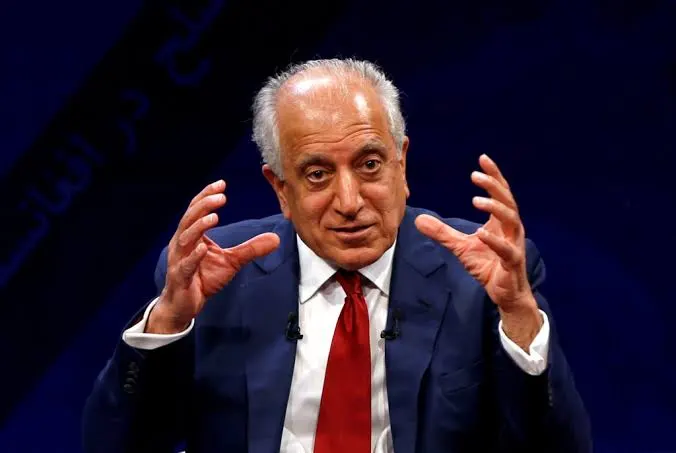
There is a particular kind of audacity that comes from men who have failed comprehensively at something and then returned, without apparent embarrassment, to lecture others about how it should be done. Zalmay Khalilzad has questioned Pakistan’s assertion that diplomacy with the Taliban has failed. This is the same Zalmay Khalilzad who spent years shuttling between Islamabad and Doha, regularly visiting Pakistan from 2018 to 2021, seeking Pakistani leverage to bring the Taliban to the negotiating table, and who then signed the Doha Agreement with the Taliban in February 2020. The agreement that he negotiated, that he championed, and that he staked his diplomatic reputation upon required the Taliban to prevent Afghan territory from being used by terrorist groups. Ayman al-Zawahiri, the global head of Al-Qaeda, was found and killed in a Kabul safe house in July 2022, a full year after the Taliban’s takeover and two years after the Doha Agreement’s signing. His presence in a Taliban-controlled safe house in the Afghan capital was not a minor compliance footnote. It was a sharp and definitive answer to the question of whether the Taliban were honoring the counterterrorism commitments Khalilzad had negotiated with them.
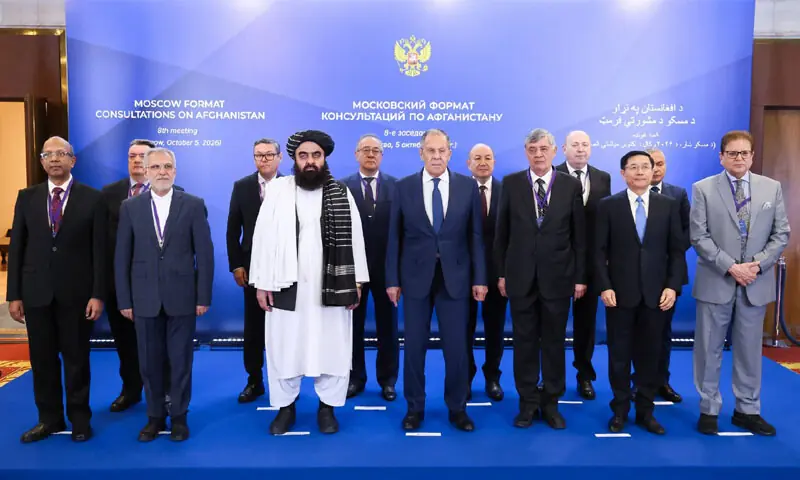
Afghanistan today, by the assessment of successive UN Security Council Monitoring Team reports, hosts more than twenty terrorist organizations with up to 13,000 foreign terrorist fighters operating from its territory. No UN member state has accepted Taliban claims that terrorist groups no longer operate there. The 37th UN Monitoring Team Report documented increased cross-border attacks originating from Afghan territory and assessed that TTP had been accorded greater operational freedom under Taliban rule. SIGAR assessments cited 6,000 to 6,500 TTP fighters alongside senior Al-Qaeda leadership inside Afghanistan. Russia, China, Denmark, the SCO, the CSTO, and successive UNSC deliberations have all expressed concern about terrorist safe havens and cross-border threats emanating from Afghan territory. This is not Pakistan’s narrative. This is the documented international consensus, assembled across multiple independent monitoring frameworks and endorsed by a range of states whose strategic interests are as varied as their geographies.
Against this backdrop, Khalilzad questions Pakistan’s diplomacy. Let the record answer him directly. Since the Taliban takeover in August 2021, Pakistan has conducted four Foreign Minister visits to Afghanistan, two Defence Minister visits, five Special Representative visits, five Secretary-level meetings, one National Security Adviser visit, eight Joint Coordination Committee sessions, 225 border flag meetings, 836 protest notes, and 13 formal demarches. Pakistan repeatedly identified more than five dozen TTP camps operating inside Afghanistan and consistently demanded their dismantlement through every available diplomatic channel. Pakistan’s core demands throughout this period were consistent, legally sound, and morally unimpeachable: deny sanctuary to terrorists, dismantle terrorist infrastructure, arrest and hand over wanted terrorists, and prevent Afghan territory from being used against neighboring states. These are not extraordinary demands. They are the minimum obligations of any responsible member of the international community and the precise commitments the Taliban made to Khalilzad personally under the Doha Agreement.
The response to four years of this engagement has not been sustained, verifiable action against terrorist infrastructure. It has been denial, deflection, and the continued expansion of TTP operational capacity from Afghan soil. The evidence is documented not in Pakistani government statements but in the bodies of Pakistani soldiers and civilians. More than 300 Afghan nationals, identified by name and full address, have been killed inside Pakistan while fighting Pakistani security forces. All five terrorists involved in the Cadet College Wana attack were Afghan nationals operating under direct TTP command. Four of the suicide attackers neutralied during the Bannu FC Headquarters operation were Afghan nationals. During an intelligence-based operation in Dera Ismail Khan, forensics identified one of the dead as Badaruddin, the biological son of the Deputy Governor of Badghis Province, Afghanistan. These are not allegations. They are forensically verified facts that document an organize operational pipeline linking Afghanistan-based recruitment, training, and cross-border terrorism into the heart of Pakistani civilian and military targets.
The Hassan Khel Post attack of 8 June 2026 martyred six Federal Constabulary soldiers, injured eight, and resulted in seven being abducted. The Bannu police attacks of April and May 2026 killed fifteen police officers and five civilians, respectively. In 2026 alone, TTP attacks from Afghan soil have martyred 86 civilians and injured 260 others in Khyber Pakhtunkhwa. These attacks occurred not in the absence of Pakistani diplomatic engagement but throughout four years of its most sustained and documented expression.
The principal challenge Pakistan faces has never been the absence of dialogue. Pakistan has pursued dialogue with consistency and institutional investment that few countries in comparable security circumstances would have sustained. The challenge has been the absence of any sustained, verifiable action on the other side, the consistent gap between Taliban commitments and Taliban conduct that Khalilzad negotiated into existence with the Doha Agreement and has declined to account for since.
Khalilzad has spent considerable energy building Taliban international credibility while directing scrutiny toward Pakistan. He remains largely silent on the Taliban’s systematic failure to honour the counterterrorism commitments he personally extracted from them. That silence is not neutral. It is a choice, and it is a choice that has consequences for the thousands of Pakistani families who have buried sons, daughters, and parents killed by networks operating freely from Afghan soil.
Pakistan does not need lectures on diplomacy from the man whose diplomacy produced this outcome. It needs the international community to hold the Taliban to the commitments that Khalilzad himself negotiated and to acknowledge that four years of Pakistani restraint, engagement, and documented good faith have been met not with reciprocal action but with continued impunity for the terrorist infrastructure that is killing Pakistanis with relentless regularity.

Your go-to editorial hub for policy perspectives and informed analysis on pressing regional and global issues.