Rivers as Lifelines in a Changing South Asia
The Indus, Ganges, and Brahmaputra rivers are the most important rivers in South Asia, surrounding the region and serving as the lifeblood and source of support for over two billion people. These rivers provide drinking water, food, industry, energy, and much more. The Indus River System alone supports around 300 million people in both Pakistan and India. For decades, the two countries co-existed and depended on each other economically for the flow of resources. They signed the Indus Waters Treaty in 1960 and the Ganges Water Treaty in 1996, but there is a major problem with these agreements. They were written for a completely different set of circumstances: a world with a much smaller population, more stable and predictable weather, and much less environmentally related stressors. We no longer live in such a world. Water scarcity is the biggest issue affecting rapidly growing South Asian countries populations today.
As the climate continually changes, the major stressors affecting water availability are increasing temperatures, rapidly melting glaciers, shifting monsoon patterns, and increasing population. These are all happening at the same time. The simple answer is less water, and a more dangerous problem. What was once a problem of technical water management evolved into a problem of politics and water security. Waters that once unified and connected South Asian countries are beginning to divide them.
The Third Pole and the Coming Water Shock
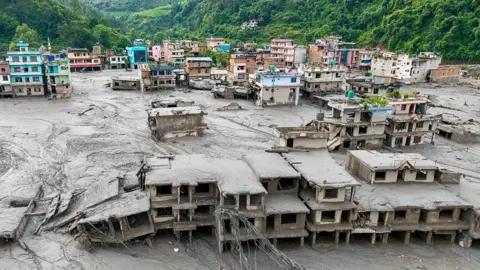
The crisis has its roots in the mountains. The Himalayas, Karakoram and Hindu Kush lay claim to the title “Third Pole” because their ice reserves are the largest outside of the Arctic and Antarctica, though they are also warming more than twice the global average. These glaciers sustain the Indus, Ganges and Brahmaputra rivers. With their rapid retreat, the whole hydrological system is thrown out of balance. On the one hand, melting glaciers become water and can lead to floods and mudslides. On the other hand, with time they lead to shrunken rivers. It is a brutal combination: disaster now, water scarcity later.
The reality of the situation only gets worse as Indus Basin faces extreme stress and projections for 2030 expect a 50% water deficit! India’s water demand is predicted to double within the same time Because of the climate crisis, even the rainfall is unpredictable! There is a cycle of extreme flooding in one year and extreme drought next. Climate change is affecting 800 million by 2050, and as water and crops fail, people become climate refugees, fleeing to already overcrowded cities from the rural and coastal areas. This situation is a recipe for unrest, as the overcrowded cities will become even more politically unstable, and conflicts will arise violently.
Outdated Treaties and the Future of Regional Cooperation
The political foundations of the areas surrounding the Indus Basin and the Indus water treaty are under extreme strain as the climate crisis continues. The Indus water treaty has withstood wars and diplomatic breakdowns, but with the climate crisis comes new, more serious stress. The rising political tensions with climate catastrophe and immediate cooperation suspensions after recent crises show how quickly water can become a weapon of politics rather than a shared resource. This is how quickly a technical treaty can become a geopolitical tool.
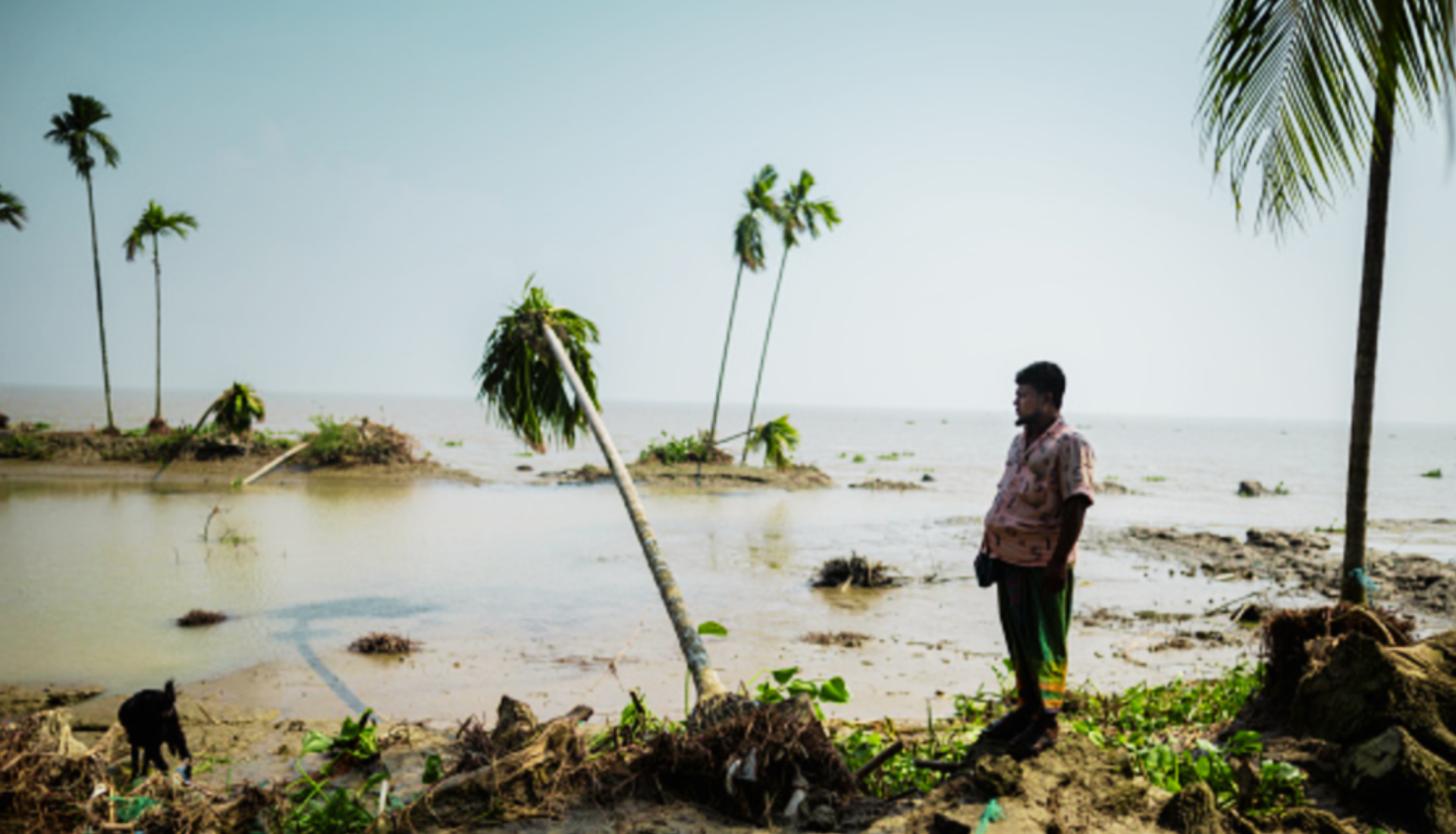
The treaty regarding the Ganges River between India and Bangladesh has similar problems. Many Bangladesh analysts say that the Ganges’ treaty is out of touch with current problems while considering it the most fundamental Bangladesh-India treaty. It will be the first treaty Bangladesh and India will renegotiate. It will also be the first treaty India has ever renegotiated with a country for the sake of climate change. In the former Bengal delta countries, the problems are variable, including groundwater depletion, salinity intrusion, creeping desertification, and increasingly poor surface water availability. Because surface water availability is increasingly poor, Dhaka increasingly and strongly advocates for more democratic, equitable, and climate-responsive relations.
Of the other rivers that run through Bangladesh, the Brahmaputra is probably the most sensitive. India, Bangladesh, and China all share the Brahmaputra River, and none of the countries have a formal treaty that outlines how to share the water resources. China also has upstream hydropower projects, and India has downstream dams. There is a great deal of mutual suspicion. Each of the three countries covets the water resources and views the resources as more of a commodity or strategic asset than a lifeline. Berlin River Treaty, the Ganges River Treaty, and Brahmaputra River Treaty also represent the emerging water diplomacy paradigms of the 21st century.It is hard to measure the strain caused by this water stress. Millions across the area work in agriculture which relies on the steady flow of rivers. When water is insufficient, crops start to fail, food prices rise, and the livelihoods of those in rural areas are decimated. By the year 2025, Pakistan will be in a state of extreme water scarcity with a reduction of water availability to around 500 cubic meters per person. In this area, extreme poverty, rapid population growth, and political issues are very present, therefore the competition for water could lead to violent conflicts.
None of this is unavoidable. Even the most difficult of situations have shown varied levels of cooperation. Initiatives in both the Nile Basin and the Mekong River have shown that countries can share information and develop plans for mutually beneficial equitable distribution. South Asia needs to adopt this approach. This entails a modernization of treaties considering climate change, increased investments in water conserving agriculture and resilient infrastructure, and aligned policies relating to migration, disaster response, and river systems. This is all about choices. South Asia can decide to continue treating water like a zero-sum game, where one country’s gain is another’s loss. Or it can realize that in a warming world, survival depends on working together. Getting these wrong spells hunger, displacement, and conflict. Getting this right means water can be a trigger not for war, but a foundation for shared stability.