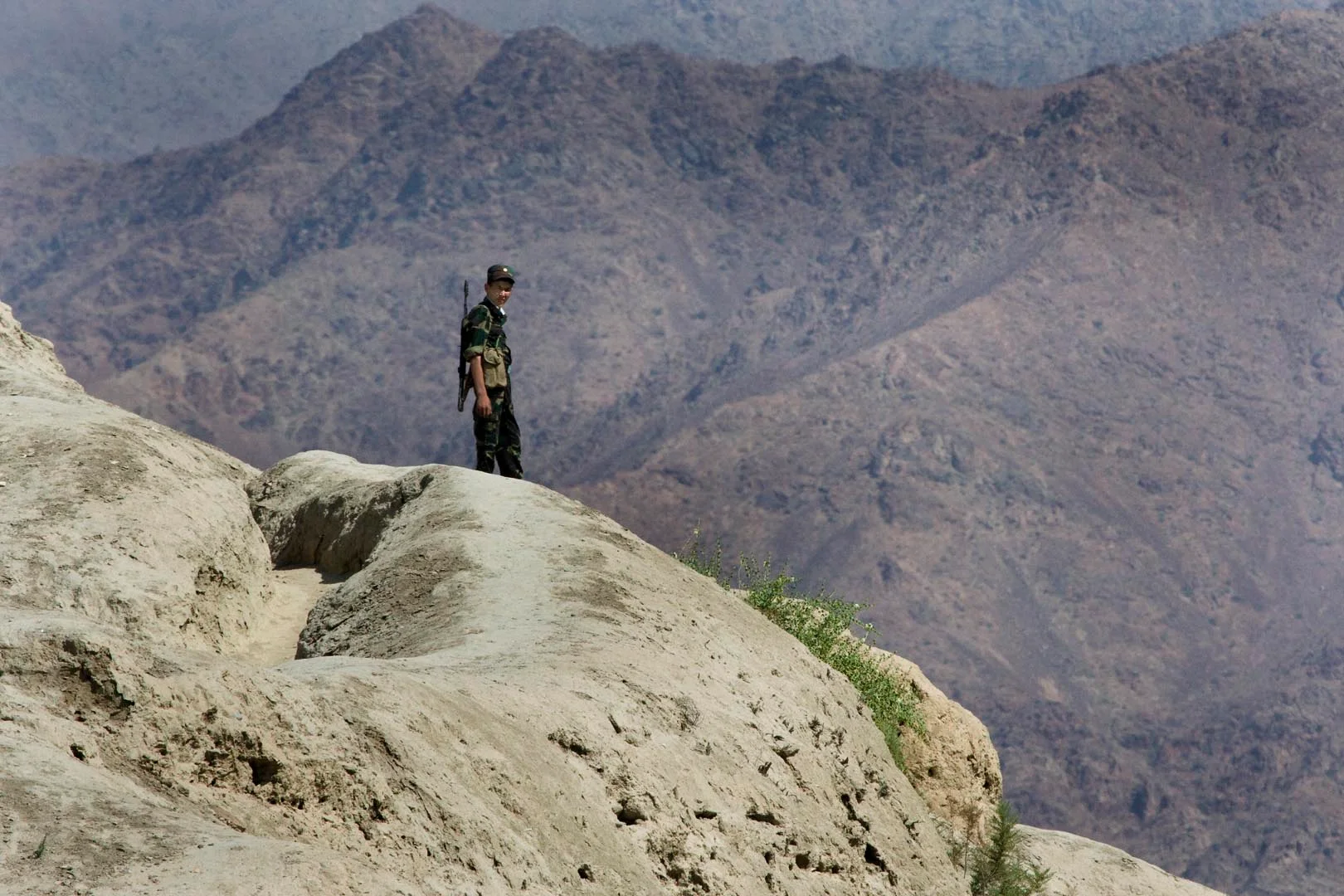
The rugged, 1,350-kilometre frontier between Afghanistan and Tajikistan has long been one of Central Asia’s most difficult borders to police. In recent months, however, it has taken on a more ominous character. A series of coordinated incidents, involving cross-border incursions, the use of advanced weaponry and multiple fatalities, has heightened concerns in Dushanbe that instability from Afghanistan is once again spilling northward.
For Tajikistan, the fear is not merely of isolated militant attacks, but of a gradual erosion of security along a border that also anchors Russian and Chinese strategic interests in the region. Despite the presence of the Russian 201st Military Base and the formal security guarantees of the Collective Security Treaty Organization (CSTO), Tajik officials increasingly view these incidents as early indicators of a more sustained challenge.
At the centre of this anxiety lies the Taliban’s return to power in Kabul. Since August 2021, regional and international actors have engaged the Taliban on the assumption that, over time, the movement would evolve into a more conventional governing authority, enforcing borders, monopolising the use of force and restraining allied armed groups. Developments along Afghanistan’s northern frontier, however, suggest that this expectation may rest on a fundamental misreading of how the Taliban understand power, ideology and regional leverage.
Rather than a temporary lapse in governance, the insecurity emanating from northern Afghanistan reflects a deeper structural reality. The Taliban remain, at their core, a revolutionary movement whose internal cohesion depends on sustaining networks of militancy that extend beyond Afghanistan’s borders. This model of permanent insurgency allows Kabul to project influence into neighbouring states while avoiding the ideological compromises required of a traditional nation-state, a strategy that now poses growing challenges for Central Asia’s fragile security order.
The Catalyst
On December 25, 2025, a violent clash at a strategic Tajik border post resulted in the deaths of at least five individuals. The engagement was notable for the use of advanced surveillance drones and high-caliber weaponry, signaling a level of tactical sophistication previously unseen in localized border skirmishes. This was followed in early January 2026 by an even more alarming incident, where Tajik security forces neutralized four heavily armed terrorists in the Darvoz district.
The destabilization effort is further evidenced by attacks on regional infrastructure development. Most notably, a series of targeted attacks on Chinese engineers working on projects in the proximity of the border. These engineers, vital to the regional connectivity and resource extraction projects that China views as central to its Belt and Road Initiative, have increasingly found themselves in the crosshairs of groups like the East Turkestan Islamic Party (ETIM). By targeting the human capital behind these projects, militants are directly undermining the Taliban’s claims that they can provide a secure environment for foreign investment.
These events serve as a proof of concept for regional militants. They demonstrate that the border remains porous despite the presence of the Collective Security Treaty Organization (CSTO) and the Russian 201st Military Base. For Dushanbe, these incursions are the opening salvos of a campaign to reignite the religious and political fires of the 1990s civil war. The choice of targets and the timing of the attacks suggest a strategy of death by a thousand cuts, designed to exhaust the Tajik military and expose the limitations of Russian security guarantees.
The Structural Imperative
The core of the regional security crisis lies in the Taliban’s internal mechanics and ideological rigidity. Since the fall of Kabul in August 2021, the international community’s engagement strategy has been built on the expectation that the Taliban would eventually adopt Westphalian norms: enforcing borders, centralizing the use of force, and disarming non-state actors. This expectation fundamentally misunderstands the movement. The Taliban is not a monolithic government, it is a loose confederation of factions, each with its own ideological intensity and command over foreign fighters.
At the heart of this friction is the divide between the kandahari traditionalists and the Haqqani Network, with various other splinter groups vying for influence. For the Taliban leadership, transforming into a rigid nation-state would be an act of ideological suicide. To strictly enforce the control on different armed groups would mean abandoning the global Jihadist narrative that sustains the loyalty of their most dedicated fighters. Many of the militants currently stationed in northern Afghanistan, members of Jamaat Ansarullah (the Tajik Taliban) and the Islamic Movement of Uzbekistan (IMU), were instrumental in the Taliban’s victory against NATO forces. They are not merely guests but brothers-in-arms who shared the trenches for two decades.
Beyond ideology, there is a deep-seated historical and ethnic grudge driving the Taliban’s policy toward Dushanbe. The Pashtun-dominated Taliban has not forgotten Tajikistan’s role in the 1990s as the primary external supporter of the Northern Alliance, the Taliban’s arch-rival. Furthermore, northern Afghanistan is home to a massive ethnic Tajik population that many within the Taliban perceive as a potential fifth column for a future mass resistance movement. By supporting and deploying allied Tajik terrorists, the Taliban are creating a security buffer that ensures Dushanbe is too preoccupied with its own internal stability to ever again offer sanctuary or support to ethnic Tajik resistance groups in Afghanistan.
If the Taliban were to crack down on these groups to satisfy the demands of Dushanbe or Beijing, they would face a serious internal schism. The most extremist elements of the Taliban rank-and-file would view such a move as a betrayal of their core dogma and a surrender to secular international norms. So the Taliban offer verbal assurances of regional security at the diplomatic level while providing logistical support and territorial sanctuary to militants who serve as a vanguard for regional instability. By keeping these groups active, the Taliban maintains a powerful lever of influence over their neighbors, ensuring that no regional power can ignore Kabul’s interests.
Exporting Radicalism
The militants massing in Afghan provinces like Badakhshan and Kunduz are also a part of a deliberate project to export a Taliban-inspired extreme version of Islam to Central Asia. Groups similar to the IMU and Jamaat Ansarullah have a long history in the region, having fought alongside the United Tajik Opposition (UTO) during the Tajik Civil War. These groups were nearly decimated during the American-led War on Terror, but the Taliban’s return to power has provided them with a new lease on life. They now possess American-made equipment, modern communication tools, and a propaganda machine that frames their mission as the “liberation” of Central Asia from post-Soviet secularism.
This export of radicalism is finding fertile ground in Tajikistan due to the country’s deep-seated social and religious cleavages. Tajikistan’s history is defined by its civil war, a conflict that pitted the post-Soviet secular elite against a coalition of democratic and religious factions. While a peace deal was brokered in 1997, the underlying tensions were never fully resolved. President Emomali Rahmon’s government has spent the last decade enacting increasingly restrictive anti-religious laws in an attempt to maintain control.
While the Dushanbe government frames these moves as secular preservation and a defense against extremism, they have inadvertently created a massive grievance that terrorist groups are expertly exploiting. Using digital platforms like Telegram and TikTok, Afghan-based militants present themselves as the only defenders of the faith against an apostate regime that has criminalized Islamic identity. This narrative resonates with a small segment of the youth who feel economically marginalized and culturally under siege.
The danger is that these external attacks will increase with each passing day. Tajikistan already faces significant economic pressure and a pending leadership succession, making it vulnerable to the type of hybrid warfare currently being waged from Afghan soil. By hosting, arming and supporting terrorist groups, the Taliban’s Afghanistan has successfully established itself as the regional hub for a new, destabilizing brand of religious extremism. The Tajik Taliban are no longer a fringe element, they are a bridgehead for a broader movement that seeks to redefine the borders and the soul of Central Asia.
As Russia remains bogged down in its conflict with Ukraine and China focuses on its maritime frontiers, the security vacuum in Central Asia is being filled by a militant infrastructure that views the entire region as its next battlefield. The recent border clashes are not an endpoint, but a warning of a permanent state of insurgency.

Your go-to editorial hub for policy perspectives and informed analysis on pressing regional and global issues.