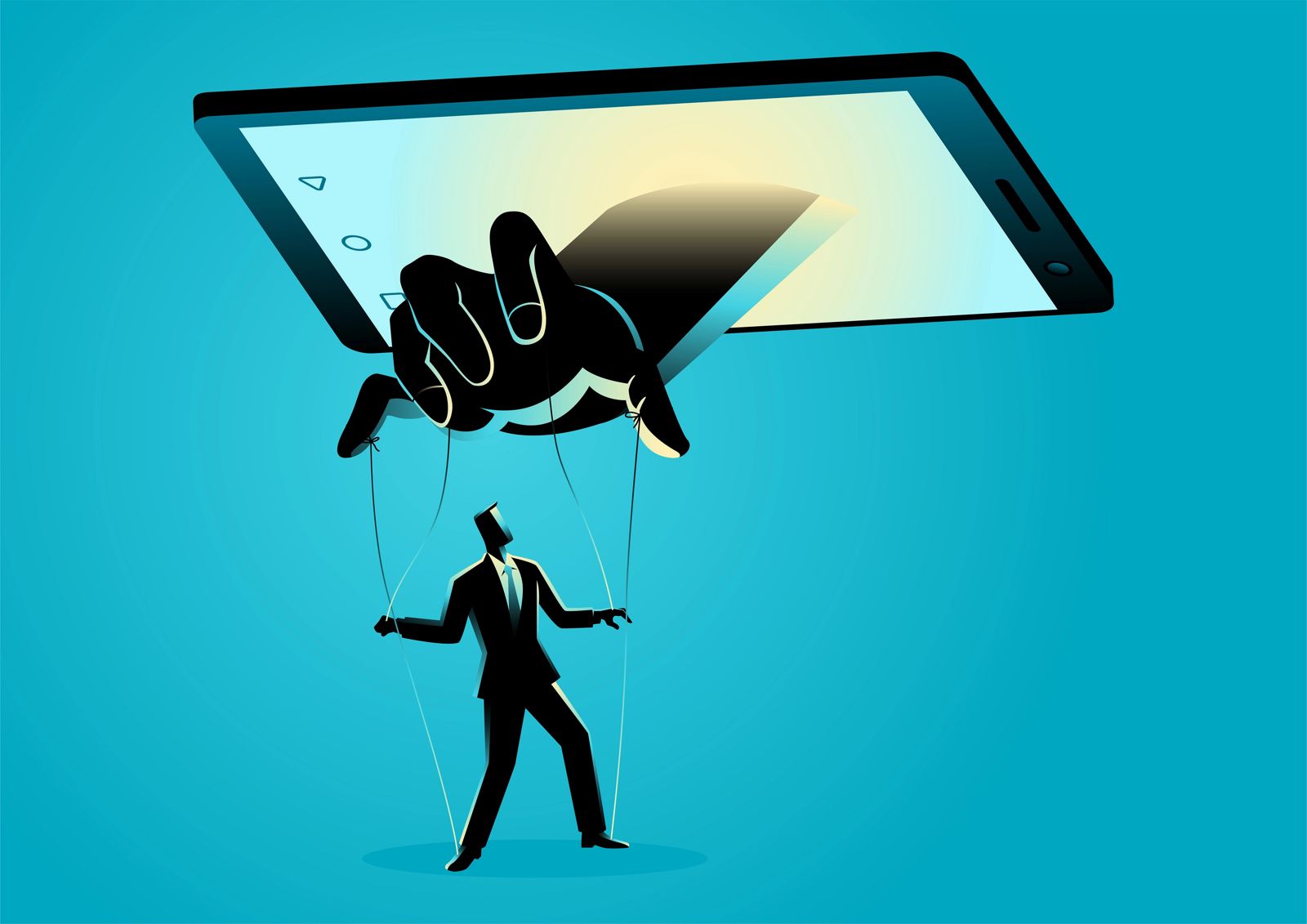
Imagine a digital town square where the ground beneath your feet shifts according to a silent, invisible logic. In this square, the volume of your voice is not determined by your conviction, your truthfulness or your community, but by a complex mathematical formula designed thousands of miles away to maximize engagement. As you speak, artificial intelligence whispers into the ears of your neighbors, occasionally distorting your words or amplifying a fabricated rumor that you never uttered. This is no longer a futuristic dystopia, it is the lived reality of the global social media landscape in our times.
For years, the prevailing global discourse, heavily influenced by Western liberal ideals, has viewed any form of state-led content moderation as an inherent assault on freedom of expression. However, as social media algorithms become hyper-intelligent and AI-driven propaganda reaches a state of perfect persuasion, the narrative is shifting.
Non-Western states, from the burgeoning tech hubs of Southeast Asia to the diverse polities of Africa and the Middle East, are increasingly finding a slight, yet significant, justification for intervening in these digital spaces. This intervention is not merely about control, it is becoming a matter of cognitive and national sovereignty.
The Myth of the Neutral Platform
The fundamental tension lies in the myth that social media platforms are politically neutral conduits of information. In reality, a handful of Silicon Valley-based corporations set the global agenda for what is discussable. These platforms operate on a set of norms that are almost exclusively Western-centric, specifically, they reflect the individualistic, secular, and liberal values of Northern California.
A stark example of this non-neutrality surfaced during the Gaza-Israel conflict. Human rights organizations and digital watchdogs documented what appeared to be a systematic tilting of algorithmic scales. Reports from groups like Human Rights Watch highlighted that content supporting Palestinian narratives or documenting human rights abuses in Gaza was frequently shadowbanned or removed under overly broad sensory or terrorist organization policies. In contrast, inflammatory rhetoric from the opposing side often bypassed these filters. Meta’s own Oversight Board later admitted that the company’s automated moderation tools had erroneously suppressed legitimate speech at a scale that fundamentally distorted the global perception of the conflict.
This bias is not an isolated incident. For many in the Global South, these norms do not align with local cultural sensitivities or social hierarchies. Western platforms often struggle to moderate content in low-resource languages, leading to a dangerous imbalance. Internal Facebook documents leaked in 2021 revealed that the platform spent 87% of its misinformation budget on English-language content, despite only 9% of its users being native English speakers. This negligence creates a vacuum where local nuances are ignored, and harmful content, ranging from blasphemy in religious societies to caste-based hate speech in South Asia, is allowed to proliferate under the guise of free speech, while harmless local cultural expressions are sometimes erroneously flagged as violent extremism.
The AI-Powered Propaganda Machine
The second pillar of justification stems from the sheer potency of modern propaganda tools. We have entered the era of algorithmic populism, where AI does not just share news, it predicts and manipulates human psychology. In many non-Western states, where internet penetration has leapfrogged traditional media literacy, the population is particularly vulnerable to sophisticated influence operations.
Statistics paint a grim picture. In the 2024 elections across the Global South, deepfake exposure reached unprecedented levels. In India, research suggested that nearly 75% of social media users were exposed to at least one deepfake during the election cycle. When a significant portion of a population cannot distinguish between a fact and a synthetic fabrication, either due to a lack of digital literacy or the sheer speed of information consumption, the free marketplace of ideas becomes a hall of mirrors.
In this environment, a small, well-funded group, be it a political IT cell, a radicalized faction, or even the platform owners themselves, can sway public opinion with surgical precision. When AI can generate 10,000 unique, persuasive posts in seconds, the traditional defense of more speech to counter bad speech fails. The sheer volume of automated content creates censorship through noise, where legitimate local voices are drowned out by high-arousal, polarizing propaganda.
Sovereign Apprehension as National Security
For non-Western states, the apprehension toward social media is increasingly viewed through the lens of national security rather than just internet policing. When platforms refuse to follow locally agreed-upon norms and instead enforce a unilateral set of rules, they act as extra-territorial sovereigns.
Consider the impact of coordinated inauthentic behavior. In regions with fragile social fabrics, a single viral lie about an ethnic group can lead to real-world violence within hours. If a platform’s moderation team is based in a different time zone, speaks a different language, and operates on a hands-off Western legal philosophy, the state is often left to clean up the physical consequences of digital negligence. In this context, some level of censorship, or more accurately, sovereign regulation, is seen as a necessary braking mechanism to prevent digital sparks from igniting national fires.
Social media is no longer free for all space, it is a deeply political, partisan landscape with its own agendas. Whether it is the promotion of certain geopolitical narratives or the suppression of anti-corporate sentiment, the “invisible hand” of the algorithm is always at work.
A striking example of this editorial overreach occurred on X, when the platform officially replaced the flag of the Islamic Republic of Iran in its graphics with the pre-1979 Pahlavi-era flag. Despite the current flag being the internationally recognized symbol of a sovereign state and a UN member, a private tech company took the liberty of de-recognizing it in the digital sphere. This was not a technical error but a deliberate political statement.
Crucially, one must ask: Would X ever do the same to a European nation? If a segment of a European population demanded regime change, would the platform unilaterally decide to swap the French Tricolour or the German Federal flag for an older iteration? The answer is almost certainly no. This disparity highlights a tiered sovereignty, where the national symbols and political legitimacy of non-Western states are treated as optional or subject to the whims of a CEO, while Western European nations enjoy a baseline of digital respect.
Non-Western states argue that if the choice is between a foreign corporation’s opaque censorship and a local government’s transparent (even if restrictive) regulation, the latter at least offers a degree of local accountability. While censorship remains a heavy word, the justification found by these states is rooted in a desire to protect their citizens from a form of digital colonialism, one where their thoughts are harvested for data and their social harmony is sacrificed for ad revenue.
As we look toward the future, the debate will likely move away from the binary of freedom vs. censorship and toward a more complex framework of digital sovereignty. In a world where AI has turned social media into a potent political weapon, the right of a nation to shield its cognitive space from external, algorithmic manipulation is becoming a central tenet of modern statecraft.
Your go-to editorial hub for policy perspectives and informed analysis on pressing regional and global issues.