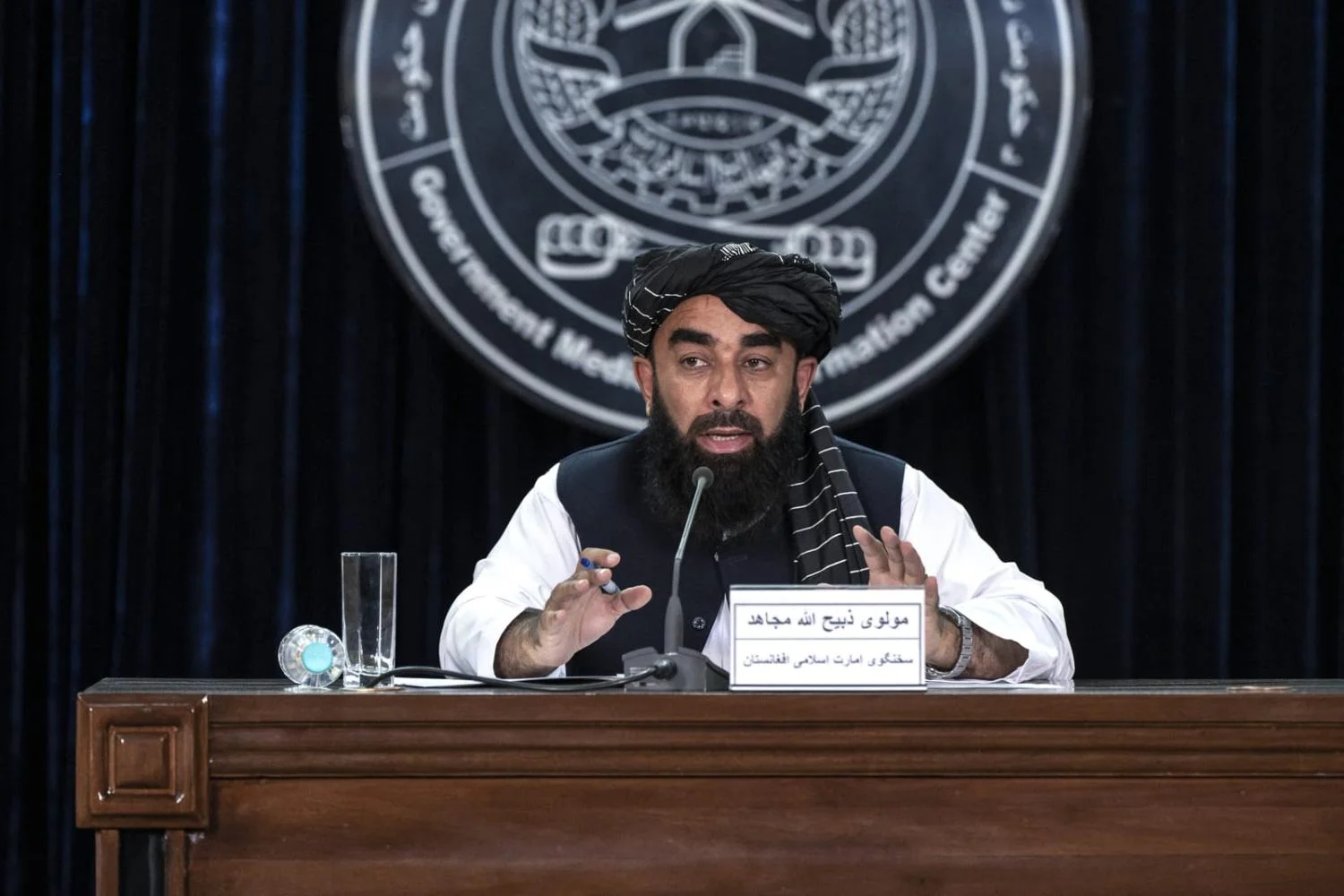
In a recent interview with Germany’s DW News, Zabihullah Mujahid, spokesperson for the Taliban regime in Afghanistan (TTA), made what can only be described as one of the most bizarre and disingenuous statements of recent times. When asked about the Tehrik-i-Taliban Pakistan (TTP), a UN-designated terrorist outfit responsible for the deaths of tens of thousands in Pakistan, Mujahid replied: “We do not call the TTP terrorists because the word ‘terrorist’ does not even exist in the Pashto dictionary, nor is it part of our terminology. The TTP is Pakistan’s internal issue, and we do not interfere in the internal matters of any country.”
This statement is not only laughable, but also an affront to facts, morality, and the painful realities faced by the Pakistani nation over the last two decades. Let’s break down this statement for what it really is: a desperate attempt to deflect attention, justify harboring a terrorist group, and evade responsibility.
Mujahid’s claim that there is no word for “terrorist” in Pashto is absurd on multiple levels. Words don’t define terrorism, actions do. The TTP has bombed mosques, attacked schools, ambushed funerals, slaughtered women and children, and assassinated soldiers and law enforcement officers. If these are not acts of terrorism, then nothing is.
Moreover, the Taliban themselves use terms like murtad (apostate), jasoos (spy), gumrah (deviant), and ghaddar (traitor) for their opponents. One wonders if Mujahid checked the Pashto dictionary for those terms before applying them liberally. Clearly, this is not a matter of linguistics but of selective morality and political convenience.
The second part of Mujahid’s statement, that the TTP is Pakistan’s internal issue—falls apart under the weight of undeniable evidence. The TTP leadership, including its top commanders and decision-making Shura, reside comfortably in Afghanistan. Many of them were killed in Afghan territory. Their safe havens, training camps, logistics, and operational planning zones have been repeatedly traced and exposed by Pakistan.
More importantly, these facts are not just claimed by Pakistan. Multiple independent reports, including those by the United Nations Security Council (UNSC) Monitoring Team, have confirmed that the TTP operates from Afghan soil with alarming impunity. Despite repeated diplomatic engagements and evidence sharing, the TTA regime continues to turn a blind eye—or worse, extend quiet facilitation.
After the Taliban’s return to power in August 2021, the TTP witnessed a dramatic revival. Thousands of terrorists returned from Afghanistan, new cadres were recruited, and for the first time in years, the group reorganised under a central command with increased coordination. This resurgence wasn’t organic. It was enabled by the power vacuum in Afghanistan and, more tellingly, by the TTA’s failure, willful or otherwise, to prevent their use of Afghan territory.
If the TTP were solely Pakistan’s domestic issue, why then does their leadership remain entrenched in Afghanistan? Why are their camps located across the Durand Line, not in Waziristan or Swat? Why has the Taliban government not dismantled these networks, despite constant Pakistani appeals.
Perhaps most telling is the TTA’s double standards. The Taliban have no qualms in calling ISKP (Islamic State – Khorasan Province) “Khawarij” (deviants), “fasadi” (corrupt), and “baghi” (rebels). Yet they never apply similar terms to the TTP. Why? The answer lies in tribal affiliations, ideological alignments, and political calculations. The TTP, largely made up of Pashtun militants, shares not just geography with the Afghan Taliban, but in many cases, historical bonds, training backgrounds, and ideological roots. This is not linguistic confusion, it is active complicity.
Pakistan has paid an unbearable price for TTP’s terrorism. More than 95,000 civilians, soldiers, police, and intelligence personnel have been martyred in attacks directly linked to this group. Markets have been bombed, children massacred in schools, and entire villages destroyed. To reduce this human suffering to a debate over vocabulary is not only intellectually dishonest—it is morally reprehensible.
The world, including the United Nations, Organisation of Islamic Cooperation (OIC), and nearly every global counter-terrorism body, recognises TTP for what it is: a terrorist organisation. Its actions fall squarely under every international and Islamic definition of terrorism, armed rebellion against the state, violence against civilians, and spreading “fasad fil-ard” (corruption on earth).
Mujahid and his TTA colleagues would do better to stop insulting regional and international intelligence by pretending innocence. The time for such hollow rhetoric is over. Pakistan cannot and will not accept verbal gymnastics to cover up Afghan complicity. If the Taliban regime truly seeks regional peace, it must stop harboring groups like TTP, dismantle their infrastructure, and hand over the leadership responsible for carnage on Pakistani soil. Otherwise, any claims of “non-interference” ring hollow, and dangerously so.
Disclaimer: The views expressed in this article are the author’s own. They do not necessarily reflect the editorial policy of the South Asia Times.

Ibrahim Khalil is an independent writer who covers regional politics, society, and security with a clear-eyed, grounded approach. His work blends traditional insight with a sharp, questioning tone, offering concise commentary on the issues shaping South Asia today.