Sufi music from a Sindhi shrine, a Pashtun attan circle dancing to ancient beats, and people in Hunza sharing a communal feast—these are some of the sights and living traditions that define Pakistan’s diverse society. They reflect values of social respect, protection of the weak, and a deep call for justice and social freedom.
Pakistan’s outward challenge today is not the existence of these traditions, but its ability to adequately represent them as the center of a rights-responsive identity. Human rights advocate respect for the individuality and self-worth of all people. Most declarations of rights around the world do not ask for uniformity; they invite cultures to pursue life, liberty, freedom of conscience, and participation in their own ways.
There are many ways to do that in Pakistan. Hospitality toward guests and respect for the asylum seeker, community justice tempered with honor and restraint, and respect for learning and the arts—these are not mere catchphrases, but real histories embedded in living traditions that have withstood the ravages of time. When coupled with contemporary human rights challenges, such clarity becomes evidence of soft power—especially when the ideas expressed are familiar to Western audiences yet articulated with depth and complexity.
Pashtunwali illustrates the point well. The demands of melmastia (open-handed hospitality) and nanawatai (asylum for anyone—even an enemy who seeks refuge) express a language of dignity within a relational ethic centered on the preservation of life. These are not abstractions; they are rules that have shaped social behavior for centuries in Khyber Pakhtunkhwa and the surrounding areas, and they define expectations about how strangers should be received and how harm should be averted. Modern scholars often struggle with badal (retribution) as a norm to be “limited and reframed” in accordance with wider legal principles. The point here is not to romanticize ancient codes, but to acknowledge that common law already reflects parts of universal principles: the emphasis on hospitality regardless of who is seeking it; the idea that the persecuted deserve asylum; and the gradual reform through which private vengeance is replaced by fair and impartial justice.
Sindhi Sufi culture offers a second example. For hundreds of years, the shrines of Sindh have served as social spaces where people come to listen to soothing sounds, find solace, share a meal, and practice a welcoming vernacular. The ethic of conduct surrounding the ajrak—a hand-block-printed textile—symbolizes a profound gesture of respect. When you place an ajrak on someone’s shoulders, you communicate that they are honored, that they belong, and that their dignity is recognized. Incorporating these practices into present-day programming—multilingual shrine-music festivals where consent, safety, and inclusion are prioritized, and artisan cooperatives that fairly compensate ajrak makers and trace each piece to its creator—strengthens both social and economic rights.
Through the folk and Sufi heritages of Punjab, we learn the spirit of equality. For centuries, the kafi tradition—which values the lowly and promotes an equitable society—has also upheld the right to food and non-discriminatory eating, challenging social hierarchies by seating people of all classes together to share a meal. These public acts powerfully symbolize equality. They serve an audience often described, with some irony, as “global rights in practice.” Without speaking a word, they teach that dignity is a table at which all people can sit, eat, and look upon one another as equals.
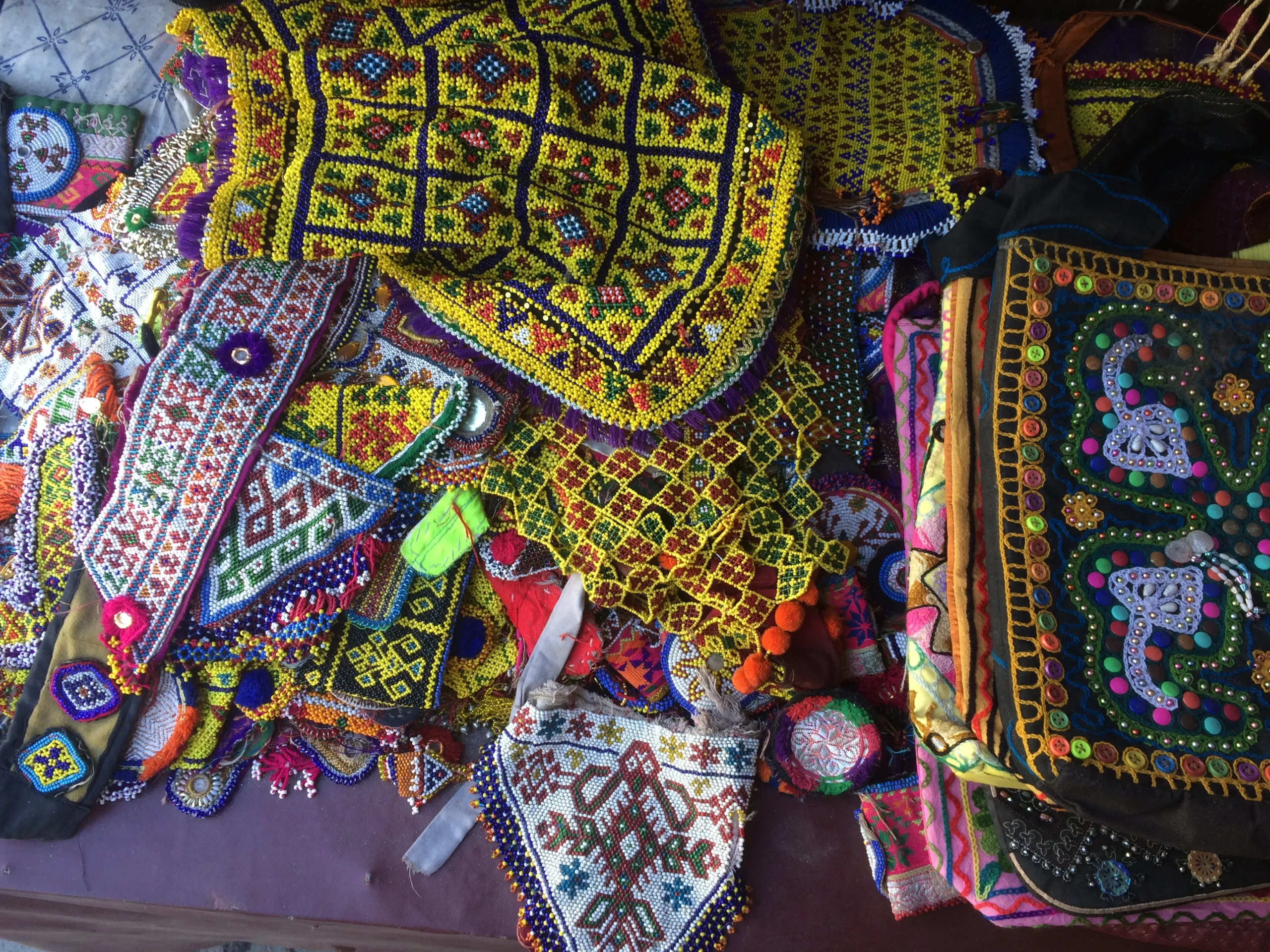
Similar stories circulate in other languages as well, such as in the customs of the Baloch people. Balochmayar, as described in the codes—with special emphasis on the terms memani (hospitality to guests) and bahut (asylum)—includes responsibilities such as the guardianship of women, children, and people with disabilities. Alongside present-day equivalents such as women’s embroidery cooperatives, these customs sustain livelihoods. Balochi embroidered textiles are not only a legacy of artistic craftsmanship but also a source of income, a means of negotiation, and a vehicle for intergenerational skill transmission. As Pakistan protects designs through provenance tracing and intellectual-property measures, craft increasingly becomes a livelihood that strengthens both economic and social rights.
This is not a romanticization of craft as mere pastime; rather, it reflects the close connection between cultural dignity and economic prosperity.
Khuli katcheri, volunteerism, and music events in Gilgit–Baltistan and Chitral all showcase the right to participation and culture. An entire mountain range is home to many endangered languages—for instance, Wakhi, Burushaski, and Shina—all of which tie place and identity to factors of survival. Community documentation projects and school clubs in these languages, often hosted on festival stages, promote the right to culture by enabling the succession of memory to take place. When tourists experience a bazmi music night in Hunza, where the audience functions as performers, they learn a form of civic pedagogy: everyone participates. Every voice and every tradition is in motion and renews itself, ensuring that no one is set aside or excluded.
Moreover, the media and the arts work hand in hand. Pakistan’s open-source music culture has shown the world how it can preserve the soul of a culture within modern production. The fusion of folk and contemporary music in studio settings has created global audiences and reshaped perceptions of Pakistani music. Visual arts—truck art, textiles, community architecture, and montage—embody care, artistic labor, consent narratives, and community pride. High-altitude polo and regional folk festivals demonstrate customs of fair play and guest safety. Each format provides an opportunity to tell a welcoming, people-centered story—especially when the artwork is thoughtfully curated and benefits are shared with the custodians.
The guardrails do not blunt the critique. The concern about tokenism—simply displaying culture without improving custodians’ lives—is entirely valid. The theft of intellectual property deprives artisans of income and erodes trust. And certain customs, without nuanced analysis, can run counter to rights, which makes thoughtful, contextualized celebration essential.
Accessibility matters: visas, costs, and security measures determine who is in and who is out. The test for alignment is simple: endorse and amplify practices that protect all people, and for those that do not, retire or reform them. Practical measures may include origin certification, as in fair trade for crafts; designing events to be more inclusive and safer; and ethical storytelling, used only where consent and context are genuinely sought, partnered with rights educators who shift norms toward better protection.
Cultural diplomacy must be the most ideal and integrated option to bring this vision together. The Pakistan Rights and Culture Fellowship is the first of its kind and will take place annually. Regional collaboratives—consisting of a female folk musician (lead), a female artisan, a community sports organizer, and a youth documentarian (workshop facilitator)—will perform in multiple cities across the globe. Each member will conduct a hospitality-themed integration, including a “Refuge and Dignity” show, a pop-up where artisans sell authentic pieces, and the workshop “Rights in Our Traditions,” where participants receive a meal sponsored by the diaspora. The purpose of this integration is to bring rights to the forefront of humanity.
The lived culture of Pakistan is the focus and will ultimately benefit, in the most humanitarian way, the custodians of our history. Structural partnerships in STEM education will be built, and measurable, policy-directed media will be generated. Responses to this evidence cannot logically differ. Pakistan’s cultural plurality already embodies a rights-based ethos: welcoming the stranger, feeding the hungry, shielding the defenseless, protecting crafts and languages, and including everyone. With integrity, the rule of law, and fair trade, these represent the country’s practicing soft powers—transmitted authentically by artists, artisans, teachers, and youth. The challenge lies not in creating the new, but in narrating the actual story: a cultural plurality that is unified, welcoming, and credibly generous.
Disclaimer: The views expressed in this article are the author’s own. They do not necessarily reflect the editorial policy of the South Asia Times.

Author is a visually impaired young scholar of International Relations, committed to advancing dialogue on global security, climate change, and human rights. His work bridges policy analysis and humanitarian advocacy, informed by research on climate–security dynamics and digital accessibility. Having contributed to initiatives on minority rights, inclusion, and policy reform through the Ministry of Human Rights and Inter-Services Public Relations, he brings practical experience to his scholarship. As a Millennium Fellow 2025, he continues to champion evidence-based, inclusive, and sustainable development.