15 Terrorists Killed in Balochistan’s Zhob district: ISPR

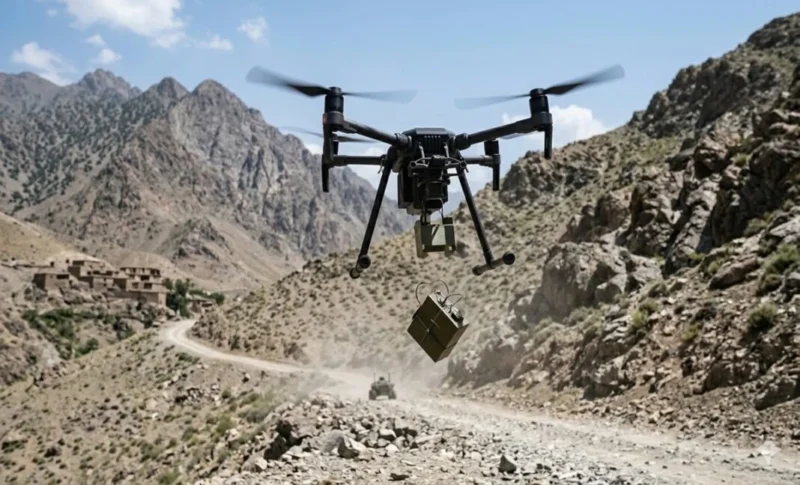
A soldier was martyred and 15 terrorists killed during a security operation in Balochistan's Zhob district. [Image via Dawn]

During an operation in Balochistan’s Zhob district on Tuesday, security forces killed 15 terrorists. However, one soldier was martyred. The military’s media wing reported the incident.
According to a statement by the Inter-Services Public Relations (ISPR), security forces conducted an intelligence-based operation in the district’s Sambaza area. They engaged the terrorists at their location and eliminated 15.

“However, during [an] intense exchange of fire, Sepoy Arifur Rehman (age 32 years; resident of Mansehra district), having fought gallantly, paid the ultimate sacrifice and embraced martyrdom,” the statement said.

The security forces recovered a large quantity of weapons, ammunition, and explosives from the 15 killed terrorists, the statement said. Furthermore, they are conducting a sanitisation operation to neutralise any remaining terrorists in the area.

“Security forces of Pakistan, in step with the nation, remain determined to wipe out the menace of terrorism from the country and sacrifices of our brave soldiers further strengthen our resolve,” it added.

In July, the government issued an official notification. It designated the banned Tehreek-i-Taliban Pakistan (TTP) as Fitna al Khawarij. The notification also mandated all institutions to use the term khariji (outcast) when referring to the perpetrators of terrorist attacks on Pakistan.

Also See: Pakistan Preparing Major Offensive Against Balochistan Separatist Groups

Statement by PM Shehbaz

Prime Minister Shehbaz Sharif praised the security forces for their professionalism in killing 15 terrorists.

The PM also paid tribute to Rehman for sacrificing his life during the operation, the state broadcaster PTV quoted him as saying in a post on X.

PM Shehbaz said that “we will continue fighting against terrorism until they completely eradicate it from the country.”

“Officers and personnel of security forces are busy day and night in protecting the motherland,” he said. “The entire nation, including me, is proud of the dutiful officers and security officers.”

“The entire nation, including me, stands by the security forces in this war against terrorism.”

The country has lately witnessed a sharp uptick in the number of attacks targeting security forces, other law enforcement agencies, and security checkpoints, particularly in Balochistan and KP.

On November 22, security forces killed seven terrorists in operations across Balochistan and Khyber Pakhtunkhwa.

Earlier in November, security forces killed four terrorists, including a “high-value target”, during an exchange of fire in Balochistan’s Kech district. In another operation in Khyber Pakhtunkhwa’s Miranshah district on the same day, the security forces killed eight terrorists.

This news is sourced from Dawn and is intended for informational purposes only.

News Desk

Your trusted source for insightful journalism. Stay informed with our compelling coverage of global affairs, business, technology, and more.

Recent

The Taliban’s new fatwa banning foreign militancy signals a shift in doctrine, but rising regional attacks and ideological fractures raise questions about its enforceability.

Doctrine vs Reality: Can the Taliban Enforce Their Ban on Foreign Militants?

The Taliban’s new fatwa banning foreign militants has been hailed by officials in Kabul as a decisive theological shift. But rising attacks in the north, continued TTP operations, and mounting pressure from Washington expose a widening gap between doctrine and reality. As regional powers demand proof of enforcement, the decree risks becoming another symbolic gesture unless it translates into measurable action on the ground.

Read More »
Deconstructing the Pakistan-Afghanistan Economic Crisis

Deconstructing the Pakistan-Afghanistan Economic Crisis

The Pakistan-Afghanistan trade freeze is widely framed as a punitive economic move, yet its roots lie in a severe security breakdown emanating from Afghan territory. Pakistan’s transit closures are reactive, not aggressive, and Afghanistan’s deep logistical dependence on Pakistani routes exposes the crisis as geopolitical, not commercial.

Read More »
Criminalising Dissent: How New Laws and “Public Order” Politics Are Shrinking Democratic Space in India

Criminalising Dissent: How New Laws and “Public Order” Politics Are Shrinking Democratic Space in India

India is witnessing a steady erosion of democratic freedoms as broad security laws, digital surveillance, and administrative restrictions redefine dissent as a threat rather than a constitutional right. From expanded use of UAPA and IT Rules to routine protest crackdowns and shrinking academic space, the cumulative impact is a quieter and increasingly constrained civic sphere.

Read More »
The Taliban’s Gamble with Afghan Healthcare

The Taliban’s Gamble with Afghan Healthcare

The Taliban’s ban on Pakistani pharmaceutical imports is pushing Afghanistan toward a severe drug shortage. Driven by ideological ties to the TTP and escalating border tensions with Pakistan, this political maneuver threatens public health, inflates medicine costs, and leaves ordinary Afghans to bear the consequences of a crisis rooted in strategic posturing rather than market forces or natural disaster.

Read More »