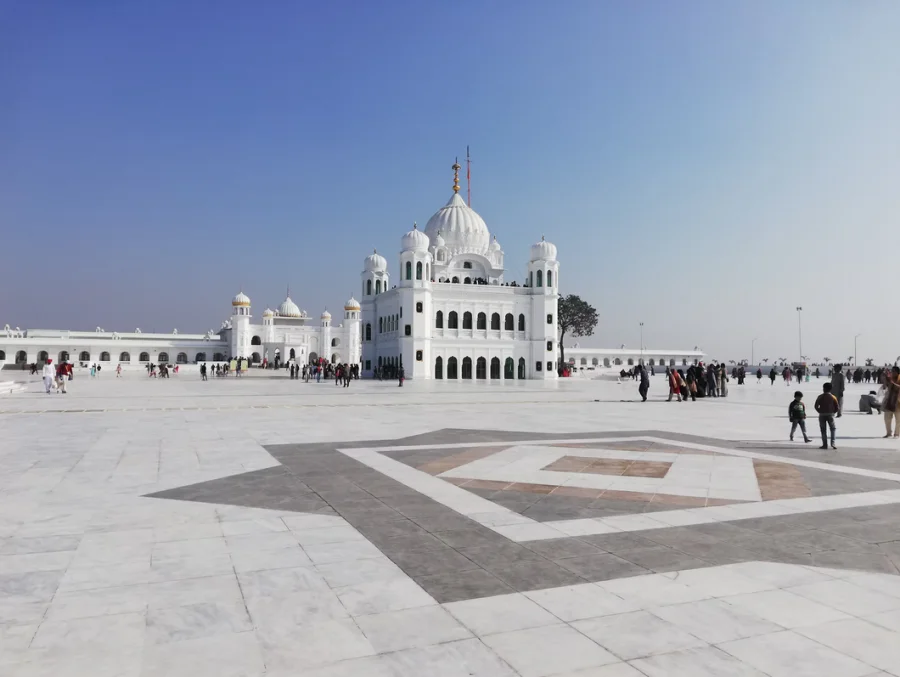
Less than a week after External Affairs Minister S Jaishankar visited Islamabad and met Pakistan Prime Minister Shehbaz Sharif and Deputy Prime Minister Mohammad Ishaq Dar, India and Pakistan on Tuesday agreed to renew their pact on the Kartarpur Sahib Corridor for another five years. The pact was due to lapse on October 24.
India and Pakistan have agreed through diplomatic channels to extend the Sri Kartarpur Sahib Corridor agreement for another five years. The Ministry of External Affairs (MEA) stated that the agreement was signed on October 24, 2019. It facilitates pilgrims’ visits from India to Gurdwara Darbar Sahib Kartarpur in Narowal, Pakistan. The agreement was initially valid for five years.
It said the “extension of the validity of this agreement will ensure uninterrupted operation of the Corridor for use by the pilgrims from India to visit the holy gurdwara in Pakistan”.
In view of the continued requests of pilgrims regarding the removal of US$ 20 service charge levied by Pakistan per pilgrim per visit, India has once again urged Pakistan to not levy any fee on the pilgrims, it said.
The 4 km-long Kartarpur Corridor provides visa-free access to Indian Sikh pilgrims to visit Gurdwara Darbar Sahib, the final resting place of Sikhism founder Guru Nanak Dev.
The authorities opened the Corridor in November 2019 but suspended movement in March 2020 when the pandemic struck. They reopened it later.
Also See: India foreign minister’s visit a ‘good beginning’: Nawaz Sharif
India and Pakistan’s Renewed Diplomacy
The development comes days after Jaishankar visited Pakistan on October 15-16. He attended the Shanghai Cooperation Organisation (SCO) meeting of the Council of Heads of Government. This marked the first visit by an Indian Foreign Minister since Sushma Swaraj went to Islamabad for the Heart of Asia meeting in December 2015.
Jaishankar and Dar, who is also Pakistan’s Foreign Minister, spoke twice in less than 24 hours. This marked the first direct conversation between India and Pakistan’s Foreign Ministers since 2015. There were indications that these talks explored the idea of resuming some form of cricketing ties between the two countries, as reported by The Indian Express.
However, sources underlined that both sides needed to think through these very preliminary conversations, given the years-long freeze in ties between the two countries. But the talks open a window, with a possible first step being Pakistan’s hosting of the Champions Trophy next February.
Jaishankar’s Visit Sparks Hopes
Jaishankar and Dar had met on October 15 evening at the dinner hosted by Prime Minister Sharif at his residence. After exchanging pleasantries and a few words as they shook hands, the two ministers had a conversation over dinner, sources said. Sources indicated that the ministers decided to continue the conversation over lunch the next day. They seated themselves next to each other at this lunch.
However, the MEA spokesperson stated that the two ministers did not meet and did not discuss cricketing ties.
On October 17, former Pakistan Prime Minister Nawaz Sharif emphasized that India and Pakistan should “bury the past” and “think of the future.” He stated that Jaishankar’s visit to Islamabad was a “good beginning” and a “good opening.” Sharif added that the two countries “should move forward from here.”
This news is sourced from Indian Express and is intended for informational purposes only.

Your trusted source for insightful journalism. Stay informed with our compelling coverage of global affairs, business, technology, and more.