SIFC Reiterates Commitment to Support Automotive Industry

SIFC reiterates commitment to support automotive industry

Special Investment Facilitation Council (SIFC) has reiterated its commitment to support the automotive industry.

As a result of its facilitation, Pak Suzuki has started exporting vehicles to Bangladesh and Afghanistan. CEO of Pak Suzuki Hiroshi Kawamura said this showcases the quality and competitiveness of Pakistani-made vehicles in the international market.

Pakistan has taken a great step forward under the flagship of SIFC. The decision has been made to export quality automobiles to Afghanistan and Bangladesh. This move paves the way for stronger economic ties.

With this strategic export initiative, Pakistan is enhancing its automotive sector. The country is also strengthening regional economic ties. Additionally, it is promoting trade development in South Asia.

Pak Suzuki Motors’ initiative boosts Pakistan’s regional influence, contributing to economic stability.

Also See: SIFC at One: Growth, Challenges, and the Road Ahead

This export initiative underscores Pakistan’s vision of expanding its production base and increasing efficiency, driving economic growth and regional cooperation.

Through this move, Pakistan is demonstrating its potential as a hub for high-quality manufacturing, contributing to regional prosperity and solidifying its role in the South Asian economy.

The SIFC deserves appreciation for paving the way for Pakistan’s automotive sector to expand its global footprint by showcasing the nation’s industrial prowess in international markets.

Meanwhile, Minister for Industries & Production, Rana Tanveer Hussain who inaugurated a new Suzuki Vendor Cluster Area said this initiative aims to expand Pak Suzuki’s network of local suppliers and enhancing efficiency and reducing costs through localized supply chain management.

The automotive industry presents an especially lucrative opportunity for cash-strapped Pakistan. Success here will bring some much needed relief to the economy.

The news content provided here is sourced from radio.gov.pk.

News Desk

Your trusted source for insightful journalism. Stay informed with our compelling coverage of global affairs, business, technology, and more.


Recent

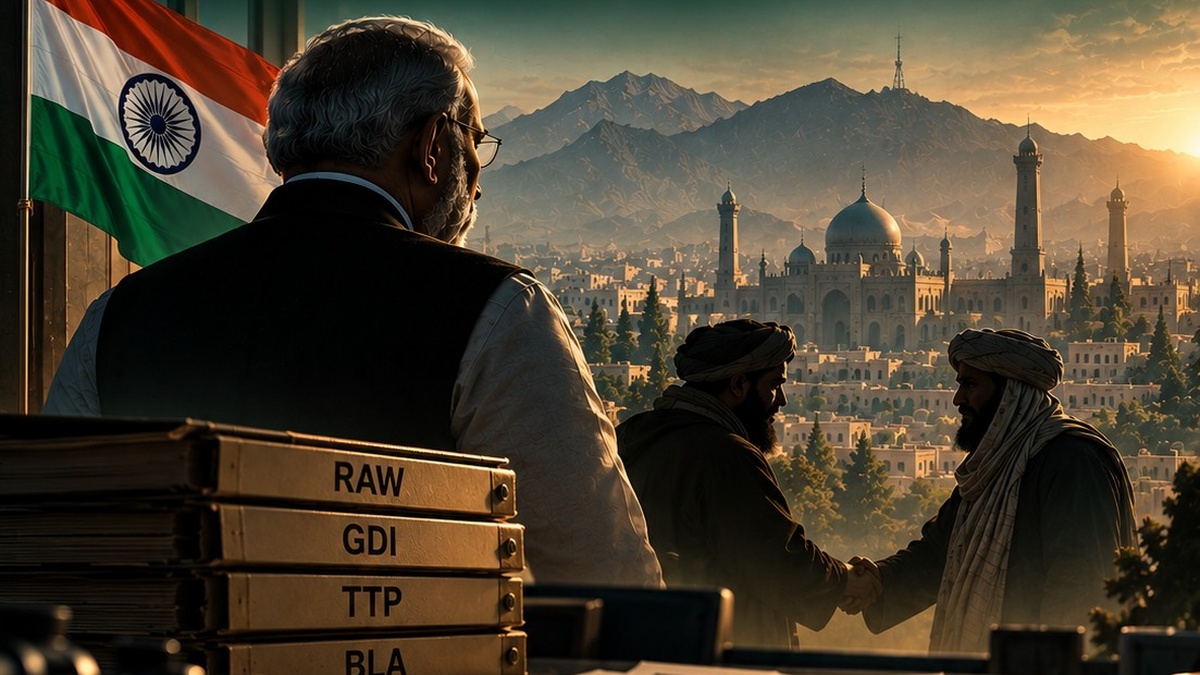
AI, Extremism, and the Weaponization of Hate: Islamophobia in India

AI, Extremism, and the Weaponization of Hate: Islamophobia in India

AI is no longer a neutral tool in India’s digital space. A growing body of research shows how artificial intelligence is being deliberately weaponized to mass-produce Islamophobic narratives, normalize harassment, and amplify Hindutva extremism. As online hate increasingly spills into real-world violence, India’s AI-driven propaganda ecosystem raises urgent questions about accountability, democracy, and the future of pluralism.

Read More »
AQAP’s Threat to China: Pathways Through Al-Qaeda’s Global Network

AQAP’s Threat to China: Pathways Through Al-Qaeda’s Global Network

AQAP’s threat against China marks a shift from rhetoric to execution, rooted in Al-Qaeda’s decentralized global architecture. By using Afghanistan as a coordination hub and relying on AQIS, TTP, and Uyghur militants of the Turkistan Islamic Party as local enablers, the threat is designed to be carried out far beyond Yemen. From CPEC projects in Pakistan to Chinese interests in Central Asia and Africa, the networked nature of Al-Qaeda allows a geographically dispersed yet strategically aligned campaign against Beijing.

Read More »
The Enduring Consequences of America’s Exit from Afghanistan

The Enduring Consequences of America’s Exit from Afghanistan

The 2021 US withdrawal from Afghanistan was more than the end of a long war, it was a poorly executed exit that triggered the rapid collapse of the Afghan state. The fall of Kabul, the Abbey Gate attack, and the return of militant groups exposed serious gaps in planning and coordination.

Read More »
The Afghan Crucible

The Afghan Crucible

Recent reporting underscores Afghanistan’s transformation into a strategic hub for transnational jihadist networks. Far from being a localized security problem, the Afghan landscape now functions as an ideological, logistical, and digital anchor linking extremist affiliates across Africa, Southeast Asia, and beyond, signaling the collapse of regional containment and the rise of a globalized threat architecture.

Read More »
Economic Statecraft and the New Geography of Power in Regional Politics

Economic Statecraft and the New Geography of Power in Regional Politics

Strategic competition has moved beyond decisive wars toward a subtler synthesis of economic leverage, proxy networks, and calibrated force. Infrastructure, finance, and trade routes now function as instruments of power, quietly reshaping regional orders while preserving the façade of restraint. In this environment, security is no longer confined to the battlefield but embedded in supply chains, data networks, and development choices, forcing states to rethink deterrence, sovereignty, and resilience.

Read More »