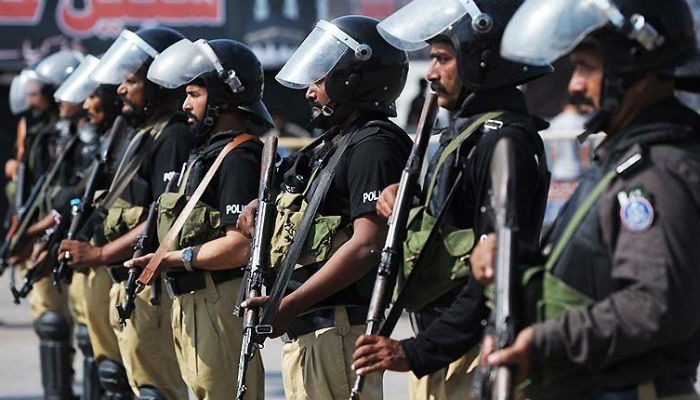
![Surging ISIS-K Threat in Afghanistan; Taliban Patrol Kabul Streets: August 27, 2021. [Image Credit: Aamir Qureshi/AFP via Getty Images]](https://southasiatimes.org/wp-content/uploads/2024/05/gettyimages--scaled.webp)
The growing strength of the Islamic State Khorasan Province (ISIS-K), a brutal offshoot of the Islamic State militant group (IS), in Afghanistan, poses a significant security threat to the region. Given its geographical proximity to Afghanistan, Pakistan faces security challenges as a consequence of ISIS-K’s presence.
The growth of ISIS-K in Afghanistan, bears the potential to seep into Pakistan, raising security concerns for the region, and necessitates risk mitigation measures.
ISIS-K’s Rise in Afghanistan
Following the Taliban takeover of Afghanistan in August 2021, ISIS-K capitalised on the weakened security situation to expand its presence in Afghanistan. The group, primarily composed of local militants alongside foreign fighters, has exploited the political and security vacuum to a concerning level by establishing sleeper cells and launching attacks against Taliban forces, religious minorities, and civilians.
ISIS-K’s ideology stands in stark contrast to the Taliban’s. While the Taliban seeks legitimacy through governance, ISIS-K adheres to a more radical interpretation of Islam, aiming to establish a global caliphate through violence and terror. This ideological divergence has resulted in a series of bloody clashes between the two groups, further destabilising Afghanistan. The continued violence perpetrated by ISIS-K can exacerbate the already dire humanitarian situation in Afghanistan, leading to a further displacement of civilians and a worsening refugee crisis.
ISIS-K’s Threat to Pakistan
Pakistan has long grappled with militancy and sectarian violence. The presence of a resurgent ISIS-K in Afghanistan poses a multitude of problems to Pakistan’s security. The porous border between Afghanistan and Pakistan facilitates the movement of militants and weapons. This increases the risk of ISIS-K carrying out attacks within Pakistan, targeting Pakistani security forces, civilians, and sectarian minorities.
Recruitment and Radicalization: ISIS-K’s extremist ideology and propaganda have the potential to radicalise and recruit disaffected youth in Pakistan, particularly those disillusioned with the political and economic turmoil. This can exacerbate existing sectarian tensions and fuel extremism within Pakistan. It is also a fact that in the past, ISIS-K had recruitment networks in Afghanistan and Pakistan, which it may use again if the need be.
Destabilisation of Baluchistan: ISIS-K has gained a foothold in Pakistan’s Balochistan province, which has a history of separatist activities. The group’s presence may further destabilise the region and hamper Pakistan’s efforts to maintain stability. One of the ISIS-K incidents recently occurred in Pishin, when an explosive device hidden on a motorbike exploded outside an independent candidate’s election headquarters, causing 18 deaths and injuries to more than 20 individuals.
Potential Consequences of Unchecked ISIS-K
The unchecked growth of ISIS-K in Afghanistan can have far-reaching consequences, not just for Pakistan but for the entire region as the emergence of a significant ISIS-K offshoot in Afghanistan might serve as a jump-off point for the group’s attacks on neighbouring Central Asian States as well as Chinese interests in Afghanistan and Pakistan, escalating regional instability.
The ongoing violence and insecurity in Afghanistan can dissuade much-needed Foreign Direct Investment (FDI), particularly Chinese, by disrupting trade routes, hindering economic development in the region and most importantly damaging the China-Pakistan Economic Corridor (CPEC). Such heinous assaults can disrupt the installations and advancement of important infrastructure projects. Attacks and security concerns may cause delays, increased expenses, and diminished investor confidence, harming economic development and regional connections.
Also Read: TTP Threat: A Stalemate for Pakistan and Afghanistan Ties?
Countering the Threat: A Multifaceted Approach
Countering the threat of ISIS-K requires a multi-prone approach that addresses the group’s root causes and disrupts its operational capabilities.
Poverty, unemployment, and lack of opportunities can create fertile ground for extremist ideologies. International aid and development programs should address the underlying causes to reduce the appeal of ISIS-K.
ISIS-K leverages sophisticated online propaganda to spread its message and recruit foot soldiers. Countering this narrative through effective counter-messaging campaigns is crucial. Since the threat of ISIS-K transcends borders, regional cooperation among Afghanistan’s neighbours is essential in the sphere of intelligence, coordination of border security measures, and disrupting the group’s cross-border movement of ISIS-K. Pakistan has a vital role in countering ISIS-K. Strengthening border security, dismantling militant networks within Pakistan, and fostering closer cooperation with Afghanistan as well as China are quintessential.
The resurgence of ISIS-K in Afghanistan presents a significant security challenge to the region. Pakistan, particularly vulnerable due to its geographical proximity and history with militancy, must be at the forefront of efforts to counter this threat. By adopting a multifaceted approach that combines military, economic, and ideological measures, regional actors should also work together to contain ISIS-K and prevent its further spread. The international community should support such efforts and ensure a stable and secure Afghanistan, which remains critical for lasting peace in the region.
The views expressed in this article are the author’s own. They do not necessarily reflect the editorial policy of the South Asia Times.

Waleed Sami is a postgraduate student specializing in Strategic Studies at the Centre for International Peace and Stability (CIPS), which is housed within the esteemed National University of Science and Technology (NUST) in Islamabad. Prior to pursuing his postgraduate studies, Waleed earned his bachelor's degree in International Relations from the National Defence University Islamabad (NDU).