![Pakistan and Afghanistan remain at odds over the Torkham border closure, impacting trade, security, and regional stability. [Image via Reuters]](https://southasiatimes.org/wp-content/uploads/2025/03/H6FPJ5CQXFPOTMBEYNKEEJU37I.webp)
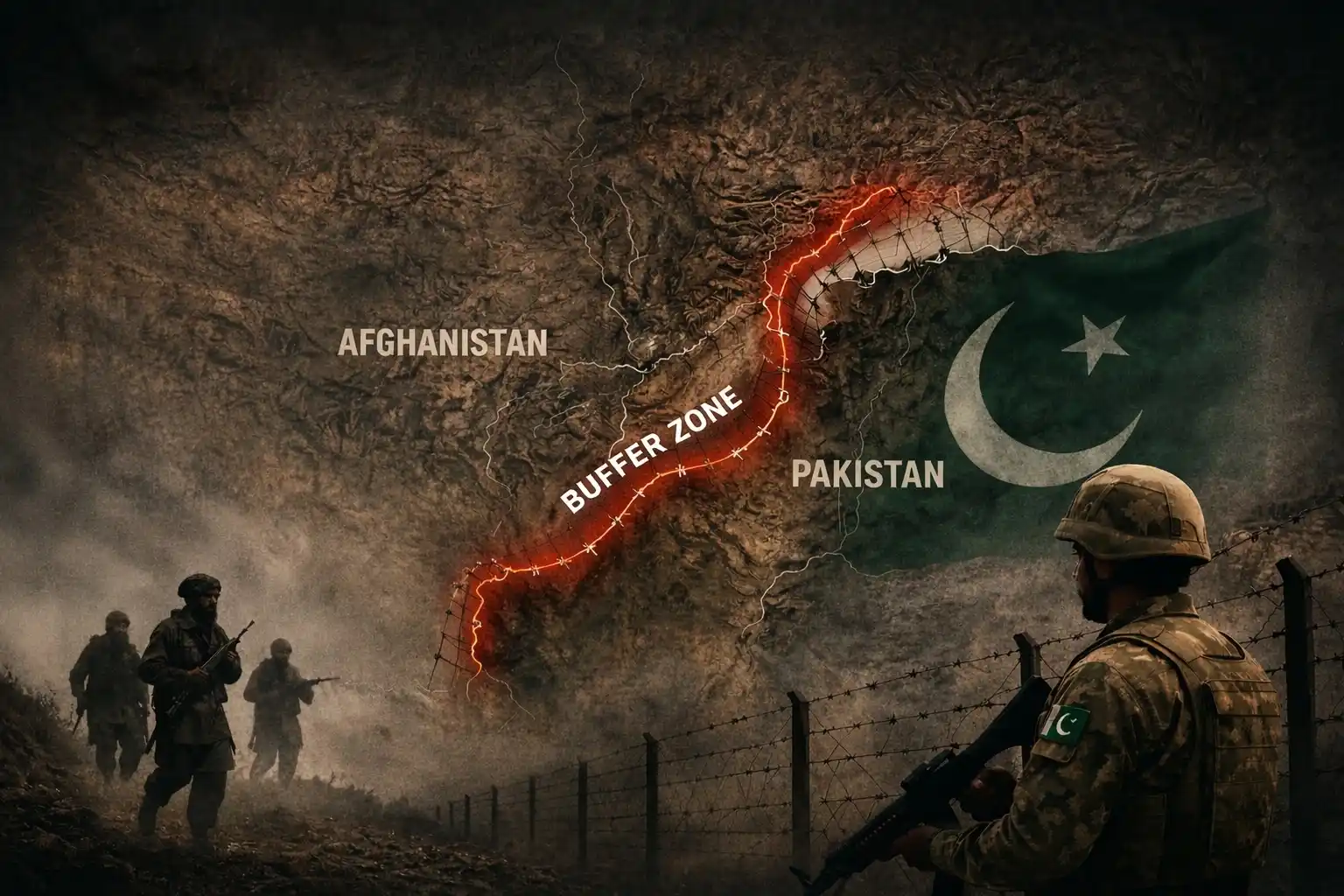
The Pakistan-Afghanistan border crossing at Torkham remains closed for the 21st consecutive day on Friday, March 14, causing severe financial distress for residents on both sides. The crossing was shut down on February 21 when Afghan border officials began construction on a disputed checkpoint, prompting objections from Pakistan. The resulting tensions led to the closure of pedestrian movement and trade activities.
Historical Context of Afghan Turmoil
Afghanistan’s recent history highlights its devastation due to prolonged wars. Over the past four decades, Afghanistan has suffered immense losses in lives, political instability, and economic regression. Whether it was the Soviet invasion, or the war led by NATO under U.S. leadership against the Taliban, these conflicts severely impacted both Afghanistan and Pakistan—particularly Khyber Pakhtunkhwa and tribal regions.
Statistics indicate that more than 80,000 civilians and security personnel have been killed in the war on terror in Pakistan’s Pashtun-majority regions alone.
Geopolitical and Economic Significance of Pakistan-Afghanistan Relations
Geographically, if Pakistan and Afghanistan had maintained stable relations, both nations could have progressed economically. Unfortunately, due to internal and international conspiracies, Afghanistan has remained entangled in conflicts for over 40-50 years, affecting Pakistan’s political, economic, and security landscape.
The closure of the Torkham border for over 21 days further exacerbates the economic and humanitarian crisis for both Pakistan and Afghanistan. The situation remains tense as both nations stand firm on their positions regarding the construction of the checkpoint.
Lessons from History: Failed Military Interventions in Afghanistan
From the Soviet invasion to NATO’s 20-year-long war, military interventions have brought no benefits to Afghanistan. Instead, millions have been killed, and millions more have been forced into exile. These wars also took a toll on the economies of Russia and the United States. The Soviet Union collapsed partly due to its costly invasion of Afghanistan, failing to achieve its strategic objectives, including access to warm waters. Similarly, the U.S. realized its failure and withdrew troops in 2021.
During the Soviet invasion, Afghanistan’s internal political instability and lack of unity among its leaders paved the way for foreign intervention. This historical pattern underscores the necessity for Afghanistan and Pakistan to resolve their disputes through negotiations rather than hostilities.
Urgency for Diplomatic Dialogue
The governments of Pakistan and Afghanistan must acknowledge that war is never a solution; it only deepens crises, pushing nations further behind politically and economically. If minor disputes continue to escalate, they risk turning into larger conflicts with severe consequences for both countries.
Third-Party Exploitation of Border Tensions
Security officials on both sides should recognize that prolonged border tensions benefit external forces seeking to destabilize the region. These tensions provide opportunities for adversaries to fuel discord, sell arms, and increase regional instability.
At a time when both Pakistan and Afghanistan are grappling with the repercussions of terrorism and past wars, their governments should focus on economic stability and improving the livelihoods of their people. Prosperous nations prioritize economic growth and social development, which in turn strengthens their global standing.
Recent Efforts Towards Conflict Resolution
Negotiations were held on February 24 and March 3 between security officials of Pakistan and Afghanistan at Torkham Zero Point to reopen the border. However, these discussions ended without resolution, prolonging the crisis.
Recognizing the sensitivity of border disputes over checkpoint construction, both countries have agreed to form a tribal elders’ jirga to mediate and find a peaceful solution. On March 9, 2025, a delegation of Pakistani elders from Landi Kotal met with Afghan representatives for a tribal jirga.
The Pakistani delegation, which included members from the Khyber Chamber of Commerce, customs clearance agents, and the Tehsil Council, was led by Chairman Shah Khalid Shinwari. He emphasized that, as per Pashtun jirga traditions, an initial ceasefire and a halt in construction at disputed sites must precede any further negotiations.
Afghan jirga members responded by stating that they would relay the Pakistani delegation’s conditions to the Taliban leadership before providing a formal response.
Challenges in Reaching a Settlement
Despite the formation of the jirga, internal disagreements have hindered its progress. However, Syed Jawad Kazmi, a representative of the Khyber Chamber of Commerce and a jirga member, remains optimistic about resuming negotiations soon to find a peaceful resolution to the border dispute.
Also See: Torkham Border Closure Enters 18th Day Amid Pak-Afghan Dispute
A Call for Political Maturity and Cooperation
History has proven that no matter how many wars are fought, conflicting nations must eventually return to the negotiating table. Pakistan and Afghanistan must learn from past mistakes and resolve border issues through diplomacy rather than conflict.
As neighboring Muslim-majority countries, both nations must recognize the severe repercussions of minor disputes leading to prolonged border closures and armed confrontations. If such hostilities persist, external forces will exploit these tensions to further destabilize the region.
Disclaimer: This news report is authored by Naseeb Shah Shinwari. The views and information presented in this article are solely those of the author.