On Friday, President Joe Biden revealed America’s highest-ever budget, worth $6 trillion for the fiscal year 2022. The budget aims for a 16% increase in the non-defence expenditure, mostly in social programs. Biden’s Administration is also planning to lay out funding for foreign aid and national defence.
The U.S Budget for Defense and Pakistan
This year, the US has requested $715 billion for defence. Previously, the allocated defence budget was $703.7 billion. This indicates a 1.6% increase in the US Defence Budget. Although this is despite the fact that the US is set to end the Afghan war. Therefore, evidently, it’s a competition with China that has pushed the US to add some more amount in their defence sector.
Moreover, the budget proposals for external operations and related programs from the US State Department also contain requests for Pakistan. The funds allocated for Pakistan will help to increase democratic governance, especially in the borders with Afghanistan. They will help address extremism, sustain stability and enhance economic growth through bilateral trade and investment. This is according to the proposal that the State Department sent to Congress. The finances of this fund will be managed from the $324.5 million allocated for the South and Central Asian region.
Core safety goals for the U.S. funds in South Asia include; supporting regional peace and stability, tackling climate problems, promoting COVID-19’s economic recovery, and revitalizing U.S. ties and relationships.
‘South Asia’s regional activities will increase transparent governance and involvement of civil society, promote the expansion of the private sector, encourage a generation of energy and extend commerce throughout Afghanistan and Pakistan.’ said the State Department.
In addition, the Department is asking $13.8 million for its South and Central Asian (International Military Education and Training) IMET program, which ‘supports the US aims for the region by professionalizing the defence forces of regional partners, highlighting military training.’ Pakistan, Bangladesh, India and Nepal are all priority beneficiaries of this Program.
Ups and Downs in Pak-U.S Engagements
Previously, the US suspended the IMET Program for Pakistan as it had signed an agreement with the Russian Military Training Program. Furthermore, due to Washington’s allegations that Pakistan provided a secure refuge for terrorists in Afghanistan which Pakistan refused. Washington suspended the majority of its security help, military equipment supplies and security-related money to Pakistan in May 2018.
In July 2019, however, after Prime Minister Imran Khan’s first official visit to Washington, the US agreed to give $125 million in technical support for its F-16 fleet.
Subsequently, in January 2020, Trump’s Administration resumed the military training facility. The State Department informed Congress that the President of the United States authorized the continuation of IMET for Pakistan to reinforce the military to military cooperation. This is in order to advance national security and shared priorities. However, the entire suspension of security aid for Pakistan is still in place.
Recent declarations have shown again interest in the re-establishment of relations with Pakistan by US officials and lawmakers. The US officials are now seeking Pakistan to provide them with ground and air access to Afghanistan.
US Withdrawal From Afghanistan
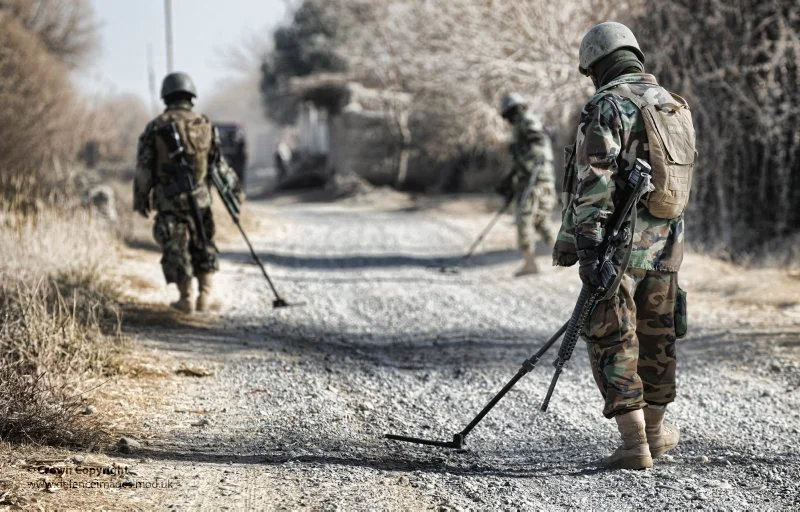
The U.S. defence secretary, Mr Lloyd Austin informed that the withdrawal is ‘slightly’ ahead of schedule. Earlier this week, the Pentagon made an announcement, according to which the withdrawal is 16-25% complete.
.@POTUS’ plan for a full drawdown in Afghanistan by Sept. 11 is underway. @CENTCOM estimates the withdrawal is 16% to 25% complete: https://t.co/nbltejtKlC
— Department of Defense 🇺🇸 (@DeptofDefense) May 29, 2021
However, the Pentagon also announced that the US would continue to have a presence in Pakistan’s Central Command area. Similarly, America’s diplomatic links with Afghanistan will also remain.
The U.S. withdrawal from Afghanistan could create a vacuum that can be cashed by IS-K. Therefore, to keep a close eye on Afghanistan after withdrawal, the U.S. is looking for Pakistan’s assistance.
Historically, Pakistan has provided its best possible facilities to the U.S. to root out terrorism from Afghanistan. Unfortunately, due to the Afghan war, Pakistan has suffered the most in the whole South Asia region. Currently, along with the U.S. Pakistan is trying its best to dig out a solution to this war through negotiations. After the U.S. withdrawal, any chaos in Afghanistan is in the least interest of Pakistan. likewise, the entire South Asian region would also receive the heat. Thereby, the role of all regional members of South Asia is very crucial to Afghanistan’s stability.