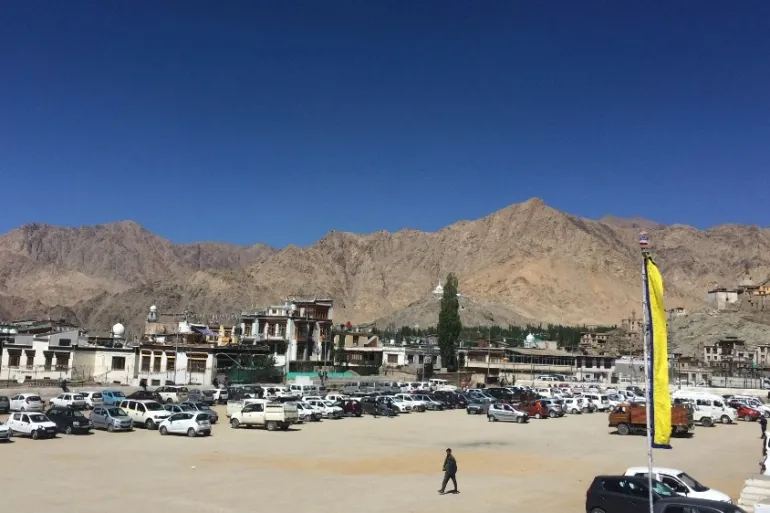
India and China military commanders started chats on Saturday to determine the stalemate circumstance in Eastern Ladakh district and de-heightening of powers over the Line of Actual Control. The gathering is being held in Moldo on the Chinese side inverse Chushul.
Indian military delegation is led by the leader of Leh-based 14 Corp Lieutenant General Harinder Singh and the Chinese are driven by Major General Liu Lin, Commander of South Xinjiang Military Region.
The Global Times newspaper in a searing piece said that China won’t surrender “any inch of an area”. It additionally cautioned that if India misconceives and “snack away at China’s region,” at that point China will take solid countermeasures.
“We trust India knows very well that China won’t be off guard in any China-India military activities along the region,” the publication distributed on Friday in the Chinese government mouthpiece said.
“India ought not to be tricked by the US,” it stated, including that the US underpins India each time China and India have clashes to support New Delhi’s encounter against Beijing and to publicity new outskirts questions.
The two nations are participating in dialogue to determine the deadlock in the Eastern Ladakh area, especially at the north bank of Pangong Tso lake where the Chinese People’s Liberation Army has endeavored to change business as usual.
They endeavored to change the norm by setting up asylums and setting up a camp in territories that were under Indian control up until this point. Before this, talks between significant general-position officials between the two nations occurred on June 2 that stayed “uncertain”.
The Chinese soldiers in enormous numbers have been deployed at Finger 4 territory of the Pangong Lake. India additionally coordinated these numbers in the organization there. The Pangong Lake is partitioned into 8 fingers. The rocky spikes sticking out into the lake are alluded to as fingers. So far India has been controlling fingers 1 to 4 and China controls the zone somewhere in the range of 5 and 8.
There is an Indian post close to Finger 4. In any case, India asserts the whole stretch till Finger 8. The territory between Finger 4 and 8 has involved debate and has regularly seen showdowns. The conflict occurred at Pangong Lake on May 5, leaving a few from the two sides injured.
Sources additionally called attention to that the deadlock was not an unconstrained response to India’s street development in Ladakh. Abnormal exercises were first seen in quite a while before that conflict.
The present deadlock in Ladakh isn’t the standard watching faceoff however part of the new confrontational technique that was turned out by China after Doklam.
In 2017, there was a 73-day deadlock among India and China. The stalemate was at the India-China-Bhutan tri-intersection Doklam. China’s street development in the Bhutanese region was viewed as an endeavor to change business as usual by India lastly the street work must be halted.
The different sides have held near twelve rounds of talks since the main seven day stretch of May when the Chinese sent more than 5,000 soldiers to the LAC.
On Friday, authorities of India and China talked through video-conferencing with the different sides concurring that they should deal with “their disparities through quiet conversation” while regarding each other’s sensitivities and concerns and not permitting them to become debates as per the direction given by the administration.


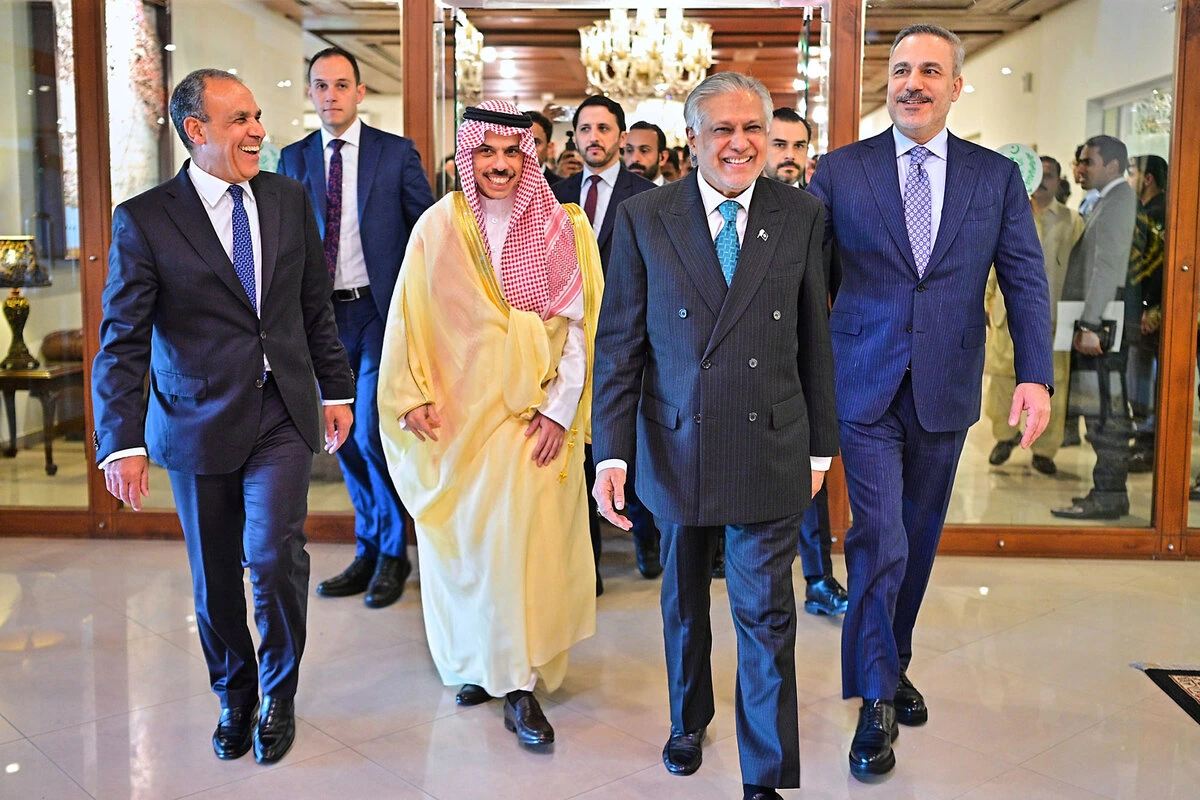
Better Call Pakistan: The Rise of Middle power in a Changing World Order
Pakistan’s neutrality in the US-Israel War against Iran highlights its rise as a middle power, leveraging diplomacy, mediation, and multi-vector foreign policy to shape regional stability in a changing global order.