In order to enhance bilateral trade and generate business opportunities for people, Pakistan is establishing three markets on its borders with Iran. Razak Dawood, Advisor to Pakistan’s Prime Minister for Commerce and Investment informed this.
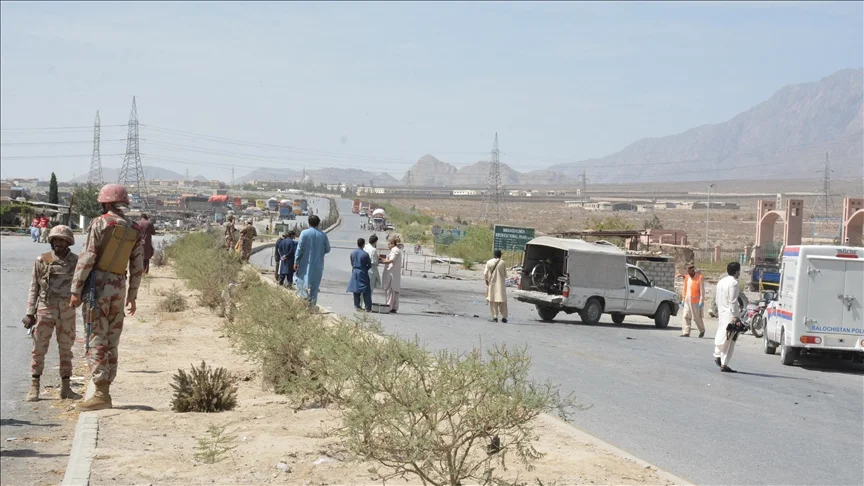
According to Razak Dawood, the plan is to situate 3 markets at Gabd, Mundi and Chedgu. Located in Baluchistan and in proximity to the Iranian border.
MOC is pleased to inform that the Memorandum of Understanding (MOU) to establish Border Markets along the border was signed between Pakistan & Iran in April 2021. Three Border Markets are now being established at Gabd, Mund & Chedgi in Balochistan, near our border with Iran.
— Abdul Razak Dawood (@razak_dawood) June 1, 2021
In April, a deal was concluded between Pakistan and Iran to build border markets along the border. On his visit to Iran, Foreign Minister Mehmood Qureshi officially signed the deal. FM Qureshi also stated that the deal will build border marketplaces for Pakistan and Iran, to strengthen bilateral trade ties.
In addition, Mr Dawood stated that, in the first phase, three Bazars in the Kuhak-Chadgi, Rimdan-GabD and Pishin-Mand border regions will be established. Similarly, the two countries will continue to construct an additional three markets, located on other border points in the second phase.
Pak-Iran Trade: Prospects and Hurdles
This initiative will not only improve bilateral commerce but will also provide economic possibilities and support for individuals living in the frontier areas. The bilateral trade between Iran and Pakistan is currently worth $359 million; with exports of $36 million to Iran and $323 million dollars for its imports.
The main difficulties in the path of trade improvement are tariff and non-tariff barriers. All four conventional forms of transportation are accessible for bilateral trade. However, the two countries do not use these transport mechanisms efficiently. This is because of the existing tariffs.
In exchange for rice, meat and other agricultural items in a trading arrangement, Iran is ready to send petrochemical, steel and liquefied petroleum products to Pakistan.
Mr Dawood further stated that the Iranian representative informed the Pakistani businessmen that Iran is ready to begin trading with Pakistan. Iran is ready to trade in multiple sectors, such as; energy and agriculture, to grow its exports and imports. The Iranian Government is eager to encourage bilateral commerce and investment with Pakistan’s business sector.
The Government of Pakistan has expressed its readiness, under the US sanction, to strengthen economic relations with Iran. The Government has stated its commitment to develop bilateral relations with Iran and to promote bilateral collaboration in several areas.
Restoring Pak-Afghan-Turkey Train
Currently, the Pakistani Government is restoring its railways’ operations with Iran and Turkey. The train will travel 6,566 km, crossing the respective three states. The service was initially introduced in August 2009. However, after eight rides the operation was stopped because of security concerns.
Due to tough economic sanctions on Iran, its economy has dwindled. On the other hand, Pakistan is also struggling to recover its economic muscles. Under such conditions, mutual trade between Pakistan and Iran would be beneficial for both. For Iran, Pakistan has a promising market for its prospects.