Senior Clerics Criticize Iranian Government over Economic Woes, Raising Questions about Raisi’s Future
While the immediate threat to Iran’s establishment from mass protests sweeping the country may have passed, a powerful source of criticism could present a growing danger to conservative President Ebrahim Raisi, as Senior Clerics Criticize Iranian Government.
Iran’s currency is in a downward spiral. In response, senior clerics are turning against the government. They are expressing rare criticism of the authorities over the country’s worsening economic situation.
The grand ayatollahs’ position is a departure from their earlier support for the president, raising questions as to whether his future in office could be at stake, as Senior Clerics Criticize Iranian Government.
Protests against Raisi
Raisi has been facing a popular protest movement calling for the overthrow of the Islamic regime. Anti-government protests erupted following the death of 22-year-old Mahsa Amini. She died on September 16 while in police custody. Amini had been arrested for allegedly wearing her headscarf “improperly.”
The protests were followed by a large-scale crackdown. This crackdown resulted in the deaths of hundreds of individuals. Thousands were arrested, and several protesters were executed in December and January. Amnesty International described the trials of these individuals as “sham trials.” Dozens more face the death penalty.
Meanwhile, the Iranian economy has been badly hit in recent months. Washington has tightened its sanctions against Tehran in response to the crackdown. Additionally, the talks between Iran and the US for the revival of the 2015 nuclear deal have likely failed.
The rial has lost 58 percent of its value in the last six months. In September, the rial traded at about 29,000 tomans against the US dollar. Since then, it has exceeded 46,000 tomans. (Note: one toman is the equivalent of 10 rials.) This has tripled the price of food and triggered widespread popular anger.
The grand ayatollahs, also known as “marjas”, have contact with the public as part of their daily job. They are thus echoing the sentiments of the Iranian street.
The title “marja” is used for clerics who are jurisprudentially able to reach a religious edict. Currently, Iran has officially less than eight marjas, but unofficially the number is more.
Every Shia Muslim must choose and follow a grand ayatollah in religious matters. Moreover, marjas can make decisions for their followers on religious, social, and even political matters.
The grand ayatollahs are mostly based in the holy city of Qom, where they host seminaries. They are generally close to the Islamic Republic establishment.
Unprecedented criticisms
Grand Ayatollah Hossein Nouri Hamedani, a supporter of the hardliners, has complained that prices haven’t decreased. He also expressed his disapproval over Iran’s currency losing more value.
Another cleric, Grand Ayatollah Hossein Vahid Khorasani, held the government responsible for failing to reduce poverty. “We have been receiving complaints about [people’s] livelihoods,” he said in January.
Likewise, Grand Ayatollah Abdullah Javadi Amoli warned that the authorities may face divine punishment. “If we do not behave properly, God will take us away and will preserve his religion through another group,” he said in statements published by the semi-official Mehr News Agency.
Meanwhile, Ayatollah Mohammad Mousavi Khoeiniha said earlier this month that “we have lost the trust of people” and this stems from “our ineptitude”.
Economic crisis
Days later, Mohammad Taghi Fazel Meybodi, a member of the Assembly of Teachers and Researchers of Qom Seminary, slammed President Raisi for the currency crisis. “Mr President, the exchange and inflation rates do not improve by your order. Why don’t you think fundamentally? The hiking prices have made people miserable ahead of the [Persian] new year.”
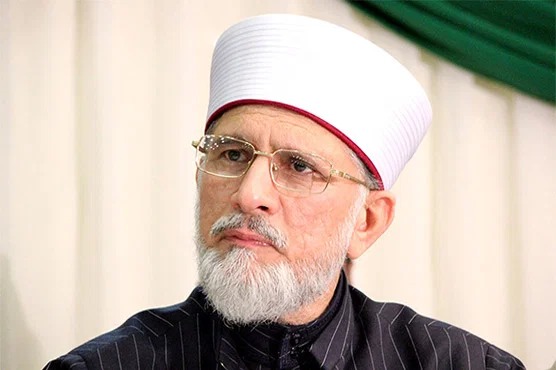
Grand Ayatollah Naser Makarem Shirazi has been at the forefront of explicit criticisms against the government. In December, Makarem Shirazi, who is 95,decried the fact that inflation witnessed a sharp increase compared to the previous year. He attributed the economic crisis to the country’s dependence on the US dollar, accusing the state of doing little to change the situation.
In a more recent statement on 4 February, Shirazi accused government officials of living in luxury while the majority suffers.
“Is this [fair] that some officials are living in welfare, while there are a lot of poor people?”
The same cleric, however, attacked the anti-government protests that erupted in the aftermath of the death of Mahsa Amini.
“We should not magnify small issues; the rioters are too small and insignificant to want to change the system and the country,” he said in statements published by a local newspaper.
“When the marjas are slamming the government, they are well aware that their criticism would send a signal to the establishment” noted the cleric.
Raisi position precarious
“If the economic situation worsens in the next three or four months, the marjas will make their tone harsher, and will possibly not let President Raisi and any official into their offices… This will deliver a huge blow to both Raisi, who will lose a lot of his religious supporters and the Islamic Republic leadership, because many consider Raisi as a representative of the establishment in the presidential palace.”
A political commentator who spoke on condition of anonymity said that if the grand ayatollahs increase their attacks on Raisi, this may force the parliament to make a move and hold a vote of no confidence against the president.
However, he added that since the Islamic Republic’s political leadership is fully behind Raisi, “it remains unclear if parliament would dare to remove him unless they receive a green light”.
“The establishment is not capable of ignoring the marjas, and therefore they will have to do something, or sacrifice someone, to decrease their anger.
“Whatever happens, the continued criticism of marjas will vehemently weaken the legitimacy of Raisi and will probably lead him to lose the next presidential race,” the commentator said.
Original Source: Middle East Eye

Your trusted source for insightful journalism. Stay informed with our compelling coverage of global affairs, business, technology, and more.