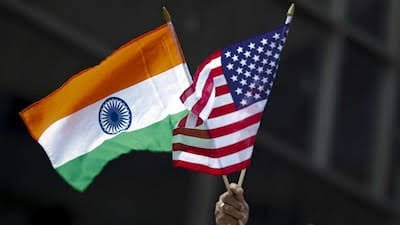
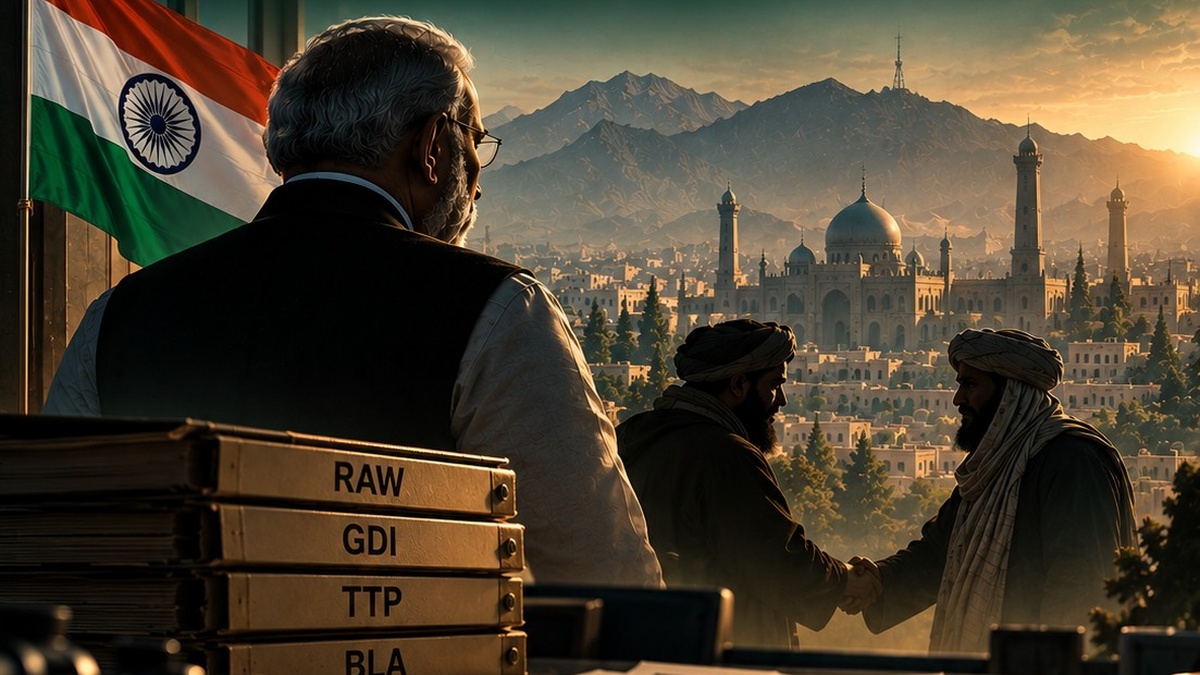
India’s Prime Minister Modi addressed his people to inform them about his government’s domestic and international accomplishments. This month’s message coincided with Modi’s seventh challenging year in office. Each time Modi used to show his brand image by saying “Modi hai to mumkin hai,” (with Modi everything is possible); an allusion to the ‘surgical attacks’ against Pakistan and tat to Chinese intruders.
Challenges Caused by COVID-19
Approximately 4000 persons a day succumbed to the COVID-19 epidemic. Modi did not pay any heed to this in his address. Moreover, he failed to address the lack of oxygen cylinders and concentrators, medicines, and hospital beds.
In this month’s address, he echoed his mantra “sabka saath, sabka vikas, sabka vischwas,” instead of monopolizing credit for every success, primarily self-conceived. He mainly just emphasized the message of the nation’s accomplishments in the last seven years.
However, opposition parties argued that Modi’s government had caused “immense agony” on people in terms of unemployment, skyrocketing POL prices, protests by farmers and the COVID-19 fiasco. They informed that when health infrastructure crumbles, people have to admit their loved ones to cow-shed clinics. This is in order to see miracles performed with the Ayurvedic elixir of cow dung and urine. Every day, around 4000 patients die. The families of those who suffered have to dump their dead bodies in the Ganges. These unfortunate events come as many people are unable to afford wood to cremate their bodies.
The epidemic continued to create challenges and develop further after Modi expressed his excitement about getting rid of the epidemic. On the 28th of January 2021, he announced victory against the pandemic at the World Economic Forum and voiced out that ‘My Country has effectively rescued humanity from a major tragedy.’
Kashmir Shock
The President of the United Nations General Assembly highlighted during his visit to Pakistan that; Pakistan should raise the Kashmir issue more vigorously and that all parties should not take steps that impact Jammu’s and Kashmir’s status. As a result, India reacted vehemently to the statement.
How can India modify the controversial state of Jammu and Kashmir; if it has no lawful evidence that the disputed state has joined India? India has never provided Pakistan or the United Nations with the fabled Instrument for Accession.
Views of Scholars on Kashmir Plight
The London NW5 Andrew Whitehead argues, that the conditions of accession are undoubtedly rather unclear. The decades-old agreement was signed on 27 October but recorded as 26 October. According to Wolpert, the Instrument of Accession was signed only by Maharaja Sir Hari Singh after the Indian army took possession of the capital, Srinagar, of the Jammu and Kashmir State in the summer.
Downgrading Democratic Values
In an infringement, India has released its own version of the Democracy Index. The Freedom House and the V-Dem have declared it “partly free”. Meanwhile, various Indian states used violent self-determination struggles. However, India only maintains it through a number of tough laws that provide its military and security forces total protection.
Amitai Etzioni, an American sociologist, discussed the connection between democracy and self-determination in Foreign Policy; Thinking Outside the Box. He states, ‘Self-determination is also used to refer to the normative principle, which is employed as a justification for disrupting the old system into a new regime.’ Etzioni adds that; ‘from all things if people break away from the democratized society and become subjugated by the people of their own kind’. Then there is no accomplishment of genuine self-determination.’
India has shelved Freedom House and announced that it will produce its own index. In many cases, Etzioni’s understanding of movements for self-determination explains why India is concerned about being dubbed “partly free.”
It was anticipated at the time of the partition that India and Pakistan would be divided into “congeries of state.” This prediction was based on the inability to deal with many self-determination movements in the emerging “dominions.” The movements could have been muzzled in India. However, Pakistan lost its Eastern part which later became Bangladesh.
India under Modi is facing unprecedented challenges. The aforementioned are a few of them. Among these challenges, COVID-19 has beefed up its pressure to the extent that the Indian Health System has to kneel down to it. Indian harsh policies in IOK are vivid to the world hence President of General Assembly of United Nations has unearthed his concerns on IOK. Despite being a potential economic power, India is continuously losing its rankings in the indexes of human rights.

Your trusted source for insightful journalism. Stay informed with our compelling coverage of global affairs, business, technology, and more.