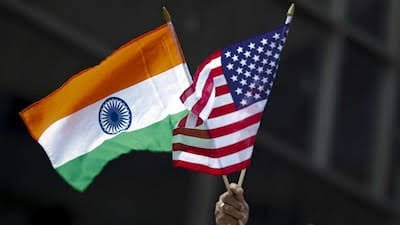
The Government of Bangladesh’s e-passport clause removal preventing its citizens from visiting Israel has given rise to speculation that Bangladesh may seek to normalize its relations with Israel.
The proposal to delete the “excluding Israel” clause from its electronic passport has stunned a population of 160 million in the south Asian country, with many querying about the decision after hundreds of Palestinians were killed in the Israeli bombing of the Gaza strip.
The statement used to bear Older Bangladeshi passports; ‘this passport is valid in all countries excluding Israel’. Approximately 6 months back, Without any public disclosure, the statement “except Israel” was deleted. This was when Bangladesh issued its new electronic passport.
Confirmation from Israeli Officials
The information came to light when the Israeli Foreign Minister’s Assistant Chief Executive Officer for Asia and the Pacific; Gilad Cohen, stated last week that Bangladesh has abolished the Israeli travel ban.
Great news! #Bangladesh has removed travel ban to Israel. This is a welcome step & I call on the Bangladeshi government to move forward and establish diplomatic ties with #Israel so both our peoples could benefit & prosper.@IsraelMFA #IsraelLooksEast https://t.co/LbOLbm9dfG
— Gilad Cohen 🇮🇱🎗️ (@GiladCohen_) May 22, 2021
However, the Government of Bangladesh adamantly denied any connection to Israel. The authorities stated that the government’s opinion on Israel remains the same.
During a media briefing attended by Al-Jazeera, AK Abdul Momen, Bangladesh’s Foreign Minister said the position of Bangladesh in Israel has not changed. He added nobody can visit Israel from Bangladesh and if somebody does, legal actions against that individual will be done.
Passports are the only identity and do not reflect a country’s foreign policy. Bangladesh’s foreign policy continues to be the same as in Bangabandhu (the time of Sheik Mujibur Rahman, founding father). We do not accept Israel. He added
However, after the amendment, if one can acquire a visa, immigration officials, and Bangladeshi nationals can now go to Israel from a third country. Aljazeera reported
According to Aljazeera, not one of Bangladesh’s 17 legal acts that Al Jazeera examined can prohibit travel to Israel, which contradicts Abdul Momen’s claim to the law.
Views from Across the Sections of Academia and State Officials
On the contrary, former Foreign Secretary of Bangladesh, Md Touhid Hossain told Al Jazeera; ‘when you get a visa, no Bangladeshi person with an electronic passport will face difficulty to visit Israel.’
Hossain further added that Taiwan had been a location to which former passengers in Bangladesh could not go. However, in 2004, Taiwan removed Bangladesh from the prohibited list.
Ali Riaz, a distinguished professor of politics and government at Illinois State University in the United States, said that from his perspective, the move was not simply a sample omission but “a conscious choice” made by the Bangladeshi administration.
Is Bangladesh moving towards normalizing relations with Israel? Arafat Kabir, a Bangladeshi research intern member of Washington DC-based Quincy Institute, published in Nikkei Asia. In this writing, he mentions that increasing collaboration provides significant advantages for the two countries.
Israel gave a 1972 offer to recognize Bangladesh, a newly-founded country. Said Uran Chowdhury, a lawyer based in Dhaka, in an article in the Israeli paper Haaretz. Nothing economic, defence, or diplomatic ties remain in place despite parallel fights for independence, the logic of strategic relationships, and an absence of direct hostilities. It is time to change. It is time for a change.
Bangladesh Action Calls on Mixed Views
Bangladesh had opposed Israel since its beginning without the creation of a Palestinian state. Israel failed to meet this need and also totally abandoned the objective, Bangladeshi journalist Ahasan told Al Jazeera.
Mr Ahasan added that the passports of Bangladesh contained a matching “with the exception” clause of the Apartheid government in South Africa. It is consequently regretful that at a time when Israel’s apartheid characterization is gaining more power than ever, Bangladesh has decided to delete that language.
Multiple Muslim states now recognize Israel. This started with Egypt, followed by Jordan and UAE. Bangladesh is a growing economic power that is sheer to place its name among the top five economies in the coming decades. Bangladesh’s action has brought along mixed reviews from the sections of society. While, pragmatic and liberal sections in Bangladesh and other Muslim countries feel comfortable having relations with Israel, on the other hand, conformists and leftists voice against the formers. Intriguingly, the coming years will let us acknowledge where Bangladesh would actually head.

Your trusted source for insightful journalism. Stay informed with our compelling coverage of global affairs, business, technology, and more.