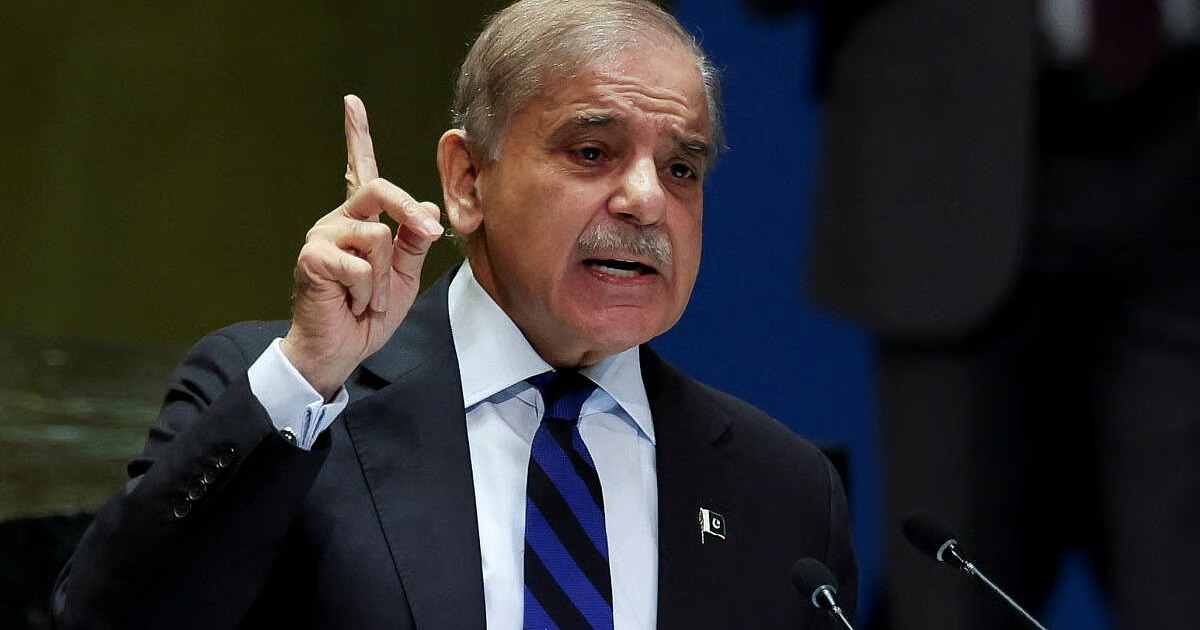
Foreign Minister Shah Mehmood Qureshi has stated that negotiation between Pakistan and India can only take place if the situation in Jammu and Kashmir improves. In an interview, the minister said that Kashmir was not a bilateral concern, but rather a globally recognized issue with various UN Security Council resolutions.
“If India and Pakistan want a lasting peace in South Asia, we cannot wish away the Kashmir dispute,” Shah said. He added, “We successfully have been able to defeat India’s design to diplomatically isolate Pakistan”. He emphasized that the Kashmir problem must be addressed and a solution must be sought. Any solution determined must be in accordance with the wishes of the Kashmiri people.
Shah Mehmood also said, “We want to move ahead but in order to get there, India which is responsible for vitiating the environment will have to create a conducive and enabling environment for the dialogue to take place.”
UAE Plays a Key Role
He went on to say that India had orchestrated a smear campaign against Pakistan, which had resulted in exposing it. Foreign Minister Qureshi said that he was in the United Arab Emirates to address the changing regional situation. Further to talk on the developments in Afghanistan.
Furthermore, he added that a conference was taking place in Istanbul, Turkey. The conference would provide him with a chance to hear other people\’s perspectives. According to the minister, the UAE has a strong Pakistani community that has contributed to the country\’s growth. He said that Pakistan was confident in the UAE\’s ability to help boost India-Pakistan ties.
He said he discussed the visa issue with the UAE foreign minister last time. “Since my discussion which took place last December, there is an improvement on the visa issue\”.
Lastly, He mentioned that the acknowledgement of the positive changes was needed. The recent re-commitment to the 2003 Ceasefire Understanding, for example, was a positive change. Unprovoked fire across the Line of Control (LoC) was causing pain to Kashmiris on both sides, he added. On Pakistan\’s National Day, March 23, India\’s Prime Minister sent a letter to Pakistan\’s Prime Minister. There was a shift in rhetoric, which signalled a hopeful growth.
Pakistan, he said, wished for a peaceful, democratic, and secure Afghanistan. “The Afghan people must lead the way forward in the peace process.”

Your trusted source for insightful journalism. Stay informed with our compelling coverage of global affairs, business, technology, and more.