
Janurary 2025
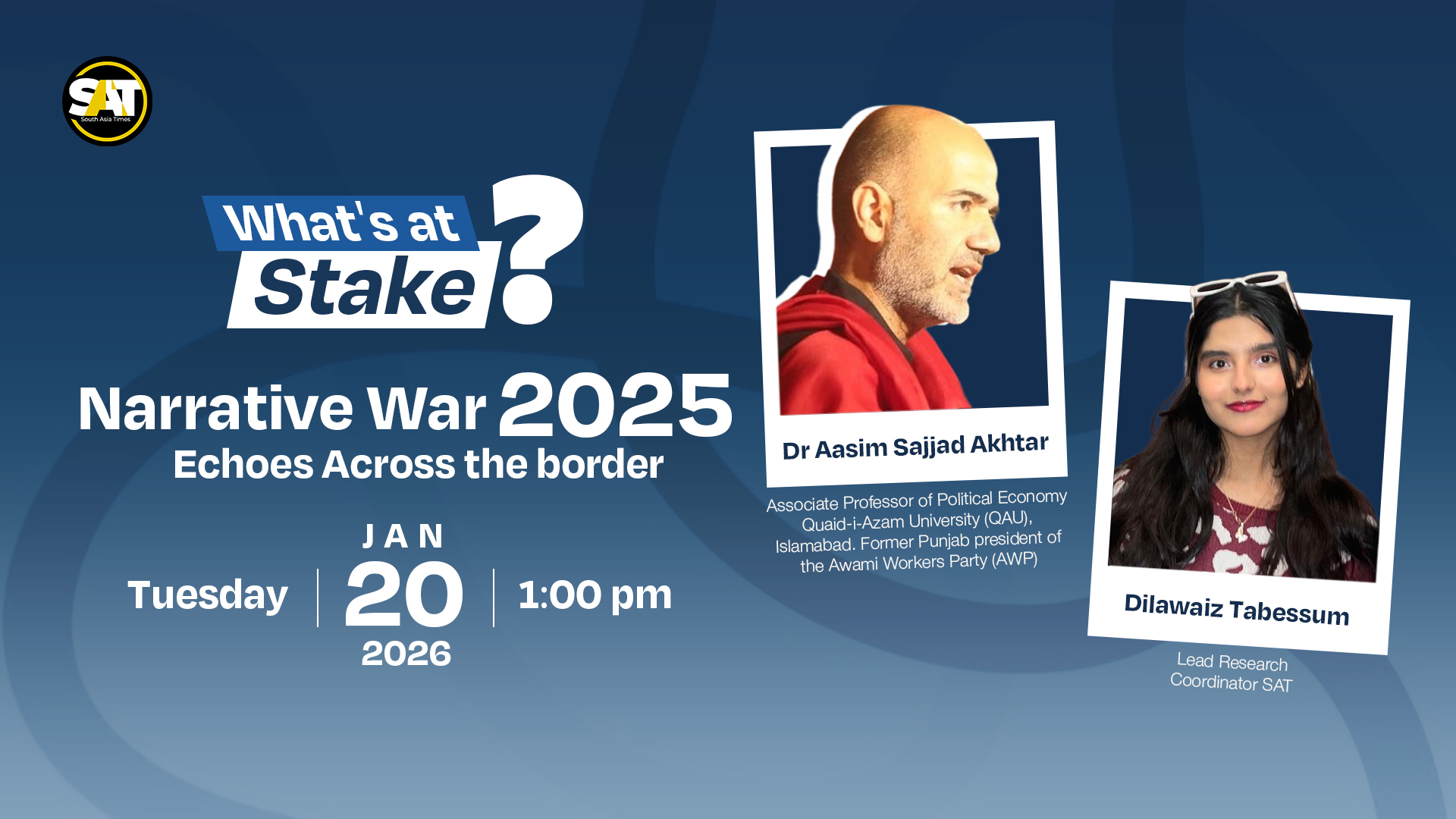
Narratives are shaped by the state, and states often claim that they are acting according to what
the people want. Narratives are spread faster than facts. People in both countries face the same
issues, such as climate change, poverty, and many others. There is nothing to be proud of when
common people become aggressive and spread different narratives. In Pakistan and in India, an
impression has been created that by heightening so-called national prestige, fighting the enemy,
and claiming victory whether factual or not they have won. This impression is repeated
month after month, on social media.
If we want to bring the young people of this region together around a shared notion or narrative,
it would be better to emphasize the advantages of peace, trade, and the benefits of interacting
with each other. Whether politicians want this or not is a separate matter. Propaganda and
psychology play a major role in war how impressions are created, which facts are highlighted,
and which are deliberately removed from the story. This happens on both sides, with India
sometimes denying destruction initially but later acknowledging it.
All those platforms on which this narrative war occurs Twitter, Instagram, TikTok, and
others are corporate entities. These platforms are run using specific algorithms and earn money
by collecting and selling user data. Young people may feel they are expressing their narratives
freely, but these platforms are neither free nor democratic. These platforms also have a positive
impact, such as enabling freedom of expression, making people express their thoughts and views
and sharing it with the whole world. It is absurd and misleading when India makes large false
claims on major platforms, such as claiming the destruction of Karachi port. Pakistan’s media
also engages in sensationalism, though it has not reached the scale of India’s media. Ethical
journalism cannot be expected during war; it should ideally exist during normal times as well,
but conflicts bring these issues to the forefront.
During this war one side had a diplomatic defeat while the other had diplomatic victory. But both
sides claimed diplomatic victory and no one accepted defeat. International media played a role in
mediation. Pakistan made an official announcement that it wanted to nominate Trump for the
Nobel Prize, claiming he played a crucial role in mediation. Meanwhile, India outright denied
that they have not accepted anyone’s mediation. Nevertheless, it is clear that some form of
mediation did occur, because without any mediation the matter would not have ended. Whether
either side is willing to publicly acknowledge it or not, but both sides agreed to mediation that’s
why the ceasefire happened.
International media does not necessarily play a decisive role in ending conflicts of this nature.
One thing that happened is that alarm bells rang everywhere because both countries are nuclear
powers. If escalation occurs, it would not only affect this region but could become a global
concern.
The entertainment industry also plays a major role in shaping narratives. India has developed its
industry significantly as compared to Pakistan. Hollywood has also influenced global perceptions
through movies on the Vietnam, Iran, and Afghanistan wars. Our culture documents narratives,
and India has a much bigger industry. While both countries share cultural similarities, the
difference lies in how we choose to think about these narratives.
No one in the world, not just Pakistanis, benefits from continuous rivalry. Expressing thoughts
openly on social media is positive, but if used constructively, it should promote friendship, trade,
and interaction rather than hostility. Energy should be directed toward solving common issues.
From childhood, Indians are often taught to see Pakistan as the enemy. India is considered more
extremist due to its larger population, though there are also voices promoting peace. However,
such thinking alone will not solve the problems faced by ordinary people. The main question
remains: is there a future horizon to come out of this?
