Grenade attack at a rally for Kashmir in Pakistan leaves at least 40 injured

Suffered injuries

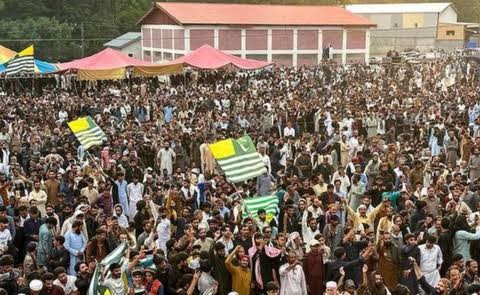
At least 40 people suffered from injuries in a grenade attack on a rally for Kashmir. On the day Pakistan marks as the first anniversary of India’s revocation of Kashmir’s semi-autonomy on Wednesday.

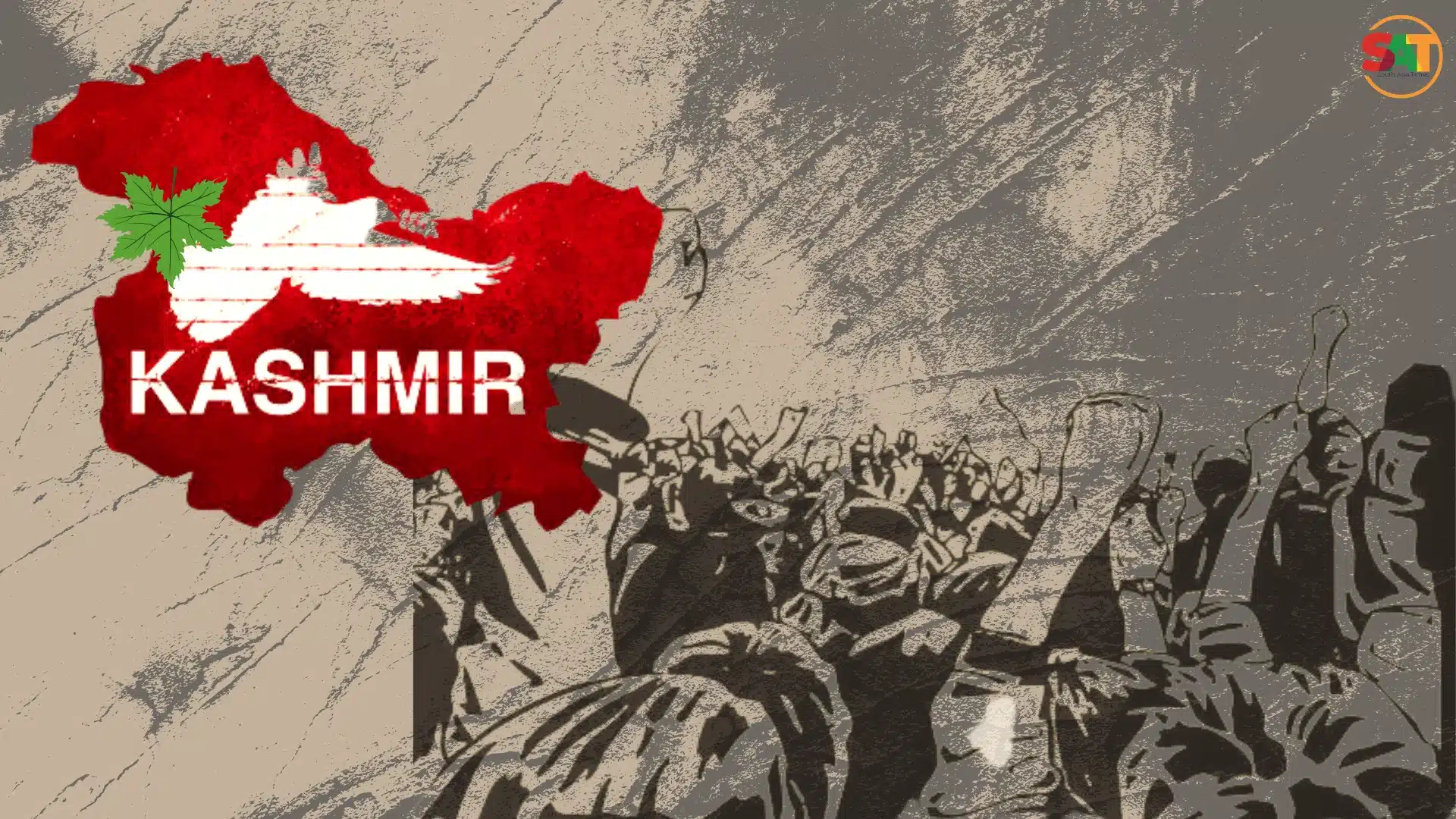
Delhi said the change was necessary to develop the revolt-torn region and integrate it with the rest of India. However the move but it infuriated many Kashmiris as well as neighboring Pakistan. Kashmir is claimed in full by India and Pakistan, which have gone to war twice over it, and both rule parts of it.

Indian authorities deployed troops and curbed public movement on Wednesday to stop potential protests in Kashmir.

SRA claims the attack

Sindhudesh Revolutionary Army claimed responsibility for the incident. This separatist outfit has become active in the past months. In June, four people were killed including two soldiers in three consecutive explosions by the SRA.

The group wants Sindh province, of which Karachi is the capital, to break from the Pakistani federation. It has also announced its alliance with the Balochistan Liberation Army. The BLA is a militant group fighting for greater autonomy for the Balochistan region in southwestern Pakistan.

Besides the attack on the rally, two other minor attacks were also by the SRA.

The recent surge of terrorism in Pakistan

The BLA also claimed a minor attack in Hub, Lasbela, yesterday. As well as the murder of an ex-deputy commissioner in an incident of target killing.

Moreover, SRA’s latest ally, the BLA is infamous for a multitude of attacks. They have previously targeted development projects, site workers, military installations, and LEA’s. The list doesn’t end here. Non-Baloch residents of the province including teachers have been attacked and killed by BLA.

The group also claimed an attack, a failed one nonetheless, on the Pakistan Stock Exchange, Karachi, last month-the the economic hub of Pakistan. The group is a proxy for Kabul and Delhi, to destabilize Pakistan.

Islamabad\’s worries stemmed from all sides yesterday. Other than Karachi, TTP claimed attacks on eight checkpoints in Lower Dir. Moreover, heavy artillery and mortar shelling from Afghan security forces has been reported. Skirmishes along the LOC also took place. A total of twelve Pakistani security, military or paramilitary rankers suffered injuries and died yesterday.

Pakistan and the current geopolitical security situation of South Asia

Pakistan has been at war for over a decade on multiple fronts. Apart from the line of control with India, its Western front with neighboring Afghanistan remains hostile. Left-wing terrorism in Pakistan has been increasing steadily.

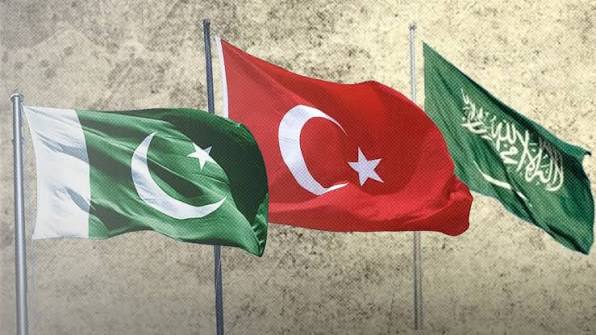
Moreover, Sino-Indian tensions continue to rise. Simultaneously, Tehran’s ties with Beijing begin to improve. Pakistan has hinted that it will make a move “with or without Saudi Arabia”. The US pullout from Afghanistan is on the cards. Furthermore, India’s stakes in the peace process are also pertinent. South Asia is nearing a potential final showdown for Kashmir.


News Desk

Your trusted source for insightful journalism. Stay informed with our compelling coverage of global affairs, business, technology, and more.

Recent

An analysis of Qatar’s neutrality, Al Jazeera’s framing of Pakistan, and how narrative diplomacy shapes mediation and regional security in South Asia.

Qatar’s Dubious Neutrality and the Narrative Campaign Against Pakistan

Qatar’s role in South Asia illustrates how mediation and media narratives can quietly converge into instruments of influence. Through Al Jazeera’s selective framing of Pakistan’s security challenges and Doha’s unbalanced facilitation with the Taliban, neutrality risks becoming a performative posture rather than a principled practice. Mediation that avoids accountability does not resolve conflict, it entrenches it.

Read More »
An analysis of how Qatar’s mediation shifted from dialogue to patronage, legitimizing the Taliban and Hamas while eroding global counterterrorism norms.

From Dialogue to Patronage: How Qatar Mainstreamed Radical Movements Under the Banner of Mediation

Qatar’s diplomacy has long been framed as pragmatic engagement, but its mediation model has increasingly blurred into political patronage. By hosting and legitimizing groups such as the Taliban and Hamas without enforceable conditions, Doha has helped normalize armed movements in international politics, weakening counterterrorism norms and reshaping regional stability.

Read More »
AI, Extremism, and the Weaponization of Hate: Islamophobia in India

AI, Extremism, and the Weaponization of Hate: Islamophobia in India

AI is no longer a neutral tool in India’s digital space. A growing body of research shows how artificial intelligence is being deliberately weaponized to mass-produce Islamophobic narratives, normalize harassment, and amplify Hindutva extremism. As online hate increasingly spills into real-world violence, India’s AI-driven propaganda ecosystem raises urgent questions about accountability, democracy, and the future of pluralism.

Read More »
AQAP’s Threat to China: Pathways Through Al-Qaeda’s Global Network

AQAP’s Threat to China: Pathways Through Al-Qaeda’s Global Network

AQAP’s threat against China marks a shift from rhetoric to execution, rooted in Al-Qaeda’s decentralized global architecture. By using Afghanistan as a coordination hub and relying on AQIS, TTP, and Uyghur militants of the Turkistan Islamic Party as local enablers, the threat is designed to be carried out far beyond Yemen. From CPEC projects in Pakistan to Chinese interests in Central Asia and Africa, the networked nature of Al-Qaeda allows a geographically dispersed yet strategically aligned campaign against Beijing.

Read More »
The Enduring Consequences of America’s Exit from Afghanistan

The Enduring Consequences of America’s Exit from Afghanistan

The 2021 US withdrawal from Afghanistan was more than the end of a long war, it was a poorly executed exit that triggered the rapid collapse of the Afghan state. The fall of Kabul, the Abbey Gate attack, and the return of militant groups exposed serious gaps in planning and coordination.

Read More »