![South Korea's Constitutional Court ousts President Yoon over martial law, triggering a presidential election in 60 days. [Image via Dunya News]](https://southasiatimes.org/wp-content/uploads/2025/04/876878_41891290.webp)
South Korean President Yoon Suk Yeol was ousted on Friday by the Constitutional Court, ushering in an election after it upheld parliament’s impeachment over his imposition of martial law that sparked the nation’s worst political crisis in decades.
The unanimous ruling caps months of political turmoil that have overshadowed efforts to deal with the administration of U.S. President Donald Trump at a time of slowing growth in Asia’s fourth-largest economy.
The decision now sets in motion a race to elect the next president within 60 days as required by the constitution. Prime Minister Han Duck-soo will stay on as acting president until a new leader is sworn in.
Lee Jae-myung, the populist leader of the liberal Democratic Party who had lost to Yoon by a razor-thin margin in 2022, is a clear front-runner but faces legal challenges of his own under multiple trials for corruption.
The conservatives have a wide-open field of candidates.
“The Constitutional Court’s unanimous ruling has removed a major source of uncertainty,” said Professor Leif-Eric Easley of Ewha University in Seoul, noting how the next government would have to navigate challenges including North Korea’s military threats, China’s diplomatic pressure and Trump’s trade tariffs.
Acting Chief Justice Moon Hyung-bae said Yoon violated his duty as president with his December 3 martial law declaration, acting beyond his constitutional powers with actions that were “a serious challenge to democracy”.
“(Yoon) committed a grave betrayal of the people’s trust,” Moon said, adding that the declaration of martial law created chaos in all areas of society, the economy and foreign policy.
Human Rights Watch called the ruling a win for the country’s resilience, quest for human rights and democratic values.
Also See: Tensions Rise as U.S. Carrier Arrives in South Korea a Day After North’s Cruise Missile Tests
Thousands of people at a rally calling for Yoon’s ouster erupted into wild cheers on hearing the ruling, chanting “We won!”
“This took a long time but it’s fortunate that it is a sensible outcome,” Kim Han-sol, a 23-year-old student, said at a rally outside the court.
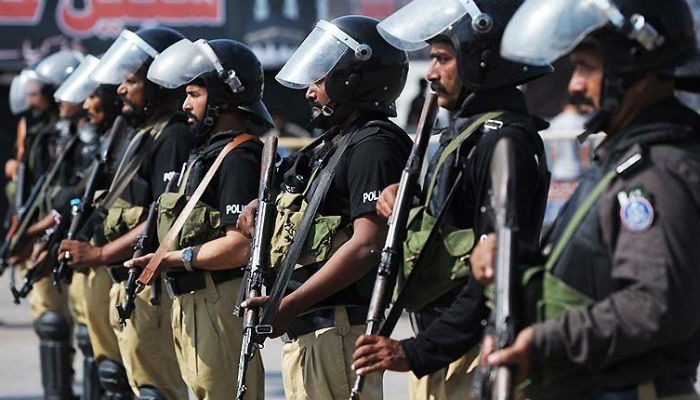
Supporters of Yoon gathered near his official residence watched the ruling on a big screen in stunned silence. Some reacted in anger, with one protester arrested for smashing a police bus window, Yonhap news agency reported. Others held their heads in their hands and wept. Most rallies remained peaceful.
The South Korean won gained as much as 1.6% to a five-week high, while the KOSPI stock index closed down 0.9% after briefly turning positive around the ruling.
In a message released through his lawyers, Yoon apologised to South Koreans.
“I am so sorry and regretful that I wasn’t able to live up to your expectations.”
Earlier, Yoon’s lawyers had slammed the court’s ruling.
“This can only be seen as a political decision,” Yoon Kab-keun told reporters.
The court rejected most of Yoon’s argument that he declared martial law to sound the alarm over the main opposition party’s abuse of its parliamentary majority, saying there were legal avenues to address disagreements.
Mobilising the military against parliament to disrupt its functions was a grave violation of Yoon’s constitutional duty to safeguard the independence of the three branches of government, Moon said.
The presidential flag that flew alongside the national flag at the presidential office was lowered on Friday after the ruling. At military bases and command centres around the country, portraits of Yoon will be taken down to be shredded or burned, according to law.
Kwon Young-se, interim leader of Yoon’s ruling People Power Party, pledged to work with the acting president to stabilise the country. Acting President Han, speaking after the ruling, said he would do all he could to ensure an orderly election.
South Korea’s election commission said presidential hopefuls could register to run from Friday, while after talks with acting President Han, June 3 was being considered for the election date. Shoring up growth and formulating a response to a 25% U.S. tariff on South Korean imports are urgent priorities for the government.
The finance ministry has proposed a 10 trillion won ($7 billion) supplementary budget but needs to reach a compromise with the opposition Democratic Party, whose leader Lee is targeting 30 trillion won.
The 64-year-old Yoon still faces a criminal trial on insurrection charges related to the martial law proclamation, which carry a maximum sentence of death or life imprisonment.
The embattled leader became the first sitting South Korean president to be arrested on January 15 but was released in March after a court cancelled his arrest warrant. Oral arguments in the case start on April 14.
The crisis was triggered by Yoon’s surprise late-night declaration that martial law was needed in part to root out “anti-state” elements.
Yoon lifted the decree six hours later after parliamentary staffers used barricades and fire extinguishers to ward off special operations soldiers who arrived by helicopter and broke windows as they sought to enter parliament, where lawmakers voted to reject martial law
This news is sourced from Reuters and is intended for informational purposes only.

Your trusted source for insightful journalism. Stay informed with our compelling coverage of global affairs, business, technology, and more.