![Pakistan urges UNSC to implement resolutions on Kashmir, emphasizing peace operations and geopolitical challenges. [Image via The Nation]](https://southasiatimes.org/wp-content/uploads/2025/03/meet-obligation-on-kashmir-pakistan-asks-unsc-1742967119-3632.webp)
NEW YORK – Pakistan has once again urged the United Nations Security Council (UNSC) to fulfil its obligation by ensuring the implementation of its own resolutions on the Jammu and Kashmir dispute.
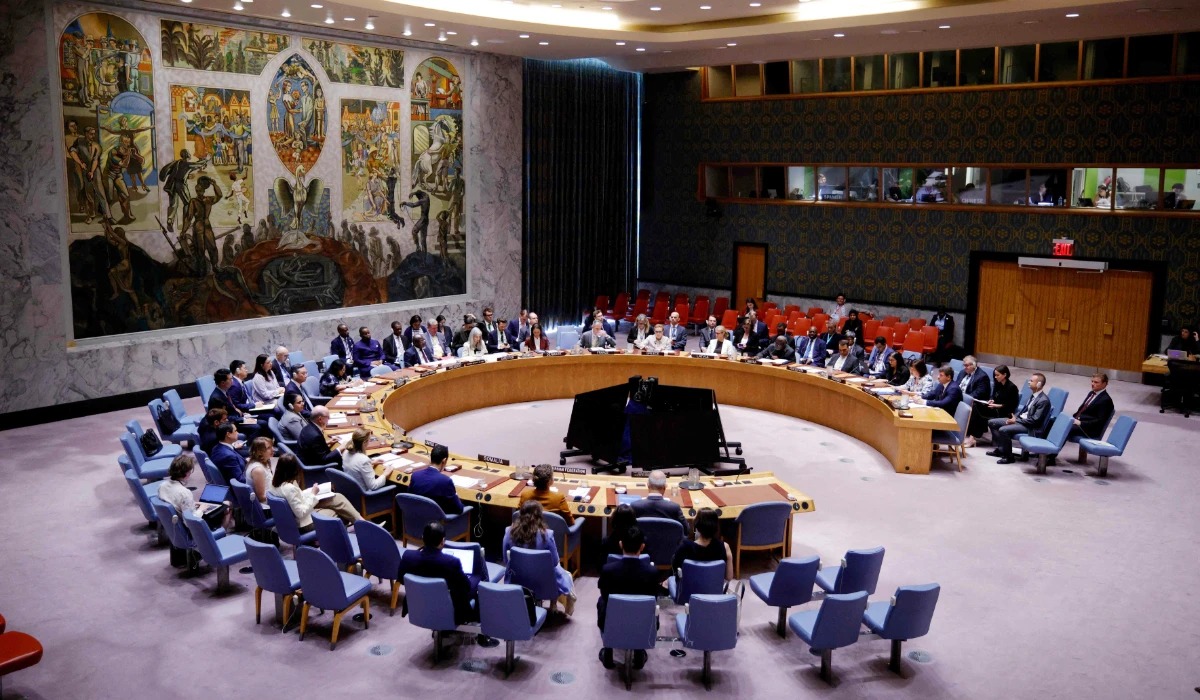
“It is the responsibility the Security Council to ensure the right to self-determination for the Kashmiri people, and promote a just and lasting settlement of the Jammu and Kashmir dispute by taking measures to implement its own resolutions,” said Special Assistant to the Prime Minister (SAPM) and Minister of State for Foreign Affairs Tariq Fatemi while addressing a high-level Security Council meeting here yesterday.
Also See: All Eyes on Kashmir: Has Pakistan Lost Kashmir? Let’s Talk Facts, Not Fiction
According to the Pakistan Mission to UN, Fatemi reminded that the Jammu and Kashmir dispute remains on the agenda of the UNSC and awaits a just and final settlement in accordance with the relevant resolutions of the Security Council that promised the Kashmiri people the right to self-determination through a UN-supervised plebiscite.
According to APP, Fatemi made these remarks while speaking at the UNSC high-level open debate on the ‘Maintenance of International Peace and Security: Advancing Adaptability in UN Peace Operations — Responding to New Realities’.
Highlighting the importance of the UN peacekeeping operations as being cost-effective instruments to maintain international peace and security, Fatemi mentioned that the UN Military Observers Group in India and Pakistan, established in 1949, exemplified the observation and monitoring type of operations for inter-state conflicts.
The SAPM mentioned Pakistan’s long association with the UN peacekeeping operations in terms of being one of the longest-serving and leading troop contributors and a founding member of the Peace-building Commission.
Fatemi also highlighted the “new realities” and challenges facing peace operations today, which, he said, are being increasingly shaped by divergent objectives and priorities resulting from increased geo-political rivalries, lack of political will and insufficient allocation of resources.
He added that the proliferation of non-state actors, the changing nature of conflicts; and the weaponi-sation of new technologies and the information space were also challenges facing peace operations today.
This news is sourced from The Nation and is intended for informational purposes only.

Your trusted source for insightful journalism. Stay informed with our compelling coverage of global affairs, business, technology, and more.